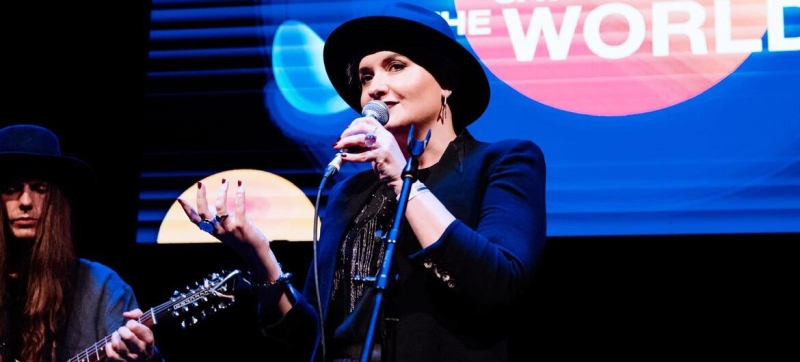

© Courtesy of Maria Semushkina Maria Semushkina is a cultural entrepreneur, producer and organizer of one of the largest jazz festivals, Usadba Jazz. INTERVIEW | Maria Semushkina: jazz is “therapy for society” Culture and Education
Jazz is not just music, but also a form of “social therapy” that helps reduce tension in relationships, overcome barriers and return people to a sense of connection with each other. This is reminiscent of International Jazz Day, which is celebrated annually on April 30, promoting the values of peace, dialogue and mutual understanding.
Maria Semushkina, a cultural entrepreneur, producer and organizer of one of the largest jazz festivals “Usadba” Jazz, told Evgenia Klesheva from the UN News Service about why jazz remains an important tool for cultural interaction and social support.
From discrimination to dialogue
Today, jazz sounds far beyond the concert halls – as a universal language that can unite people even in the face of conflicts and political differences. Its history dates back to the late 19th and early 20th centuries, and is closely tied to African-American culture and the experiences of oppressed people. Jazz was rooted in the rhythms and songs of the people who worked on the Louisiana plantations, for whom music became a way to express pain, hope and desire for freedom.
“This is music that was originally born in very difficult conditions and carried a signal to society,” says Semushkina.
According to her words, jazz developed in parallel with social and political processes, including racial segregation in the United States, when black musicians could not perform in the same venues as white people. However, it was jazz culture that became one of the first spaces where these barriers began to break down.
“Groups were created where it no longer mattered who you were – what was important was attunement, the ability to hear each other,” – notes the producer.
Improvisation, a key element of jazz, requires both freedom and deep mutual understanding between musicians. This is what, according to Semushkina, makes jazz a metaphor for dialogue. In this sense, jazz becomes a model of a society in which different voices can coexist and interact.
Music that unites
Today, jazz continues to perform a unifying function – sometimes in spite of political reality.
“It can unite people from warring countries, from different religious contexts,” says Semushkina. According to her, musicians serve not politics, but music – and this is what creates space for dialogue.
She observed such an experience within the framework of “Estate Jazz”, where artists from Africa, Europe and the USA performed, creating a space free of cultural barriers. Festivals and music projects are increasingly seen as tools of cultural diplomacy and social cohesion. One such example was the Music Saves the World project initiated by Semushkina, which brought together more than 100 musicians from different countries, including those who found themselves in situations of forced displacement. In particular, artists from Russia and Ukraine performed on the same stage.
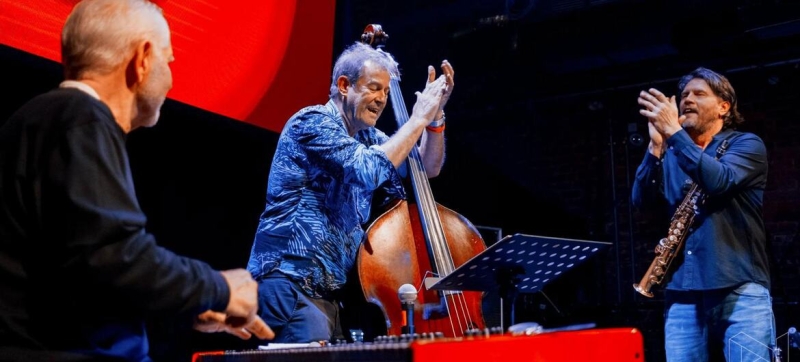
© Courtesy of Maria Semushkina Vintskevich-Kershaw Trio (Russia-UK), Music Saves the World, London, 2024.
In the future, she plans to expand this initiative to bring together musicians from other countries in conflict.
“I know that musicians won’t say, “I won’t play with him because he’s from another country.” They serve music and understand the value of peacemaking,” she says.
Jazz as “therapy” after crises
The tradition of jazz festivals is also closely linked to global upheavals. The first major festivals in Europe appeared immediately after World War II war – for example, in France already in 1948.
According to Semushkina, in the post-war period, jazz became a form of collective therapy: “It was not just entertainment – it was a space where people could recover, feel unity.”
This feature continues today. Jazz, in her words, is able to “change the temperature in the room” – reduce the level of anxiety and aggression, rebuild neural networks, helping people better understand themselves and each other. Even complete strangers at a jazz concert find it easy to get along: “It’s a special community—you may not know these people, but you know you can talk to them.” This informal community unites people around the world and becomes an alternative form of global communication – outside of formal institutions and political alliances.
This role is especially important for people living in difficult social conditions, such as adolescents from marginalized communities. The opportunity to go to a concert or festival can be not just a cultural experience for a person, but a turning point. That is why it is important that there are not only expensive festivals – the common person should be able to come and have this experience.
Global music without borders
Over the decades, jazz has become a truly global phenomenon, incorporating elements of different cultures – from African rhythms to Middle Eastern and Latin American motifs.
“Jazz seems to have no boundaries – any culture can join it,” notes Semushkina.
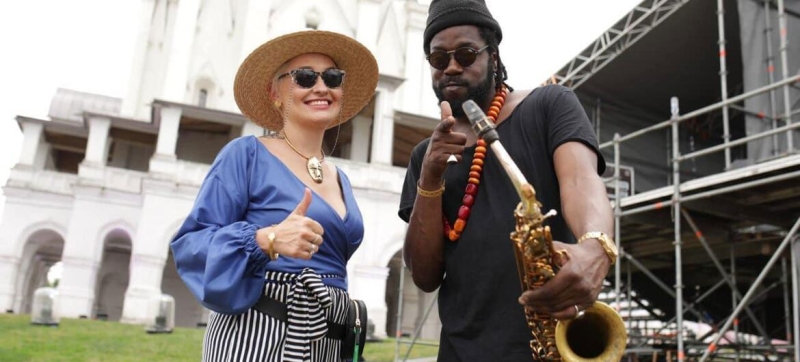
© Courtesy of Maria Semushkina Maria Semushkina and Soweto Kinch (Great Britain) at the Usadba Jazz festival, 2019.
In her words, jazz exists as a space that transcends political and geographic divisions.
“Jazz is a superstructure that is not about politics or division, but about unification,” she says. Even in times of tension, musicians continue to interact with each other friend, guided not by nationality, but by the common language of music.
Female voice in jazz
Semushkina pays special attention to the role of women in the industry. Despite progress, they remain one of the most vulnerable groups – especially in conditions of unstable creative careers.
To support female artists, she created a platform whose goal is to connect them with audiences and communities of female leaders. Women in music, according to Semushkina, often face instability, dependence on male producers and the difficulty of combining a career with motherhood. Without systemic support – grants, production initiatives and cultural policies – many talents find it difficult to realize themselves. she.
Support culture is not “last”
According to Semushkina, support for culture should be considered a priority – including at the level of states and international organizations. Culture should not be seen as a secondary area – especially in times of crisis.
Musicians, especially those working outside the commercial mainstream, need grants, institutional support and development opportunities. Despite global recognition, many jazz musicians remain in a vulnerable position, especially if their work is not aimed at the masses market.
“They say there’s no time for culture now. No, culture is just— not in the last place, but in the first place,” she says.
On International Jazz Day, Semushkina addresses world leaders and society with a simple appeal: “Stay human, listen to your heart, listen to good music and support those who come with bright ideas.”