Watch on UN Web TV

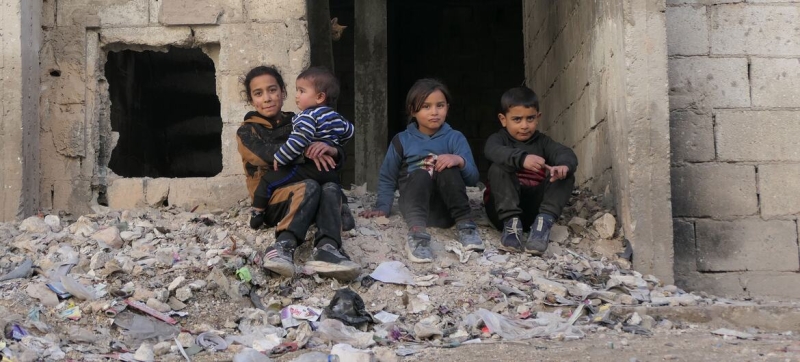
© VPP/F. Winter “The best defense against food insecurity is peace.” UN Secretary General: Conflicts are the main cause of hunger in the world, their consequences extend beyond combat zones Peace and Security
Conflict remains a major cause of acute global food shortages, and its consequences increasingly extend far beyond war zones, disrupting global supplies of food, fertilizer and energy. This was stated by UN Secretary-General Antonio Guterres on Tuesday, speaking at the open debate of the Security Council.
The ministerial meeting, chaired by Denmark, was devoted to the theme “Food at risk: the role of the Security Council in mitigating the impact of food crises at the global and local levels.”
“Critical food systems – and the lives and livelihoods of the people who depend on them – are under attack,” the Secretary-General said. He recalled that in resolution 2417, adopted in 2018, the Security Council recognized the link between armed conflicts, food insecurity and the threat of famine. “There is no time to waste,” Guterres emphasized.
Conflicts and famine
According to the Secretary General, in the Sahel, conflicts are forcing farmers to leave their fields, in Sudan, markets are being hit by drones and missiles, and in In Haiti, gang violence has cut off entire communities from the outside world. From Gaza to Mali, Myanmar and Sudan, aid workers are being prevented from providing aid and some are being attacked.
“It is no coincidence that 2025 not only saw the highest number of armed conflicts since the Second World War, but also one of the highest levels of acute hunger on record, with at least 266 million people facing acute food insecurity,” Guterres said. The Secretary General called it a “shameful milestone.” According to the latest UN report on hunger hotspots, conflict and violence are the main cause of the crisis in 12 of the 13 most dangerous hotspots.Guterres stressed that the impact of wars on food security is not limited to war zones. The war in Ukraine affects the export of grain and energy from Ukraine and Russia through the Black Sea. The crisis in the Middle East poses new risks to global supply chains.
About a fifth of the world’s oil supplies and a third of the world’s fertilizer trade pass through the Strait of Hormuz. Shipping restrictions and closures have already led to higher prices and reduced availability of goods. Attacks on commercial shipping in the Red Sea pose further threats to the supply of food and other goods. Countries that are import dependent and at the same time burdened with high levels of debt are especially vulnerable.
The best defense against food insecurity is peace
The Secretary General recalled the temporary mechanism proposed by the UN to meet humanitarian needs arising from the crisis in the Strait of Hormuz. At the first stage, it should ensure the supply of fertilizers and raw materials for their production, and subsequently can be extended to other goods.
“Cooperation and political will of the parties are now necessary. I encourage all participants to engage seriously and constructively,” Guterres said. At the same time, he emphasized, such an initiative cannot replace the complete restoration of freedom of navigation in the Hormuz and Bab el-Mandeb Straits.The Secretary General proposed three directions of action to the Security Council. First, resolution 2417 must be implemented consistently and fully. Parties to conflicts have an obligation to protect assets essential to the survival of civilian populations, including food, crops, livestock and drinking water sources, and to ensure safe and unhindered humanitarian access.
“We cannot wait until famine or catastrophic conditions are officially confirmed. “I urge the Council to act when the warning lights go off,” Guterres said.
Second, there is a need to protect food systems as a whole – farms, water systems, markets, warehouses, ports and supply routes, including cross-border and maritime movements of food, agricultural inputs and humanitarian aid.
Third, there is a need to ensure security humanitarian workers and bring to justice those responsible for illegally obstructing the delivery of aid. Resolution 2417 provides for the possibility of the Council taking appropriate measures, including sanctions.
“The best defense against food insecurity is peace. And the safest conditions for the world is a world without hunger,” concluded the Secretary-General.
Cutting humanitarian funding
Speaking before the Security Council, the Acting Executive Director of the World Food Program, Karl Skau, drew particular attention to the situation in Somalia, which he visited last year. week. Families displaced by conflict and drought are once again facing catastrophic hunger, he said. “Waiting for a famine to be officially declared is a complete failure of our duty,” he said. “When families cannot put food on the table, they are faced with impossible choices: starve, leave or rebel. And the cycle repeats itself,” said the head of the WFP.
At the same time, the capabilities of humanitarian organizations are being reduced due to a lack of funds. WFP, according to Skau, will continue to do everything possible to help people caught in conflict zones, despite the reduction in humanitarian funding. “But humanitarian organizations cannot replace political action,” he stressed, calling on states to fund life-saving operations and push for political solutions that can prevent famine.