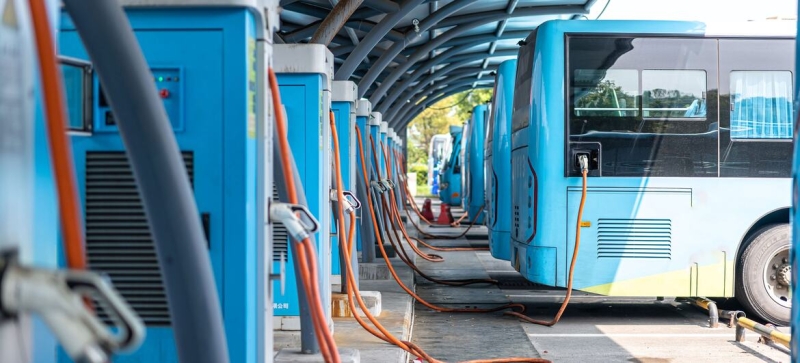

© Adobe Stock/THINK b Electric buses are being charged in China. UN: clean energy transition must not lead to exploitation of labor and resources Sustainable Development Goals
The clean energy transition is impossible without copper, lithium, cobalt, nickel and other critical minerals. However, countries rich in these resources still receive only a small share of the benefits from their extraction. This was stated by UN Deputy Secretary-General Amina Mohammed, opening the first high-level meeting in UN history on minerals needed for the energy transition.
According to her, the world is experiencing two interconnected crises at once – climate and energy – and both require the same solution: a rapid, equitable and inclusive transition to renewable energy sources.
“The transition to clean energy can no longer be stopped, but it must happen much faster,” Mohammed emphasized. At the same time, she added, its benefits should be enjoyed by the people on whose land and whose labor this transition will be ensured.
Minerals, without which “green” is impossible economy
Critical minerals copper, lithium, nickel, cobalt, graphite, silicon and rare earth elements are the basis for the production of electric vehicles, wind turbines, solar panels and industrial batteries. They are also increasingly used in digital technology, healthcare, industry and other strategic sectors.
The UN estimates that global demand for such minerals will more than double by 2040. At the same time, the rapid development of artificial intelligence and the construction of new data centers can make this growth even more significant.
The deputy head of the UN noted that for developing countries with rich mineral reserves, this offers a unique chance to diversify the economy, create new jobs, increase government revenues and accelerate the achievement of the Sustainable Development Goals. fair. Many developing countries continue to export only raw materials, while the main profit is created through its processing and production of finished products in other countries. And local communities where mining takes place often face pollution, unsafe working conditions, and limited opportunities for development.
She cited Africa as an example. The continent has about 30 percent of the world’s critical mineral reserves, but receives only two percent of global clean energy investment. Lack of investment, Mohammed noted, is hampering infrastructure development, skills development and environmental standards.
In addition, increasing competition for access to Africa’s mineral resources is causing instability, forced displacement and armed conflict.
Three steps to fairness transition
“We cannot allow the transition to clean energy to reproduce the injustices of the past,” the UN deputy chief stressed.
To avoid exploitation, she believes, the international community needs to act on three fronts at once.
Above all, mining must provide real and sustainable benefits to producing countries and local communities. The UN has already prepared recommendations providing for the strengthening of investment policy, the protection of human rights, compliance with environmental standards and the development of processing of raw materials directly in production countries.
Mohammed named strengthening international cooperation as her second priority. The world needs transparent and sustainable supply chains based on fair partnerships between producers and consumers, she said. She warned that bilateral deals, in which access to resources is exchanged for security guarantees or infrastructure projects, could increase the dependence of developing countries and undermine their sovereignty. minerals.
“Human rights must be protected, respected and ensured for everyone, including indigenous peoples, workers, children, youth, women, local communities, and environmental and human rights defenders,” she stressed.
Mohammed called on governments, businesses and international organizations to strengthen transparency, anti-corruption and environmental standards across the chain supplies of critical minerals.
“As demand for critical minerals grows, so too must equitable governance, security of supply, sustainability, and investment in processing and new technologies,” she concluded.