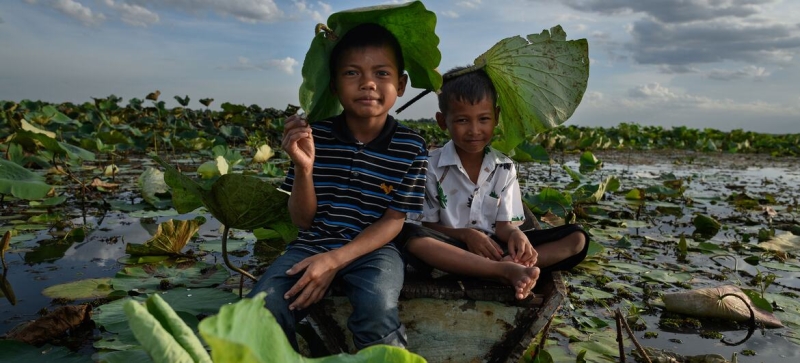

© UNICEF/A. Roysri Two boys in Thailand take shelter from the sun under lotus leaves. The UN warns that the world is entering a period of unprecedented heat. Climate and Environment
The planet is entering a period of unprecedented heat, and the intensifying El Niño phenomenon could lead to new temperature records in the coming months. This was stated by UN Secretary-General Antonio Guterres, calling on governments to speed up measures to protect the population and abandon plans to further expand the use of fossil fuels.
Speaking to reporters at UN headquarters in New York on Friday, the UN chief stressed that the world is facing several interconnected crises, while climate change continues to accelerate rapidly. El Niño is approaching, and today its consequences are being felt throughout the world.
“We have already experienced a summer of extreme weather events: record heat waves, apocalyptic wildfires raging in Spain, France and far beyond, and thousands of lives lost in this sweltering heat wave. “In addition, June and July saw record levels of sea surface temperatures,” Guterres said.
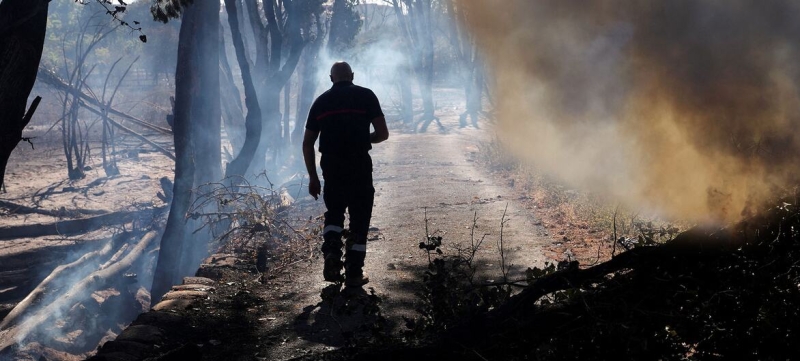
© Adobe Stock/Arafat A firefighter inspects the aftermath of a forest fire in the south of France.
“However, according to the latest scientific data, this is just a prelude. New forecasts released today by the World Meteorological Organization paint a worrying picture of what to expect between August and October,” he continued.
According to scientists, the surface temperature of the Pacific Ocean, which determines the development of this climate phenomenon, has never been so high at such an early stage of its formation – and continues to rise. According to forecasts, until October the air temperature on almost all land will be above the climate norm.
Droughts and extreme heat
The Secretary General noted that El Niño affects not only the temperature, but also the precipitation regime. He said India’s monsoon season is already significantly weaker than usual, and forecasts point to further deterioration of the situation in the region. problems because many heat-related deaths are not officially counted.
Behind the statistics are real human tragedies: families living in unsafe conditions, people forced to choose between health and income, children who cannot study. Hospitals, energy systems and transport infrastructure are overwhelmed. At the same time, the effects of extreme heat are felt especially strongly by those who contributed least to climate change, the Secretary-General emphasized. Since then, many countries have improved their forecasting and early warning systems, and over 250 cities have joined the Beat the Heat initiative and adopted action plans.

© Adobe Stock/Mazur Travel The thermometer in the city of Bilbao, Spain, shows 50 degrees Celsius.
However, the UN chief says the rate of warming is outpacing action.
The Secretary-General called for a focus on four areas: protecting people through action plans and early warning systems, ensuring safe working conditions, adapting cities and infrastructure to extreme heat, and addressing the root cause of climate change crisis.
Fossil fuel abandonment
The world continues to pay too little attention to the main cause of increasing heat waves, droughts and wildfires: the continued use of fossil fuels, the UN chief says. He warned that every new coal, oil or gas project makes future heat waves even more dangerous.
But some governments, Guterres noted, still plan to produce more than double the amount of fossil fuels by 2030 than the scenario of keeping global warming to 1.5 degrees would allow. Celsius.
“Extreme heat is not a threat to the future. It has already arrived. She is becoming more and more dangerous. And unless we take action to protect people and address the root causes of the crisis, the consequences will only get worse,” said the Secretary-General.The new WMO Monthly Global Seasonal Climate Update indicates that El Niño will continue to strengthen steadily and reach high intensity between August and October 2026. Seasonal mean sea surface temperature anomalies are forecast to exceed 2.9 degrees Celsius in key monitoring areas. In addition, a positive Indian Ocean dipole is predicted (the climate regime in the western part of the Indian Ocean becomes warmer than average, and in the eastern part – colder). Together, these factors can exacerbate events such as droughts, floods and wildfires. Sea surface temperatures in the tropical Atlantic Ocean are also expected to remain above average.
“El Niño is one of the most closely monitored climate events in the world. But forecasts by themselves do not prevent dangerous events; people do that. Coming against a backdrop of unprecedented ocean warming and rising temperatures, El Niño provides an opportunity for governments and communities to anticipate risks and act before impacts occur. The decisions we make today will influence the impacts we experience tomorrow,” said WMO Chief Celeste Saulo.
Global Impacts
El Niño and La Niña are opposite phases of the El Niño/Southern Oscillation. This is one of the most powerful factors determining interannual climate variability. This natural climate regime is characterized by above-average water surface temperatures in the central and eastern equatorial Pacific Ocean.
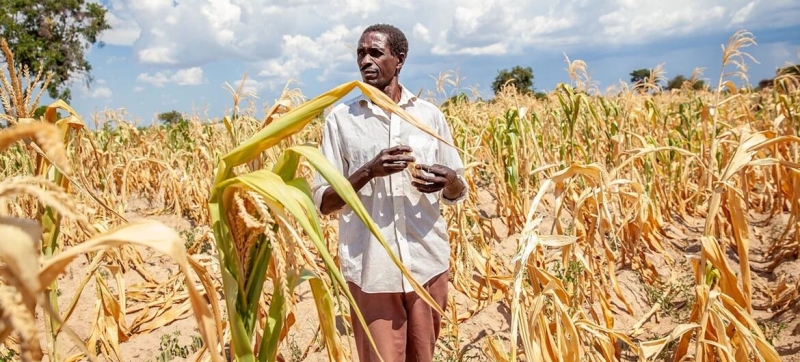
© VPP/G. Vivacqua Drought-affected corn crop in Zambia.
El Niño events typically occur every two to seven years and typically last between nine and twelve months. The phenomenon often begins to develop between March and June, reaches its maximum intensity between November and February, and has its greatest impact for a year after its onset.
The effects of El Niño vary depending on the intensity, duration, time of year, and interactions with other factors.
Regional forecasts
According to the WMO bulletin, temperatures are likely to exceed average across much of the Earth’s land area. The clearest signs of this trend are across Africa, southern Europe, the Arabian Peninsula and Indian subcontinent, eastern Asia, Central America, the Caribbean, and much of South America and New Zealand.
The rainfall forecast for August to October 2026 shows the characteristics of a high-intensity El Niño event. Wetter than normal conditions are expected across the Greater Horn of Africa, parts of Central Asia, southern Europe, western North America and southeastern South America. In contrast, drier-than-normal conditions are more likely across the Indian subcontinent, southern and eastern Australia, southern Central America and parts of the Caribbean, and northwestern South America and northern Europe.