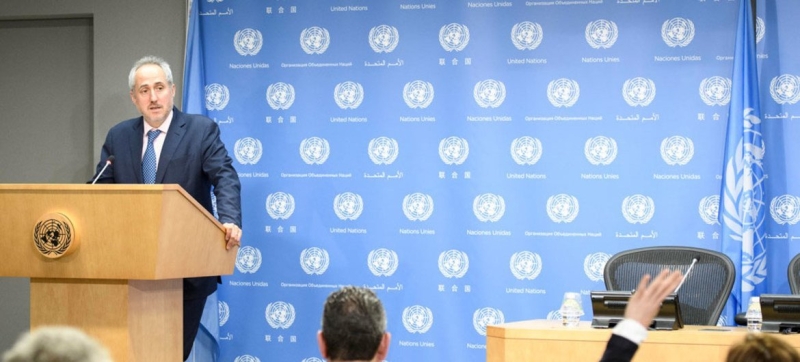

UN Photo/Manuel Elias UN Spokesperson Stephane Dujarric reads a statement from UN Secretary-General Antonio Guterres The UN called for increased diplomatic efforts to end the conflict between the US and Iran Peace and Security
The United Nations chief again called on parties to show restraint amid ongoing escalation in the Middle East, emphasizing the need for dialogue and an end to attacks on “vital infrastructure” across the region.
U.N. Secretary-General Antonio Guterres “remains deeply concerned by the ongoing and widening military escalation between Iran and the United States over the past few days,” U.N. chief spokesman Stephane Dujarric told reporters in New York on Tuesday. liquefied natural gas. The new round of violence followed the collapse of an agreement that would have ended months of fighting that began after joint US-Israeli strikes on Iran in late February and subsequent retaliatory strikes from Tehran.
Fears of a return to full-scale war
Asked whether the Secretary-General is personally involved in efforts to return the parties to diplomacy, Dujarric noted that the UN chief has consistently made appropriate calls, and his personal envoy Jean Arnault continues diplomatic contacts. conflict.”
“We are very grateful to Pakistan for the leading mediation role it has taken, with the support of other states,” Dujarric said.
The conflict has affected ten countries
According to the UN, the consequences of a new round of conflict are already being felt in Iran, Bahrain, Jordan, Syria, Iraq, Saudi Arabia, Yemen, Qatar, Kuwait and the United Arab Emirates.
The escalation is putting pressure on trade systems, humanitarian operations, transportation, and driving up the prices of fuel and essential goods both in these countries and abroad.
The Secretary-General is particularly concerned about attacks on civilian infrastructure in Iran, including a nuclear power plant under construction and a desalination plant, Dujarric said. plant.
Stop “unacceptable” attacks
In recent days, power plants and desalination plants have been hit by air strikes in Kuwait and other countries.
“Such attacks are unacceptable and must stop immediately,” the representative of the Secretary-General emphasized. He reiterated the UN chief’s position that there is no military solution to this conflict and called for increased diplomatic efforts to achieve a peaceful and lasting solution.
According to Dujarric, such an agreement should include “the full restoration of international law regarding navigation and freedom of navigation in and around the Strait of Hormuz.” He also stressed that “vital infrastructure on which civilians depend for life, including hospitals and water supplies, must be protected.”
The UN called on all parties to comply with their obligations under international humanitarian law, including the principles of discrimination, proportionality and precaution, to minimize potential harm to civilians.