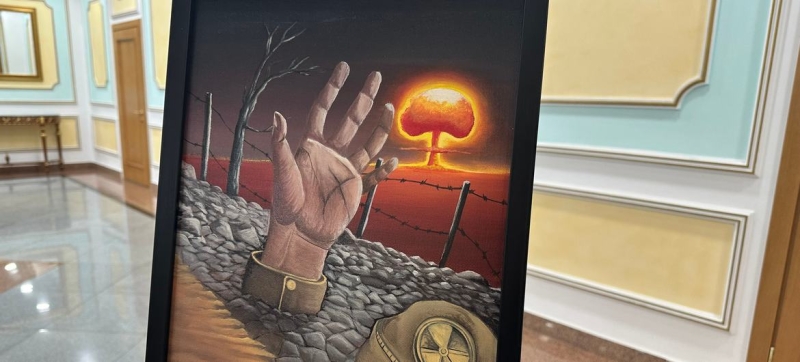

UN News Service/K. Konyrova Painting by international anti-nuclear movement activist Karipbek Kuyukov. Semipalatinsk 35 years later: Kazakhstan calls on the world to prevent new nuclear tests Evgenia Kleshcheva Peace and Security
He was born without arms – this is the legacy of four decades of nuclear explosions at the Semipalatinsk test site in Kazakhstan. On Monday, artist and anti-nuclear activist Karipbek Kuyukov walked the corridors of the UN headquarters in New York along with diplomats, scientists and test survivors. His message remains the same: no one should ever have to experience what his generation experienced again.
Kuyukov paints, holding a brush with his lips and toes. He became one of the participants in the symbolic march before the meeting of the UN General Assembly on the occasion of the International Day against Nuclear Tests. It ended in front of a large photograph exhibited in the General Assembly building: in the picture are people demanding the closure of the Semipalatinsk test site.
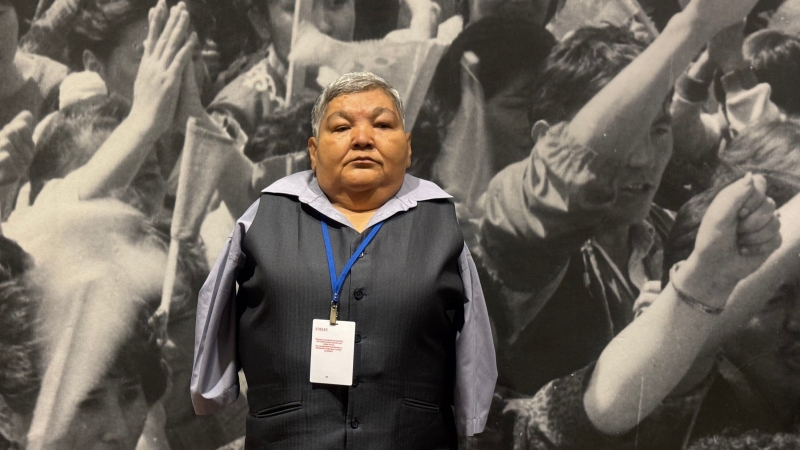
UN News Service Karipbek Kuyukov, an artist and activist from Kazakhstan, near a photograph of protesters demanding the closure of the Semipalatinsk test site.
From 1949 to 1989, 456 nuclear tests were carried out at the Semipalatinsk test site. Hundreds of thousands of people living nearby were exposed to increased doses of radiation, and the effects of radiation are passed on in families from generation to generation.
“My parents were living witnesses to these tests. And as a result of this, I was born without arms,” said the artist.
“The whole people rose up”
Kuyukov was 20 years old when the poet Olzhas Suleimenov led the anti-nuclear movement “Nevada-Semipalatinsk”.
“The whole people rose up against this monster, against the Semipalatinsk test site,” recalls activist.
According to him, the movement has gone far beyond the borders of Kazakhstan. Kuyukov remembers how he stood at a rally shoulder to shoulder with the leader of the Shoshone tribe, whose lands are located next to the American test site in Nevada, and how activists from French Polynesia, where France conducted tests on the Mururoa Atoll, and from Japan participated in peaceful protests at the gates of the Semipalatinsk test site.
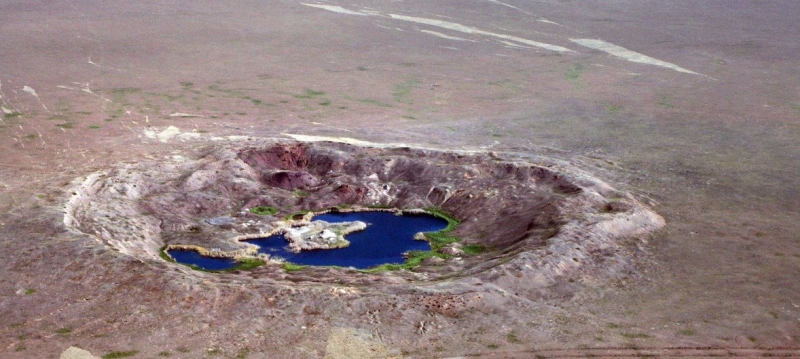
Photo CTBTO Semipalatinsk test site in Kazakhstan, where the USSR conducted nuclear weapons tests.
August 29, 1991, the Semipalatinsk test site was closed. Later, at the initiative of Kazakhstan, the General Assembly proclaimed this date as the International Day of Action against Nuclear Tests.
This year marks 35 years since the closure of the test site. Kuyukov noted that it was with this peaceful decision – the renunciation of nuclear weapons – that his country began the path to sovereignty.
“I believe that this is a great honor for us and this decision can be a worthy example for other countries,” he emphasized.
Every step has value
Addressing the march participants, UN High Representative for Disarmament Affairs Izumi Nakamitsu said that the silence that reigned in Semipalatinsk 35 years ago “did not come on its own.”
“It was achieved through the determination of people, communities and leaders who rejected nuclear testing,” Nakamitsu said.
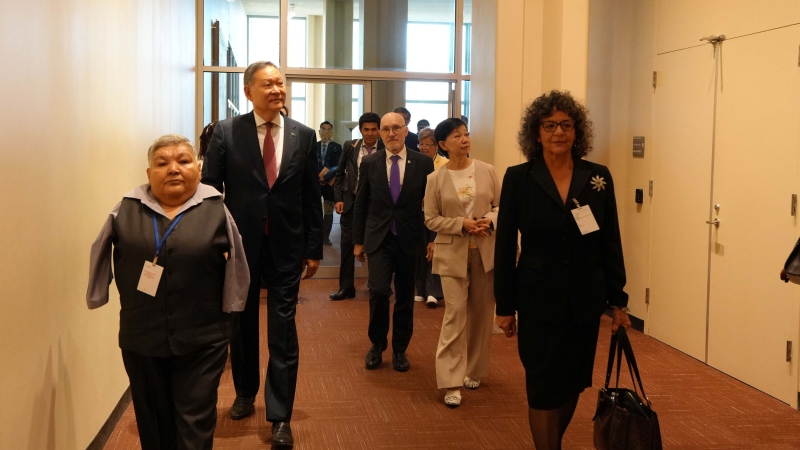
UNODA Participants in a symbolic march on the occasion of the International Day against Nuclear Tests.
Kazakhstan’s permanent representative to the UN, Kairat Umarov, called the march “a very simple but very effective reminder that every step towards disarmament matters.”
This year also marks the 30th anniversary of the opening for signature of the Comprehensive Nuclear-Test-Ban Treaty (CTBT). CTBT Organization Executive Secretary Robert Floyd, addressing the young marchers, called disarmament “the path that people follow from generation to generation.”
“The day will come when your generation will lead, make decisions, sit in boardrooms and assembly halls,” Floyd said. “And we will welcome your big steps forward.”
Prevent the Nuclear Threat
Speaking later on the General Assembly floor, Nakamitsu warned that amid deep geopolitical tensions, fears about a possible resumption of nuclear testing had been renewed. She recalled the words of the UN Secretary-General: “The world must never again witness a nuclear explosion.”
Since 1945, more than 2 thousand nuclear test explosions have been carried out on the planet, but in the three decades since the CTBT opened for signature, there have been fewer than a dozen. Today the document was signed by 188 states; Ratification by Tonga last month brings the number of ratifying countries to 179. The treaty has not yet entered into force.
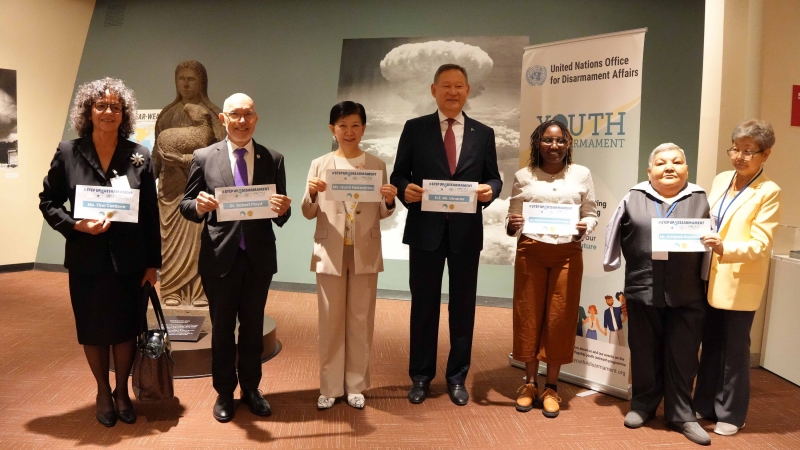
UNODA Participants in a symbolic march on the occasion of the International Day against Nuclear Tests.
The President of the General Assembly, Annalena Burbock, noted in her speech that the consequences of explosions know no borders.
“In an interconnected world like ours, there are no truly “remote areas” protected from the consequences and dangers of nuclear testing,” she said she.
Tina Cordova, a representative of the fourth generation of victims of Trinity, the first ever nuclear test conducted in 1945 in the US state of New Mexico, also spoke at the meeting. “We became the first people in the world to be exposed to radiation when ash fell from the sky in the first days after the explosion,” she said, talking about five generations of cancer in own family.
“I am here to speak for the many people who have been silenced—those who are crying out from their graves,” Cordova told delegates.
“After 81 years, it is time to free our families, our children and grandchildren from the nuclear threat,” called the activist.
The Cause of the Young
For Kuyukov, the struggle today is, first of all, the support of future generations. When he sees young people joining movements against nuclear weapons, he invariably reminds: in war, it is innocent children who suffer first.
“The future is in their hands,” the artist is convinced. – We have experience. We can share this experience with young people.”
When asked what he would say to world leaders in the current alarming situation, the activist responded with a call for reconciliation – for the sake of a new world in which kindness, mercy and compassion will reign. Kuyukov. “Now we only need to move forward together.”