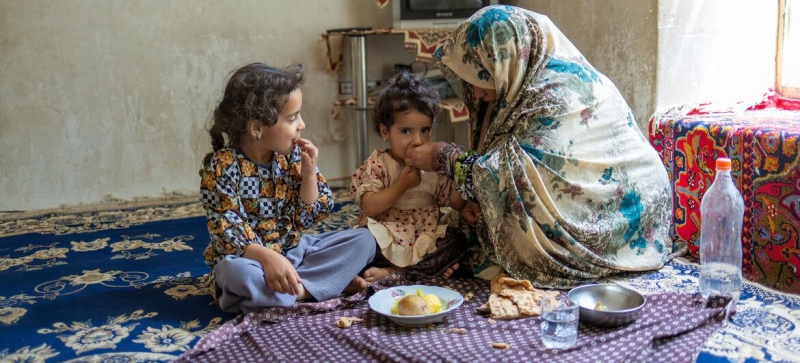

© UNICEF/O. Khayyam Women who have lost their husbands often face economic hardship due to employment restrictions imposed by the de facto authorities in Afghanistan. Afghanistan: Victims of conflict must have access to justice and reparations Peace and Security
Victims of the decades-long conflict in Afghanistan continue to face serious physical, psychological, social and economic consequences. At the same time, victims and their loved ones often do not have access to justice and the necessary assistance, and the damage caused to them is not recognized. This is stated in a new report from the UN Assistance Mission in Afghanistan (UNAMA).
The report mainly focuses on the consequences of the armed conflict that engulfed the country from 2001 until the Taliban took power on August 15, 2021. It is based on interviews with 195 victims and their relatives.
Nearly all respondents—95 percent—reported emotional or psychological damage, including depression, anxiety, flashbacks of traumatic events and other symptoms. More than half—58 percent—were physically injured. Many of them suffer from chronic pain or have acquired disabilities.
“The interviews we conducted reveal the depth and scope of the collective trauma that persists in Afghan society. It is clear that the events of the past continue to impact the lives of many victims and their families,” said Deputy Special Representative of the Secretary-General for Afghanistan and Acting Head of UNAMA Georgette Gagnon.
“In order to help victims, it is critical that they acknowledge the harm they have suffered and demonstrate a genuine commitment to keeping victims’ voices and rights front and center,” she added.
Serious barriers to justice
Victims have testified that since the conflict, they have had no access to health care and support for themselves or their loved ones. They were also unable to rebuild damaged housing.
Women who have lost their husbands often face economic hardship due to employment restrictions imposed by the de facto authorities in Afghanistan.
More than half of those surveyed – 55 percent – have never sought justice, compensation or other forms of redress. This was often due to a belief that their complaints would not be taken seriously or a fear of reprisals.
Among those who tried to get help or bring perpetrators to justice, 64 percent reported that their efforts were unsuccessful. Those surveyed cited bureaucratic obstacles, a lack of response from government and other institutions, as well as perceived discrimination and a lack of transparency.
When participants were asked about their basic needs, 81 percent cited financial compensation, 48 percent cited access to justice, and 47 percent cited measures to prevent further violations.
Victims’ interests
UN mission calls for a comprehensive, victim-centred approach to addressing the challenges remaining from years of armed conflict in Afghanistan.
In particular, all parties with obligations in connection with the conflict must support efforts to hold those responsible for violations accountable and promote measures to protect people’s rights and provide them with the support they need.
The report makes recommendations for de facto authorities to realize the rights of all people affected by the conflict, including the establishment of comprehensive reparations programs. In addition, Afghanistan requires international humanitarian assistance that takes into account the needs and priorities of victims of armed conflict.