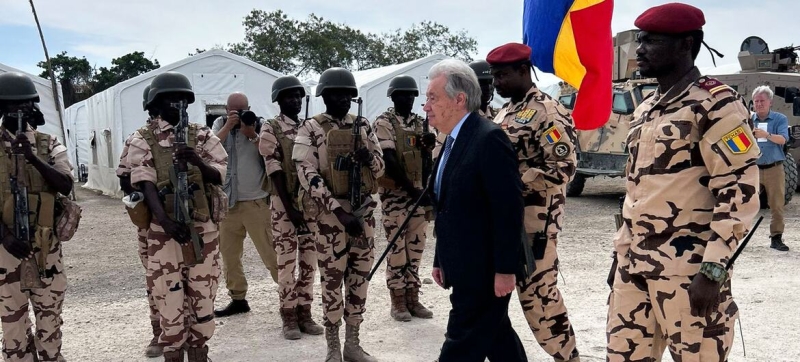

UN Photo UN Secretary-General Antonio Guterres visits the Anti-Banditry Force base in Port-au-Prince, Haiti. A turning point for Haiti: can the country end the omnipotence of street gangs? Daniel Dickinson Peace and Security
Along the Boulevard 15th October, a busy street in the east of Port-au-Prince, colorful pick-up taxis move along, passengers peering out of their windows. Along the road, street vendors sell fruit and a variety of household utensils from makeshift stands. This urban scene might not have been particularly remarkable except for the fact that until recently, fear of armed gang violence kept people away from the streets of the Haitian capital.
It is estimated that at least 26 gangs control approximately 90 percent of Port-au-Prince and surrounding areas. They engage in intimidation, extortion, kidnapping for ransom, and obstructing the free movement of goods. Since the beginning of the year, more than 2,300 people have been killed and nearly 1,100 injured as a result of gang violence.
New stage
Now the situation is gradually changing: the city is patrolled by the UN Security Council Anti-Banditry Force, whose base is located just a few blocks from the 15 October Boulevard. The UN Secretary-General visited the base on Tuesday during a visit to Port-au-Prince. “The deployment of these forces provides a real opportunity to contain violence and restore the authority of the state,” Antonio Guterres told reporters after visiting the base. “We have no right to miss this chance.” The UN chief added that gangs must be disarmed and disbanded, and their members reintegrated into society. According to Guterres, security alone is not enough – it must be accompanied by “progress on the political field.” © BINUH The capital of Haiti is patrolled by the UN Security Council Anti-Banditry Force. Anti-banditry forces are receiving logistical, operational and technical assistance from the newly created UN Support Office in Haiti. This structure plays a key role in ensuring that the Anti-Gang Force operates effectively, protects vulnerable populations and supports humanitarian access. “Our goal is very clear: we must reduce the operational capacity of gangs to a level that local law enforcement agencies can manage on their own,” Jack Christofides, head of the Anti-Gang Force, told the Security Council in April this year. The base is now preparing to receive 5,550 troops from a number of countries. peace. Offices where senior staff will work are being hastily set up in shipping containers. Haiti has suffered from devastation and instability for decades. The country has been without an elected president since the last sitting head of state, Jovenel Moïse, was assassinated in July 2021. Gang violence has forced some 1.5 million Haitians to flee their homes. Millions of people are in need of humanitarian support as poverty deepens. During his visit to Haiti, the UN chief spoke with Haitians forced to flee by violence. “I met families who had lost everything, yet held together with admirable courage and dignity,” Guterres said. “These families did not ask for my sympathy. They are waiting for action.” © WFP Millions of Haitians are in need of humanitarian support as poverty deepens. Despite the challenges Haiti faces, there is now hope that as the Anti-Gang Force grows in capacity, it will be able to make a difference in the daily lives of Haitians by working together with local law enforcement agencies. Organizing urban patrols and establishing front lines operational bases throughout Port-au-Prince and beyond are designed to provide Haitians with a sense of security and return their daily lives to normalcy. The Anti-Gang Force is also expected to have a profound, long-term impact on the country. This is about working with countries in the region to cut off arms and ammunition supplies, take control of border crossings and maritime smuggling routes, and disrupt financial flows for armed groups. “For the first time in many years, there is finally light at the end of the tunnel,” Antonio Guterres noted at the end of his visit. – Haiti has a chance to change the situation – but only if the international community takes responsibility. Let’s take a sober look at the situation: gangs are terrorizing the country, state institutions are weakened. But the biggest shame is the indifference of the world, which has turned its back on Haiti.”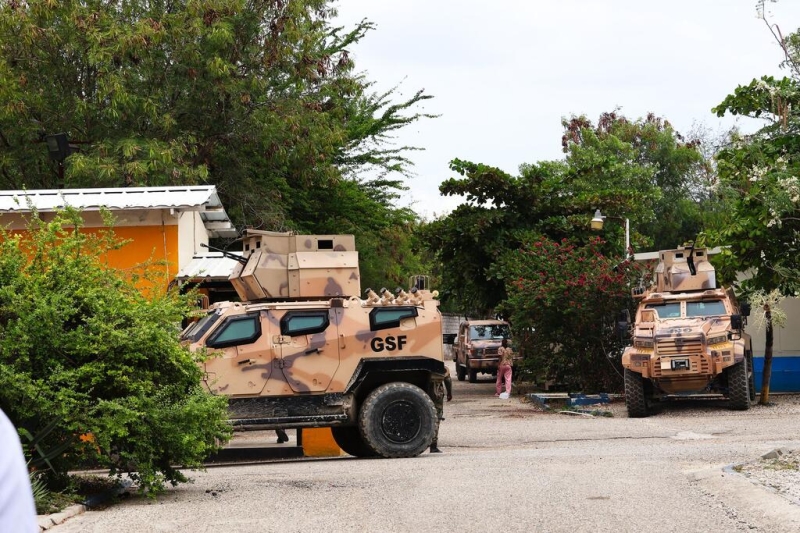
Years of instability
Renewing Hope