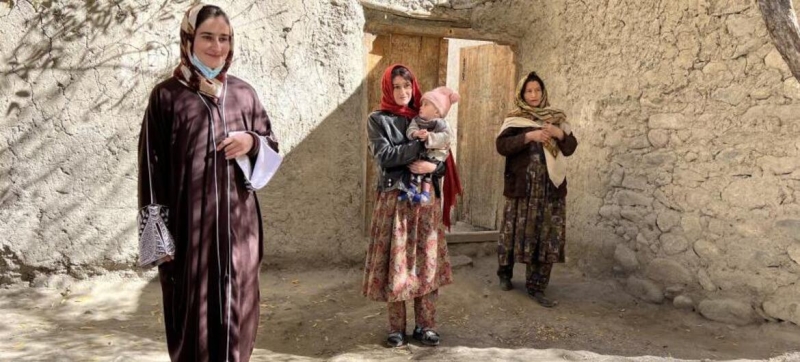

© VPP/I. Sumra Afghan women and children receive humanitarian aid in rural areas. More than 2.6 million girls in Afghanistan have lost access to secondary education since 2021 Culture and education
In the five years since the Taliban seized power in Afghanistan, more than 2.6 million Afghan girls have been denied access to secondary education. According to the United Nations Children’s Fund (UNICEF), Afghanistan remains the only country in the world where access to secondary and higher education for girls and women is virtually closed.
As of September 2021, girls are prohibited from receiving formal education after the sixth grade, and from December 2022, women are prohibited from studying at universities.
“Five years may be a short period in a country’s history, but it is a defining moment in a girl’s life,” said UNICEF Executive Director Catherine Russell. – School gives much more than just knowledge. It gives young people a voice and the opportunity to realize their full potential. It also provides protection against child labor, early marriage, violence and abuse. Schools closed, and those protections disappeared just when girls needed them most.”
The risks girls face outside of school are exacerbated by poverty and displacement. Since 2023, more than 2.7 million people have returned to the country from Iran and Pakistan, and 60 percent of them are children and youth.
Afghanistan is losing skilled labor
The consequences affect not only the girls themselves. According to a UNICEF report published in April 2026, the country risks losing up to 20,000 female teachers and 5,400 female health workers by 2030. The number of female teachers in basic education has already fallen by more than nine percent, from almost 73,000 in 2022 to about 66,000 in 2024. The share of women in the civil service fell from 21 percent to 17.7 percent between 2023 and 2025.
The same study shows that restrictions on girls’ education and women’s employment cost Afghanistan an estimated $84 million annually in lost economic potential, and these losses accumulate with each year the restrictions remain in place. The consequences will also affect the next generation. As the proportion of mothers without education increases, the risks of having children with low birth weight and stunting and declining vaccination rates increase.
In the current situation, “the country cannot prosper”
Despite existing restrictions, UNICEF continues to support education in Afghanistan. In 2025, more than 3.7 million children in public schools received emergency education assistance, 442,000 children participated in community-based education programs, 66 percent of them were girls. 232 schools have also been built or rehabilitated.
“UNICEF calls on the country’s de facto authorities to lift restrictions on education and immediately allow all girls and women to return to schools and universities,” Russell said. “A country cannot prosper when half of its youth are deprived of the opportunity to develop.”