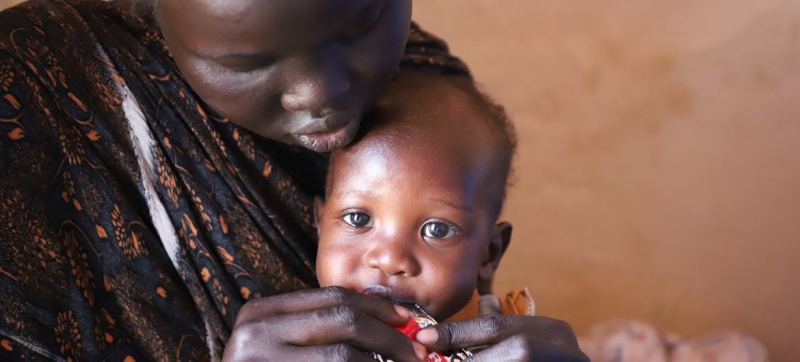

© UNICEF/J. Maiden In Renka, northern South Sudan, a mother feeds her baby medicinal food. South Sudan: Lack of funding could leave hundreds of thousands of refugees without food aid Humanitarian aid
In South Sudan, more than 650,000 refugees and asylum seekers are at risk of losing vital humanitarian assistance due to severe funding shortfalls. The Office of the United Nations High Commissioner for Refugees (UNHCR) and the World Food Program (WFP) warned about this on Friday.
Unless additional funding is urgently allocated, September will be the last time the 240,000 refugees who have so far relied on food aid will receive it. Previously, 650 thousand people received such support, but due to a lack of funds, the program has already been significantly reduced.
UNHCR and WFP warn that cutting off aid supplies has immediate and long-term consequences. The risk of malnutrition is increasing, as is the threat of exploitation and violence against women and children. Of particular concern is that people may be forced to cross borders again in search of food.
The flow of refugees continues
Meanwhile in the region Conflicts continue to force people to flee their homes and seek refuge in neighboring countries.
Up to three thousand refugees and returnees arrive from Sudan to South Sudan every week, placing additional strain on already limited resources.
“For refugees and host communities, food assistance often determines whether they can cope or end up in a humanitarian crisis,” said WFP Deputy Director for South Sudan Adham Effendi. to support refugees, WFP urgently needs $37 million. The UN agency’s total funding gap until the end of 2026 is $258 million, which could leave 4.2 million people experiencing severe food insecurity across the country without assistance.
UNHCR, in turn, received only 28 percent Of the $286 million needed this year to provide protection and assistance services to nearly 4 million refugees, internally displaced persons, returnees and representatives hosting their communities.
The funding crisis is unfolding against the backdrop of one of the world’s worst hunger emergencies. More than 7.8 million people – over half of South Sudan face the highest levels of food insecurity, and 2.2 million children suffer from acute malnutrition.
Due to shortages WFP has already been forced to provide assistance only to those refugee families who need it most, and they now receive only half of the full food ration. occur during the rainy season, when food supplies dwindle, food prices rise, and flooded and damaged roads make it increasingly difficult to deliver humanitarian aid.
Many refugee families are already forced to eat less and less often, as well as to borrow money to buy food, sell their few possessions, and cut costs on health, education and housing.
“Every week, thousands of refugees continue to arrive from Sudan and returnees, who have virtually no means of subsistence,” said UNHCR Deputy Representative in South Sudan Mesfin Degefu.
“At the same time, we see refugees who have been living in South Sudan for many years and are trying to rebuild their lives, becoming increasingly “Cutting aid now would reverse hard-won gains… and could force refugee families to take desperate steps, including continuing to travel along dangerous routes for survival,” he added.
Despite serious internal challenges, South Sudan continues to maintain an open-door policy for refugees. More than 1.4 million refugees and returnees have entered the country since the start of the war in neighboring Sudan in 2023.
UNHCR and WFP are calling on the international community to urgently provide flexible funding to prevent prevent the interruption of aid supplies and protect families caught in the middle of a regional crisis.