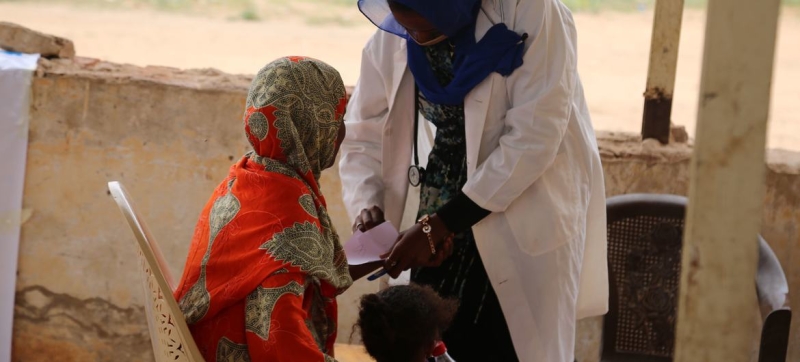

© UNFPA-Sudan/S. Abdul-Muti Midwife in a maternity hospital in Khartoum, Sudan (archive). “Some women gave birth on the road”: how midwives save lives in Sudan Humanitarian aid
Fierce fighting has forced tens of thousands of residents from Blue Nile State to flee their homes in the first five months of 2026. Most of them are women and children. Some residents have found refuge in overcrowded displacement camps, but ongoing violence, destroyed infrastructure and frequent flooding often make obtaining life-saving medical care impossible.
“Some women gave birth on the road. We provided them with emergency assistance and the necessary support. Without trained midwives, the consequences could have been tragic: severe bleeding could have killed both mother and child,” Saida, a midwife from the town of Bot in Sudan’s Blue Nile state, told the United Nations Population Fund (UNFPA). Saida herself was forced to leave her home in 2024. She now works in a mobile health clinic set up with UNFPA support in the Al-Karama 3 displaced persons camp in the state capital Damazin. Saida is one of 15 midwives whom UNFPA has trained, equipped and deployed to communities where their care is most needed.
“Without her, it would have been very difficult for me,” said Somaiya, whom Saida helped in the camp. “We don’t have money, and we don’t know where to go or how to get medical help here. Without her, I would not have been able to get to the hospital.”
Help for every woman
Safiya was also sent by UNFPA to the Al-Karama camp. She keeps records of all pregnant women and their places of residence.
Read also:
“As long as I can help others…”: the story of a midwife who lost everything, but continues to save lives in Sudan
“If a woman does not come to me, I myself go to her, wherever she is, to check her condition and find out why she did not come,” said Safiya.
Most health facilities in Sudan remain closed, leaving displaced pregnant women without safe and consistent access to care. UNFPA staff run mobile clinics and safe spaces across the country, but large funding cuts have forced many to close. referrals of patients to hospitals. They also help survivors of gender-based violence, participate in epidemiological surveillance and conduct educational work.
“Pregnant women regularly come to me to learn about their condition and what they need to do to be healthy,” Safia said. “I monitor every woman from the third month of pregnancy until a successful birth.”
Investing in obstetric care is considered one of the most cost-effective, successful and sustainable ways to improve the health of mothers and newborns and reduce mortality among them.
“Today, our work is not limited to helping pregnant women,” Safiya continued. “We also provide essential medications and postpartum care to breastfeeding mothers. The rainy season is one of our biggest challenges. Moving around the camp becomes very difficult, and getting women to hospitals in emergency situations becomes even more difficult.”
Saving lives through knowledge and skills
In their first three weeks of operation, UNFPA-supported midwives helped carry out 140 safe births and monitored more than 700 pregnant women. With support from the Norwegian government, UNFPA is training an additional 30 midwives in White Nile State and 30 in Northern Kordofan. Once trained, they will be sent to crisis-affected areas where there is a growing need for maternal and reproductive health services.
In addition, UNFPA will arrange for women to be referred to Damazin Maternity Hospital for caesarean sections, as well as cash assistance and vouchers for other types of care for complicated births. An isolated room has been equipped for pregnant women with hepatitis E, where they can receive specialized care amid deteriorating sanitary conditions in the camp.