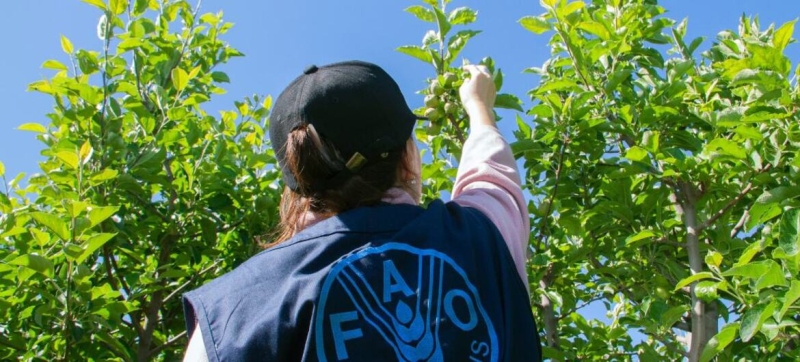

© FAO New joint projects between FAO and Kazakhstan will help the country modernize agriculture. Kazakhstan and FAO launch three projects to modernize the country’s agriculture Climate and Environment
Kazakhstan and the Food and Agriculture Organization of the United Nations (FAO) have launched three new projects. They are designed to help Kazakhstan strengthen agriculture and increase its resilience to climate change, including through innovative approaches.
“These projects help turn our shared priorities into practical action, from strengthening national breeding and seed systems to improving early warning systems for locust outbreaks and laying the foundation for reliable monitoring of soil carbon content and stocks,” said Raimund Jehle, FAO Deputy Regional Representative for Europe and Central Asia.
Modernization crop production
The “Kazakh varieties and seeds” project is aimed at solving long-standing problems in the field of breeding and seed production. Kazakhstan’s food security, rural livelihoods and exports rely heavily on crop production, particularly cereals such as wheat, barley and corn.
However, seed breeding organizations operate under outdated infrastructure, limited access to modern tools, slow adoption of new varieties, and weak links between research organizations and commercial seed producers. These problems have led to Kazakhstan’s increasing dependence on imported varieties and seeds.
The first phase of the project will create the scientific, institutional and management framework necessary to revive domestic breeding and seed systems, increase farmers’ access to high-quality planting material and reduce dependence on imports. It will cover both field and horticultural crops (including apple trees).
The project will promote the involvement of women farmers, researchers, extension workers and women-led farms.
Infestation prevention locusts
FAO will also help Kazakhstan improve its monitoring and forecasting of locust outbreaks using artificial intelligence and drones. Locust outbreaks pose a serious threat to crops and rangelands, and consequently to food security and rural livelihoods.
Improving the effectiveness of early warning and response systems is a key way to prevent or minimize damage.
In close collaboration with the Kazakh authorities, FAO will develop modern geospatial and artificial intelligence tools for collecting, analyzing and forecasting data for monitoring and control of locusts.
Healthy soils for building resilience to climate change
Kazakhstan has more than 219 million hectares of agricultural land, but losses of organic carbon stocks in rangeland soils have been estimated at 20–40 percent in recent decades. This has led to deterioration of soil structure and water-holding capacity, as well as increasing its vulnerability to extreme climate events.
One of the new projects will contribute to the development of a national system for monitoring, reporting and verifying the content of organic carbon stocks in soils. It will help Kazakhstan create a reliable and internationally recognized system.
FAO and Kazakhstan will jointly prepare a work plan, modernize and certify the national laboratory network. Satellite and ground-based data will be used to develop a system for monitoring soil organic carbon and analytical tools, which will be integrated into the existing national geoportal. three projects that combine innovation, institutional capacity building and practical skills development will help improve the productivity of Kazakhstan’s agricultural sector and its resilience to external influences.