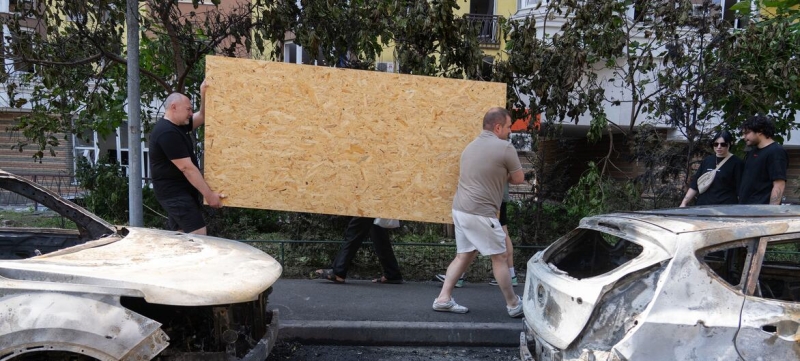

© UNICEF/A. Filippov A typical street scene in Kiev in the fifth year of a full-scale war. Restoring Ukraine: step by step, fate by fate Peace and Security
In maternity wards, school classrooms, hospital corridors and in local communities across Ukraine, people are trying to rebuild their lives, despite the war continuing into its fifth year.
In the frontline village of Bezruki in the Kharkov region, just half an hour from the Russian border, the local school suffered a direct blow in the very first months of the war and soon closed. The tanks passed so close that they could be heard in the vicinity of the school. During the renovation, the frame of the building was strengthened and the windows were restored – life returned to the school. The basement was converted into a shelter, then became a gallery.
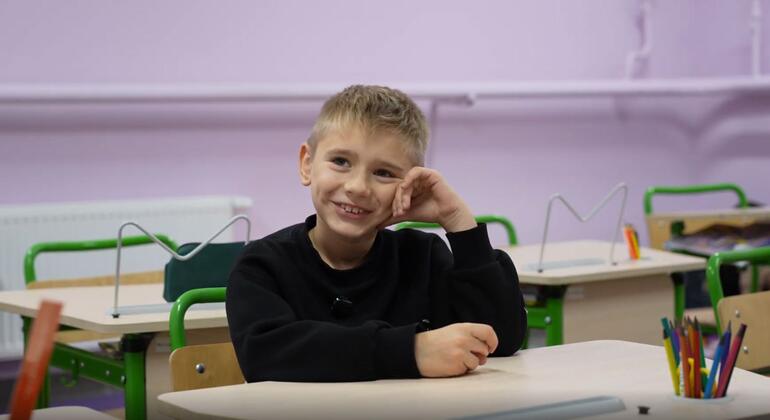
© UNOPS/V. Jaresko Thanks to an initiative led by the United Nations Office for Project Services (UNOPS) with support from the European Union, more than 15,000 children in the region are back in school.
A curriculum built around the child
Yuriy Tkalenko worked as a teacher in schools in the Cherkasy region for twenty years. In 2025, he completed training as part of the state reform “New Ukrainian School.” “You always need to study,” he says. “The new program puts the child at the center, adjusting the learning process to his needs.” This program is implemented by UNESCO with the support of the Global Partnership for Education and the Ministry of Education of Ukraine.
New life – new hope
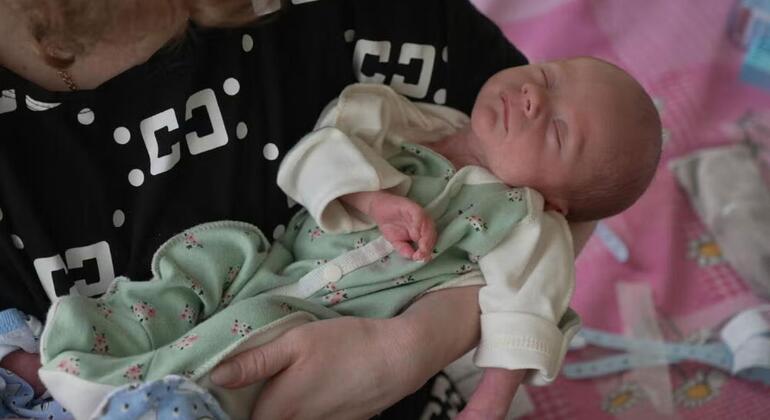
For Anastasia from the Donetsk region, giving birth meant leaving home and getting to a secure maternity ward in Kharkov, where she gave birth to two twin boys. “I was scared to give birth, but life goes on,” she says. “The doctors helped us at all stages.” The United Nations Population Fund (UNFPA), together with the European Union, supports such maternity wards in areas near the front line.
© UNFPA
“Nanny School”
A mother’s ability to work often depends on how child care is resolved. The International Labor Organization (ILO) Nanny School has trained 80 women to care for children under three years of age. Almost half of the school’s graduates found work soon after receiving the certificate. The program is small, but created with further growth in mind – it helps women leave the informal employment sector and find stability. In Krivoy Rog, after training as part of a project implemented by UN Women, Oksana drives a bus on one of the longest routes in the city. She previously worked as a cargo and baggage acceptance specialist and doubted that she would pass the selection.
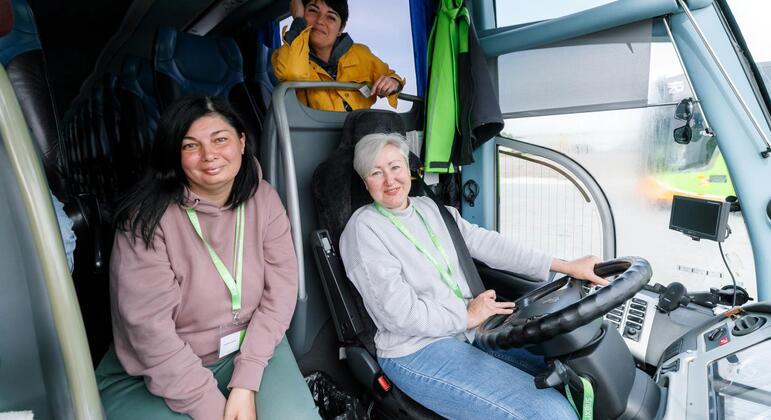
© UN Women “Many passengers still find it strange to see a woman driving a bus, but their appreciative reaction inspires me,” she says. – If you want to do something, don’t be afraid to try. I tried to change my life, and I succeeded.”
“My colleagues give me strength…”
The director of the hospital from Zaporozhye, Anna Makarenkova, treated the wounded throughout the war and received evacuees from Mariupol. Since the beginning of the full-scale invasion, more than 25 thousand patients have passed through it. They often had to be treated under fire and during blackouts. “My colleagues give me strength,” she says, “their tireless work and dedication to the common cause.” New off-grid power units installed by the United Nations Development Program (UNDP) with EU support now keep medical equipment running when the grid goes down.
© WHO
“Movement is life”
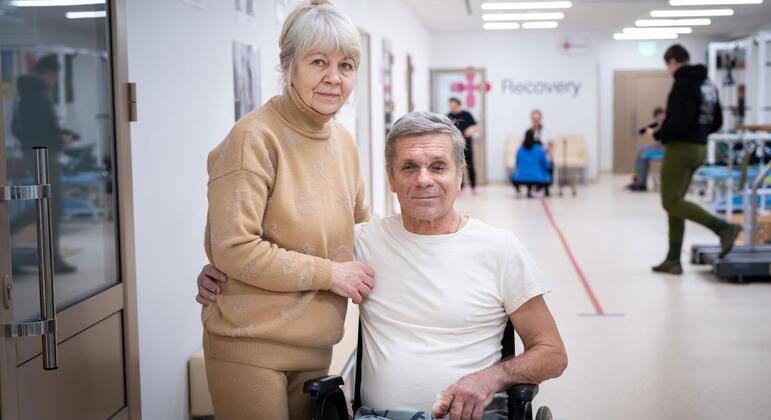
Alexander from Konstantinovka, Donetsk region, lost both legs and an eye as a result of a drone strike. His wife Natalya helped him through three months of operations and rehabilitation: Alexander learned to balance and transfer to a wheelchair on his own. “Movement is life,” says Natalya. – I think everything will be fine with us. We will live and rejoice. Life goes on no matter what.” The World Health Organization (WHO), with the support of the EU, has trained more than 300 rehabilitation specialists throughout Ukraine: they are engaged in fitting and adjusting wheelchairs; nine of them are now training others. None of this will give back to the people what the war took away. But this is what recovery looks like, step by step.