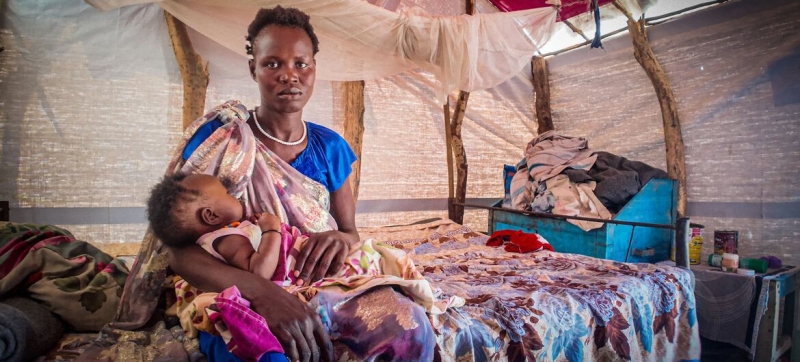

© OCHA/A. Ademigbuji Due to the violence, many South Sudanese have been forced to flee their homes and are living in displacement camps. UN Commission: South Sudan remains mired in violence and impunity ahead of elections Human rights
Following the 14th mission in the last decade to the youngest state on the planet, independent human rights activists expressed deep concern about the growing threats to civilians in South Sudan.
The UN Commission on Human Rights in South Sudan, established by the Human Rights Council, warned that outbreaks of violence, political tensions, restrictions on civil liberties, entrenched corruption and impunity continue to jeopardize both the safety of residents and the planned transition to democratic governance. society.
Human rights activists called on the authorities to take urgent measures to protect civilians, ensure the unhindered delivery of humanitarian aid and create conditions for inclusive political dialogue ahead of elections scheduled for December.
Violence continues
South Sudan gained independence from Sudan in July 2011. Less than three years later, civil war broke out in the country, sparked by a power struggle between President Salva Kiir and Vice President Riek Machar. Despite the signing of a peace agreement in 2018, fighting continues.
Commission Chair Yasmin Sooka visited Jonglei State and met with people affected by recent violence in the northern region.
She heard devastating stories of sexual violence, murder, forced flight and family separation. Some of the victims said they were unable to receive medical and psychological care, including those who needed emergency treatment.
“Visit after visit, we hear the stories of people suffering the consequences of violence, displacement and instability. They are paying the price for the failure of those in charge of politics and security to prevent these disasters,” she said.
“The scenario remains virtually unchanged, and the cost of human suffering continues to rise. The people of South Sudan deserve better than a life defined by cycles of violence and uncertainty,” added Sooka.
Humanitarian crisis grows
The Commission expressed serious concern about the killing of civilians, attacks on civilian targets, mass displacement of people, disruptions in the delivery of aid and growing risks to the lives of humanitarian workers.
Experts stressed that, amid enormous humanitarian needs and severe funding shortfalls, support for humanitarian operations and the activities of the United Nations Mission in South Sudan (UNMISS) is critical.
They also expressed extreme concern about the recent attack on a UNMISS patrol in Jonglei State, which left two peacekeepers dead and several others injured. The commission called for an investigation and for those responsible to be brought to justice.
Peace and “credible elections”
The visit comes at a critical juncture as the country prepares for its first elections since independence. The Commission has previously warned that holding a vote without basic security guarantees could trigger a new round of conflict and increase the risk of mass atrocities.
Commissioner Barney Afako noted that although the implementation of the 2018 Revitalized Peace Agreement has stalled, it remains the only foundation for building a democratic and peaceful South Sudan.
“The country is approaching elections, but political and civic space is shrinking, and many key conditions for a peaceful and transparent vote have not yet been created,” he said.
“The citizens of South Sudan have the right to vote. This right must be protected by ensuring that they can freely participate in the process, compete fairly and have any electoral disputes resolved through independent judicial institutions. It is precisely such guarantees that will prevent the elections from provoking violence and destabilization of the situation,” the expert added.
The Commission once again called for a genuine and comprehensive political dialogue. It needs to involve both “The Sudan People’s Liberation Movement – in Opposition” under the leadership of Machar, as well as splinter groups, civil society, women’s and youth organizations.
Corruption and impunity
Corruption remains one of the main obstacles to peace and security. The Commission has noted a lack of progress since the publication of its 2025 report, which detailed how systemic corruption and misappropriation of public funds infringe on the rights of citizens.
“All these years, the Commission has documented grave violations and consistently points to the same root problem – impunity. Very often, those responsible for atrocities escape accountability, and justice institutions remain weak and bloodless due to lack of resources,” concluded Commission member Carlos Castresana Fernandez.