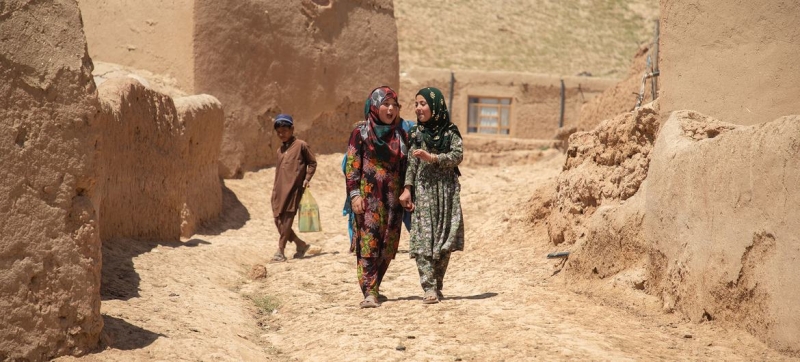

© UNICEF/A. Mirzad Afghanistan remains the only country in the world that systematically bans girls from secondary school and women from university. Five years of Taliban rule: exclusion of women and girls from public life in Afghanistan is becoming the new norm Women
Five years after the Taliban took power in August 2021, half of Afghanistan’s population is still systematically deprived of basic rights. According to new data from UN Women, more than 50 percent of the country’s residents surveyed due to severe restrictions, they only leave their homes once or twice a month.
Since 2021, the de facto authorities have adopted more than 100 decrees directed against women and girls. As noted by UN Women, over the past year, the exclusion of Afghan women from education, the labor market, public life, the justice system and health care has become even more large-scale.
The UN agency calls on the international community not to forget or ignore this unprecedented crisis.
Women and men are not equal before the law
Decisions of de facto authorities, issued in 2026, further limited women and girls’ access to justice and denied them equal legal status and protection.
Decree No. 12 abolishes the legal equality of men and women before the law, entrenching the husband’s authority over his wife and limiting women’s ability to seek justice. Additionally, spousal violence is only criminalized in cases of severe, visible bodily harm.
Decree No. 18 makes it much more difficult for women to end their marriages, while preserving men’s unilateral right to divorce. It also effectively enables child marriage, further undermining the rights and safety of girls.
Health Crisis
Forced isolation, often accompanied by an increased risk of violence, has a serious impact on women’s mental health. Lack of opportunities, limited access to physical activity, communication and emotional support have led to a mental health crisis, with women and girls increasingly reporting anxiety, hopelessness and despair.
According to a new report UN Women, seven in ten women today rate their mental health as “poor” or “very poor.”
Women are also finding it increasingly difficult to access health care due to restrictions on movement and a growing shortage of female doctors and nurses. At the same time, Afghanistan already has one of the highest maternal mortality rates in the world: in 2024, it was 638 cases per 100 thousand live births.
Women have disappeared from public life
In 2025, restrictions on movement and access to public spaces have become even stricter. According to UN Women, more than half of Afghan women now leave home no more than twice a month. Nearly three-quarters of those surveyed reported that they did not feel safe leaving home without a male guardian (mahram), and more than half avoided public places altogether, including markets and medical facilities. institutions.
At the same time, the system of supervision and control is expanding, which involves thousands of people with broad powers to detain Afghan citizens. This creates an atmosphere of fear and insecurity – especially for women and girls.
Ban on education
Afghanistan remains the only country in the world that systematically bans girls from secondary school and women from university. These are the girls who could become future teachers, doctors, nurses and midwives.
According to recent estimates, if current restrictions continue, by 2030 Afghanistan could lose more than 25 thousand female teachers and medical workers.
Humanitarian crisis
More than 10.7 million Afghan women and girls will require humanitarian assistance in 2026. Across the country, the health situation is deteriorating, hunger is rising, and access to services continues to decline.
Additional strain on Local communities and economies are shaped by the ongoing return of Afghans from Iran and Pakistan. Less than 20 percent of women returning from these countries manage to earn any income. This contributes to the increasing debt burden and food shortage among returnee families.
At the same time, restrictions imposed by the de facto authorities on the work of women in non-governmental organizations, along with cuts in international funding, make it even more difficult to provide assistance to Afghan women who especially need it. in the labor market of Afghanistan remains extremely low. Only seven percent of women are employed, compared to 84 percent of men.
The continued exclusion of women is projected to result in a cumulative economic loss of $920 million, or 5.8 percent of GDP, between 2024 and 2026 year.
Reduction in international funding
Nearly three-quarters of women’s organizations in Afghanistan reported funding cuts in 2025. More than half of them expect to be forced to suspend operations or close completely within the next year.
Women’s organizations remain one of the last sources of support for Afghan women. They provide vital services including protection from violence, medical care and mental health support.
UN Women continues to work across Afghanistan to support women in the country to stay safe, provide basic necessities for their families, receive emergency support, and participate in design and implementation humanitarian programmes.
UNESCO also continues to support Afghan girls and women by offering them alternative community-based opportunities through literacy and skills development programmes, as well as psychosocial support.
While these initiatives cannot replace formal schooling, they provide an opportunity for girls to continue their studies while restrictions remain in place. UNESCO and its partners strive to provide not only learning opportunities, but also safe spaces where students can gain confidence in themselves and their future. Currently, almost 70 thousand people receive support under such programs, 73 percent of them are women and girls.