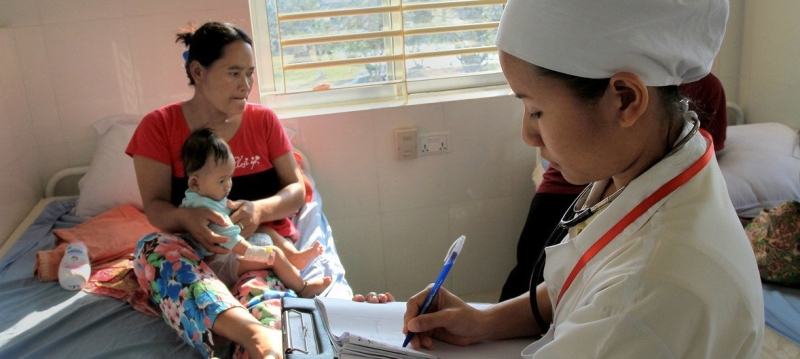

Photo by World Bank/Ch. Sokuntea Reductions in international funding and cuts to prevention programs are creating the conditions for a new surge in the HIV/AIDS epidemic. Global efforts to combat HIV are losing effectiveness amid the threat of a new surge in cases Health
In 2025, the world again missed its targets: 1.2 million people became infected with HIV and 570,000 died from AIDS-related illnesses. This is according to a report presented on Monday at the 26th International AIDS Conference in Rio de Janeiro.
The authors of a report by the Joint United Nations Program on HIV/AIDS (UNAIDS) warn that cuts in international funding and cuts to prevention programs are creating the conditions for a new surge in the epidemic. UNAIDS estimates that without urgent action, the number of new infections could exceed three million by 2030. Although new infections and deaths are at three-decade lows, the global response to HIV remains extremely weak. Progress is uneven, with three regions and 21 countries recording increases in new cases in 2025. About nine of the 41 million people living with HIV are not receiving treatment. Almost half of the infected children did not have access to antiretroviral therapy.
Scientific breakthrough and lack of equal access
Seven countries have achieved a nearly 80 percent reduction in new infections since 2010, and 11 countries have achieved the 95-95-95 target, which requires 95 percent of people living with HIV to know their status, 95 percent of those with diagnosed infection to receive antiretroviral therapy, and 95 percent of those on treatment to achieve viral suppression. Scientific advances are paving the way for a prevention revolution, with monthly and semi-annual injections now on the market and new drugs entering late-stage trials. “Scientific breakthroughs are giving us tools that previous generations could only dream of,” said UNAIDS Executive Director Winnie Byanyima. “But innovation without [equitable] access is not innovation but evidence of injustice.” According to the report, Brazil increased preventive drug coverage by 41 percent in just one year, Ethiopia and Uganda are expanding access through domestic and external funding, and South Africa is negotiating lower injection prices.
Crisis financing
Global development assistance fell by 23 percent in 2025, hitting health and HIV programs particularly hard. For many countries in Africa with high rates of infection, international funding provided up to 90 percent of the cost of the response. “The era of dependence on international aid is over,” Byanyima said, calling for urgent reform of the financial system and faster debt restructuring so that governments can invest in the health, education and future of their citizens. Funding for HIV programs fell by $1.5 billion, from $8.8 billion in 2024 year to 7.3 billion in 2025. Prevention, especially in sub-Saharan Africa, was heavily dependent on external funds, with 80 percent of funding coming from international aid. The cuts have already led to dramatic drops in treatment coverage, with services for key populations reduced by 50 to 85 percent in some countries. More than 55 countries have reported plans to increase domestic funding for HIV, including Belarus, Georgia, Moldova, Kazakhstan, Kyrgyzstan, Uzbekistan and Tajikistan. criminalization and threats to human rightsAt the same time, pressure on human rights is growing around the world. For the first time in years of monitoring, UNAIDS notes an increase in the criminalization of marginalized groups. Burkina Faso and Niger criminalized same-sex relationships in 2025, and Senegal toughened penalties this year. Today, 168 countries criminalize sex work, 152 criminalize possession of small amounts of drugs, 66 same-sex relationships, 14 transgenderism. “You cannot defeat AIDS by criminalizing people living with or at risk of HIV,” Byanyima said. “Human rights are a key element of a successful response to the epidemic.”
Chance for a Turnaround
Despite negative trends, in June 2026, 149 countries adopted a new Political Declaration on HIV and AIDS, aligned with the UNAIDS Strategy for 2026–2031. It includes providing treatment to 40 million people, access to prevention for 20 million, and reducing stigma, gender-based violence and restrictive laws. If these commitments are met, an additional 3.2 million new infections and 1.3 million deaths could be averted by 2030. “Despite enormous challenges, ending the AIDS epidemic is still within reach,” Byanima said. “The choice is clear: retreat and allow the epidemic to resurge, or mobilize, rebuild systems and achieve the ultimate goal of ending AIDS as a public health threat by 2030.”