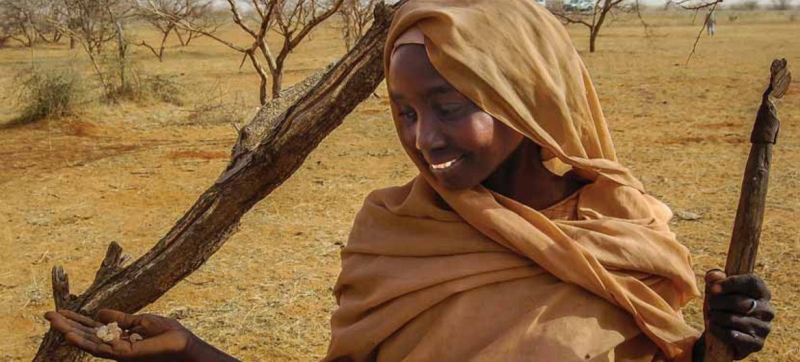

UNEP/G. Row Street Local residents in Sudan’s North Kordofan collect gum arabic. Gold, gum arabic and war: the hidden economy of conflict in Sudan Peace and Security
In addition to gold, the conflict in Sudan is also fueled by a lesser-known commodity – gum arabic (or gum arabic), used in the production of soft drinks, food, cosmetics and pharmaceuticals. On Wednesday, the UN Human Rights Office (OHCHR) reported that warring parties in Sudan are looting gum arabic supplies and changing trade routes to use the proceeds to continue the war.
“Sudan’s vast natural resources must be used for the benefit of its people. Unfortunately, today we are seeing exactly the opposite,” said OHCHR spokesperson Ravina Shamdasani. According to her, these riches only fuel conflict, causing pain and suffering on a huge scale.
Across the country, gum arabic is a source of income for approximately five million people. It is collected from the stems and branches of acacia trees in areas most affected by conflict, where serious violations of international humanitarian law and international human rights law have been recorded.
Tasty target
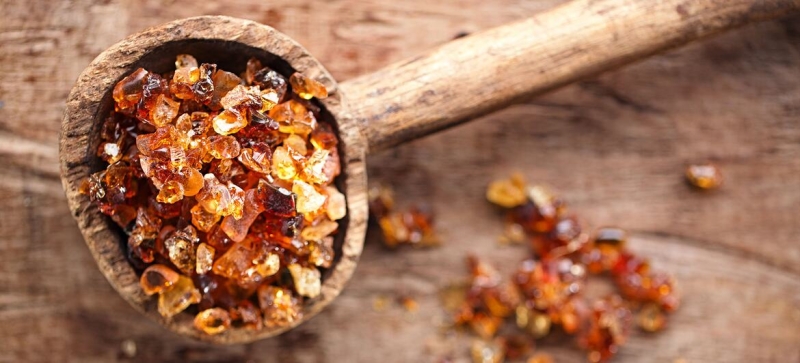
© Adobe Stock/E. Moiseeva Gum arabic is a water-soluble gum obtained from several types of acacia.
Before the outbreak of war in April 2023, the country accounted for 70 to 80 percent of the world’s raw gum arabic exports, with annual revenues reaching $183 million. This made the product a desirable target for the Rapid Reaction Force (RRF) paramilitary group, which is believed to have removed supplies of gum arabic from a major trade hub in Nuhud, Western Kordofan State, and transported them west to Darfur and Chad in May 2025.
Despite the conflict and the serious human rights risks identified by OHCHR, Sudan continues to provide a significant share of the world’s gum arabic supply.
“This militarized economy must be stopped, and the international community must pay much closer attention to the goods and trade routes that keep it afloat,” Shamdasani said. gum arabic, have faced threats, arbitrary detentions, looting and extortion from warring parties and their allies.
Traffickers using routes through RRF-controlled areas of Darfur and Kordofan in the west and center of the country face confiscation of goods, unofficial extortions and insecurity. On the more secure northern and eastern routes leading to Port Sudan and the Northern State, the situation is complicated by numerous checkpoints, as well as official and unofficial tolls and cross-border smuggling, the report notes.
Before the conflict, gum arabic production was concentrated in the region including Kordofan and Darfur, as well as the Blue Nile, White Nile, Sennar and Gedaref states, where the harvest provided an important source of off-season income for smallholders and semi-nomadic farmers. It is noted that significant quantities of gum arabic are transported by the SBR from Western Kordofan and part of Darfur in the direction of Souk el-Naam – the demilitarized zone on the border of Sudan and South Sudan, and from there – deep into South Sudan, to Juba and further to the port of Mombasa in Kenya.
Alternative routes have also emerged – in particular, through Chad to Cameroonian port of Douala and points where gum arabic is relabeled before export and processing.
UN Security Council-appointed experts have previously documented how looted gum arabic was transported along routes leading to Chad, the Central African Republic and South Sudan. According to them, the massive looting of gum arabic reserves by the RSF forces was used as a form of compensation for fighters in the absence of salaries: from January to June 2024, at least 3,700 tons were taken out. sale of gold. According to the authors of the OHCHR report, it is the main source of income for both the Sudanese Armed Forces and the RRF. 48.5 percent of all Sudanese exports.
However, according to reports and official statements, about 48 percent of the gold mined in Sudan in 2024 was smuggled out of the country, the OHCHR report notes. There are no records of gold mining in areas controlled by the SBR, but the precious metal likely continues to be mined and traded in the mining areas of Darfur and Kordofan, including Jebel Amir in northern Darfur, Songo in southern Darfur, and Talodi in Southern Kordofan.