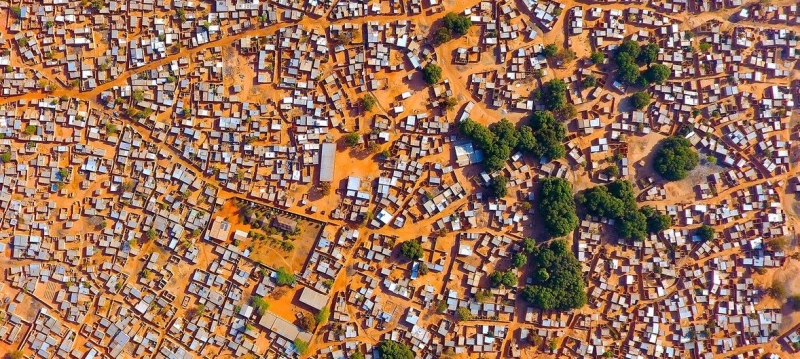

UN-Habitat/F. Vollmann Urban sprawl in Burkina Faso. Achieving the goal of creating resilient cities by 2030 is in jeopardy Sustainable Development Goals
If the global housing crisis is not addressed, the world will fail to achieve Sustainable Development Goal 11 on creating safe, resilient and sustainable cities. This is the conclusion reached by the authors of the Global Report on SDG-11, presented at the UN headquarters in New York on Thursday.
According to a report prepared by the United Nations Human Settlements Program (UN-Habitat) together with the UN Department of Economic and Social Affairs, the World Health Organization and other UN agencies, today more than three billion people around the world lack access to decent housing. Of these, over 1.1 billion live in informal settlements and slums.
UN-Habitat Executive Director Anaclaudia Rossbach stressed that providing people with decent housing and transforming slums is one of the main indicators of how well the world is moving towards achieving SDG 11.
“With only four years left until 2030, the implementation of the New Urban Agenda has already reached its equator. Gradual progress is not enough – action must be taken urgently,” she said.
Progress is still being made
The report’s authors note that, despite falling behind schedule, some progress has been made in recent years. Thus, in 126 countries, the proportion of urban residents with access to public transport, increased from 53.2 percent in 2020 to 61.5 percent in 2025.
In addition, in a number of countries, the rate of development of new urban areas has become more in line with population growth, indicating improved urban planning. The report’s authors also noted that in regions such as Australia, New Zealand and North Africa, more than 90 percent of the population has a solid waste collection system. progress
However, as the report highlights, these achievements are not enough: four out of ten urban residents still do not have access to public transport. At the same time, the cost of housing is rising. For example, half of the world’s households spend more than 30 percent of their income on rent.
Natural disasters remain an additional risk factor. On average, they affected about 123 million people each year between 2015 and 2024, and their frequency continues to increase.
Housing as a foundation for sustainable development
The report emphasizes that housing should not be seen as an outcome of sustainable development, but as the foundation of it. Investing in affordable housing, upgrading informal settlements and making cities more resilient will reduce poverty, improve public health, increase access to education, advance gender equality and strengthen climate resilience. The report also calls on countries to invest more heavily in statistics, geospatial data, and advanced monitoring technologies to better identify problems and allocate public resources more effectively.