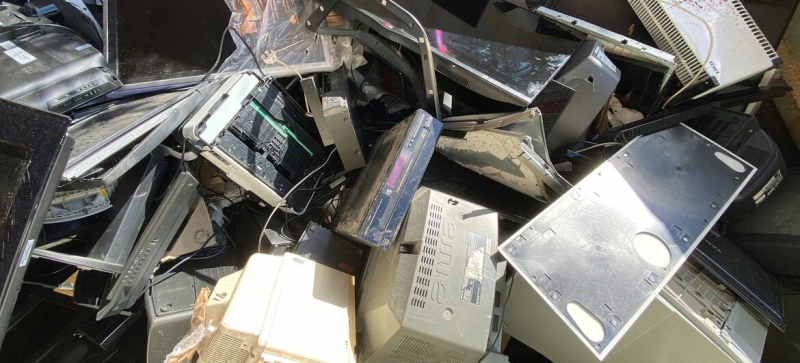

© Unsplash/J. Cameron By 2050, European recycling systems could recover between 4.1 and 5.7 million tonnes of critical raw materials annually. Waste could become one of the main sources of critical materials for Europe by 2050 Economic development
What is considered trash today can become one of the main sources of raw materials for the European economy in just a few decades. This is the conclusion reached by participants in the FutuRaM project, funded by the European Union. Scientists have for the first time compiled a detailed map of Europe’s so-called “urban mine” – vast reserves of valuable materials found in old electronics, used cars, batteries, wind turbines, construction debris and industrial waste.
New estimates of recycling potential
The study found that by 2050, European recycling systems could recover between 4.1 and 5.7 million tonnes of critical raw materials annually. This volume will be able to replace from 33 to 56 percent of primary raw materials, which will reduce the region’s dependence on imports and strengthen the supply of materials needed for the production of batteries, electric vehicles, as well as solar and wind energy.
One of the main achievements of the project was the development of a new assessment model that distinguishes between critical raw materials contained in waste and secondary raw materials that can be recovered after processing. This addresses one of the major shortcomings of previous studies and provides a more accurate picture of potential supply volumes.
Waste as a resource of the future
According to the study, approximately 5.2 million tons of critical raw materials contained in various products entered the European market in 2022. At the same time, 2.1 million tons of such materials ended up in waste, and only 1.4 million tons were recovered, which indicates a significant gap between the consumption and processing of resources. According to new forecasts, by 2050 the volume of critical materials entering the market will increase to 8.4-12.2 million tons per year. At the same time, the volume of waste containing such materials will increase to 5.2–6.4 million tons, and the potential volume of their recovery could reach 4.7–5.7 million tons annually, which reinforces the strategic importance of recycling development.
The significant climate benefits of recycling are also emphasized. The authors estimate that by 2050, the use of recycled materials could prevent up to 273 million tons of CO₂e emissions annually, making recycling an important tool for mitigating climate change.
Next steps to strengthen resource sustainability Europe
The report notes that to fully unlock the potential of Europe’s ‘urban mine’, further improvements in data collection systems, better assessment of realistic recycling opportunities and improved monitoring of waste exports are needed.
The databases and analytical tools developed under the project will be available for further use in in accordance with principles that ensure availability, interoperability and reuse of data. According to the study’s authors, they could form the basis for long-term monitoring of Europe’s raw material resources and strengthening the resilience of supply chains in the face of growing global uncertainty.