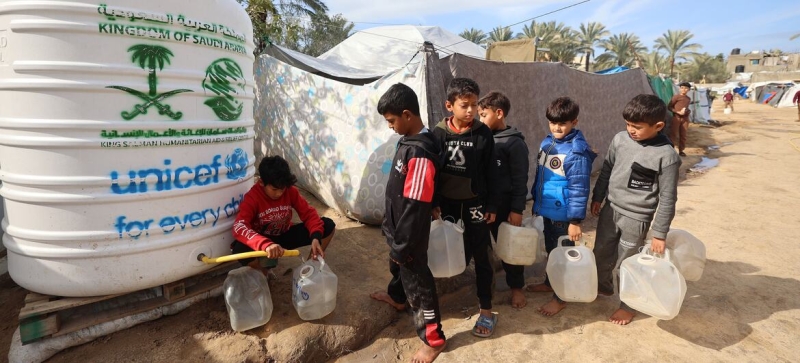

© UNICEF/R. Eleyan Children queue for water in the southern Gaza Strip. Gaza: Medicine supplies blocked amid growing risk of disease spread Humanitarian aid
The dire humanitarian situation in Gaza, where fighting continues, infectious diseases are spreading and displaced people are suffering from rodent infestations, is exacerbated by the blockage of vital medical supplies. UN agencies warned about this on Friday.
World Health Organization (WHO) representative for the occupied Palestinian territory, Renee van de Weerdt, who recently visited the enclave, told reporters in Geneva: “Nothing can prepare you for Gaza.”
“I thought it would be easier the second time. But that’s not true,” she said.
According to van de Weerdt, since the ceasefire between Israel and Hamas in October 2025, at least 880 people have been killed in the Strip and more than 2,600 have been injured.
“There may be less fire, but the violence continues,” she said. – We hear explosions nearby. Shooting continues every day.”
Hospitals are only partially operational
The WHO representative stressed that since the beginning of the year, about 22 attacks on medical facilities have been recorded in Gaza. However, only half of the hospitals are “partially functioning,” and none of them can be considered fully operational.
“One of the main reasons is the critical shortage of medical supplies,” she explained.
Equipment and medicine remain blocked on the other side of the sector’s borders, van de Weerdt said. Thus, in Jordan, ready-made elements of a prefabricated hospital have been waiting for several months for permission to enter Gaza.
“Laboratory equipment, reagents, oxygen concentrators, orthopedic products are not luxury items. These are necessary things, without which medical institutions and the entire health care system cannot work,” said a representative of the UN agency.
Risk of disease outbreaks
Without laboratory equipment and reagents, she emphasized, it is impossible to diagnose diseases and identify potential outbreaks of infections.
“We We are discussing hantavirus, Ebola virus. This is not luxury. This equipment is needed to save lives, detect diseases, warn the world of possible outbreaks and prevent loss of life,” said van de Weerdt.
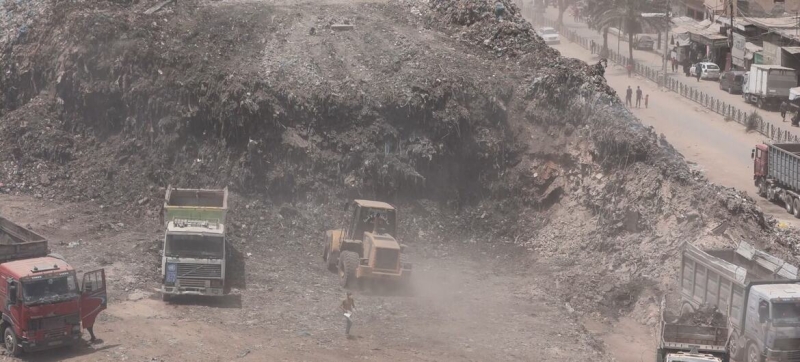
UN News Service Waste collection in Gaza City.
She added that in the face of catastrophic living conditions, overcrowding, rodent infestation, water shortages and lack of sanitation, such supplies are urgently needed.
Some goods, the WHO spokeswoman explained, are prohibited from import due to Israeli restrictions on so-called dual-use items, which are believed to have military uses. At the same time, she emphasized, such restrictions apply even to goods included in internationally recognized lists of vital medicines.
Prostheses and evacuations
As an example, she cited prosthetic limbs, which are considered dual-use goods. In the enclave, some 5,000 amputees are awaiting not only prosthetics, but also the corrective surgeries needed to fit them properly.
“It’s impossible to do such operations in Gaza right now,” van de Weerdt said. “So people are forced to wait to leave the sector.”
WHO is supporting the medical evacuation of thousands of patients to more than 30 countries.
Since the opening of the Rafah crossing in February, it has once again become a key route for the transfer of patients into Egypt. Through the Kerem Shalom crossing, which opens about once a week, patients are transported to Jordan “through a very long and complex route.”“Often only one or two family members can leave, and conditions for return do not always exist,” she said. “We continue to seek medical evacuation of patients who require highly specialized care. But we also want to ensure that more of the thousands and thousands of people who need specialized treatment in Gaza today can receive it in the strip itself.” restrictions have significantly complicated its work.
UNRWA Health Director Akihiro Seita said the agency conducted 4.5 million consultations in Gaza last year – about 40 percent of the total health care in the sector.
Renée van de Weerdt stressed: “No one can replace what it does UNRWA.”
Seita, in turn, noted that due to Israeli laws, the agency cannot deliver medicine to Gaza and the West Bank and has already lost two medical centers in East Jerusalem, which served about 11 thousand patients annually.
He also recalled that almost 400 people died during the war in Gaza agency employees. Thousands more continue to work in extremely difficult conditions.
“Many of our employees are still living in tents,” Seita said. “One of them told me words that I will never forget: ‘I feel like an orphan of the world. No one cares about us. We have been forgotten.'”