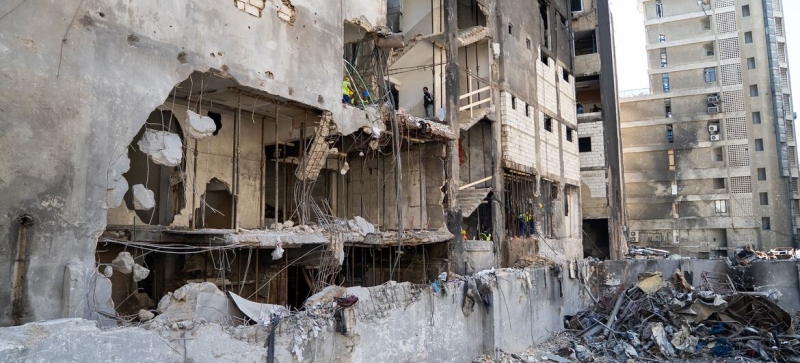

© UNICEF/F. Chufani Destroyed residential building in Beirut, Lebanon. Lebanon: sharp escalation of hostilities Peace and Security
The United Nations is “deeply concerned by the escalation of hostilities in Lebanon” and particularly by Israel’s strikes on southern Beirut today. This was announced by UN spokesman Stephane Dujarric, speaking at a briefing in New York on Thursday.
According to the UN, the Israeli air force carried out intensive strikes on targets in the area of responsibility of the UN Interim Force in Lebanon (UNIFIL), as well as in the area north of Litani and the Bekaa Valley. There are also reports of ground raids by the Israel Defense Forces (IDF) north of Litani.
“We once again call on everyone to maintain the ceasefire and stop any further attacks. Civilians and civilian infrastructure should never be targeted,” the Secretary General’s spokesman said.
Calls for de-escalation
UN Special Coordinator for Lebanon Jeanine Hennis-Plasschaert and UNIFIL Chief of Mission Diodato Abanyara continue contacts with the parties, seeking immediate de-escalation and compliance with the Security Council resolution 1701.
UNIFIL reports that over the past 24 hours, about 670 launches of shells and rockets were recorded – this is the maximum number since the ceasefire came into force on April 17. The mission also observed intense IDF ground and air activity: armored vehicle movements, extensive engineering work, and new airstrikes throughout the area of operations.
Mass Evacuations
Over the past 48 hours, Israeli military command has issued new evacuation orders south of the Zohrani River, which affected hundreds of thousands of residents. The collective centers for internally displaced persons in the cities of Tire and Saida are reportedly overcrowded and can no longer accommodate people.
The UN Office for the Coordination of Humanitarian Affairs (OCHA) has expressed grave concern that families are once again fleeing their homes. “People are forced to flee again, and this is happening in conditions that are intolerable for any person,” OCHA said.