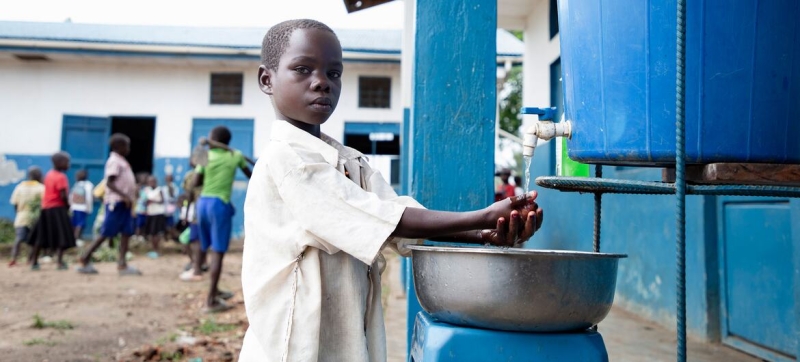

© UNICEF/K. Ndomba A boy washes his hands at a UNICEF-supported primary school in the Ituri province of the Democratic Republic of Congo. WHO: the risk of Ebola spreading in DR Congo is high, but the scale of the outbreak does not reach pandemic levels Health
Although the Ebola outbreak in the Democratic Republic of the Congo (DRC) and Uganda does not meet the criteria of a global pandemic, the risk of national and regional spread of the disease remains high. The Director General of the World Health Organization (WHO), Tedros Adhanom Ghebreyesus, announced this on Wednesday.
Speaking in Geneva, the WHO chief said that in addition to several dozen confirmed cases of infection with the Bundibugyo strain, there were almost 600 suspected cases and 139 deaths that were believed to be related to the disease caused by the strain.
“We expect the numbers to continue to rise. We must take into account that the virus had been circulating for a long time before the outbreak was identified,” Tedros said.
According to him, two cases of infection have also been confirmed in the Ugandan capital Kampala.
No vaccine or treatment yet
The head of WHO recalled that the Bundibugyo virus is extremely rare and was last detected in 2007. There is currently no vaccine or treatment for it.
However, WHO officials are already working with community leaders in Ituri province, the epicenter of the outbreak, to prevent further spread of the infection. Years of armed violence have left residents of eastern DRC, including local health workers, in an extremely vulnerable situation.
There are more than two million internally displaced people in the outbreak-affected provinces of Ituri and North Kivu, according to the United Nations High Commissioner for Refugees (UNHCR). The capital of North Kivu, Goma, remains under the control of the rebel group M23.
WHO’s acting regional emergencies director, Marie Roseline Belizaire, said the organization’s permanent team in Goma remains on the ground and continues to support the population.
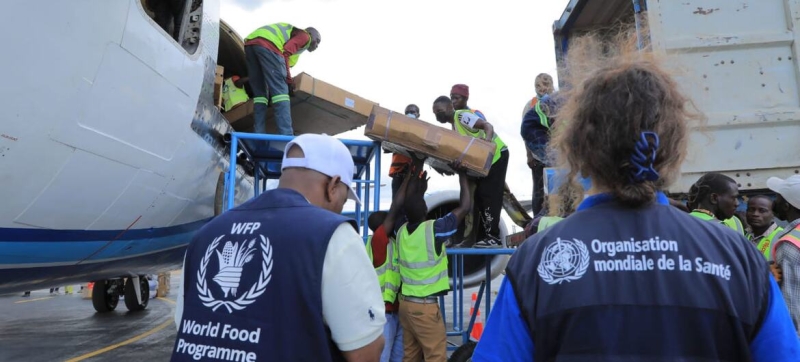
© WHO Aid is being delivered to Ituri to strengthen the response to the Ebola outbreak.
Difficulties in detecting the disease
In April, the number of civilian deaths in the region again sharply increased. WHO Regional Director for Africa Mohamed Yacoub Janabi noted that identifying Ebola outbreaks in Ituri province remains “extremely challenging.”
He said effective surveillance depends on timely communication from local communities, health care facilities and laboratory confirmation of cases.
“In remote or insecure areas, it may take time before cases are identified,” he said.
Janabi explained that the Bundibugyo virus was only identified after samples were shipped overseas 1,700 kilometers – to the capital of the country, Kinshasa.
WHO specialist on viral hemorrhagic fevers Anais Legan emphasized that the organization began supporting the authorities of the DRC as soon as it received information about the threat.
“Investigations are ongoing to determine when and where exactly this outbreak began. Given its scale, we estimate that it probably started several months ago. But our top priority now is to break the chain of transmission,” she said.
Public health emergency of international concern
The WHO Emergency Committee met in Geneva on Tuesday and confirmed that the Ebola outbreak constitutes a public health emergency of international concern, but is not pandemic.
Committee Chair Professor Lucille Bloomberg recalled that the Ebola virus is transmitted only through direct contact with the blood or body fluids of an infected person.
“This is not casual contact or airborne transmission. This is important to understand. This is why travel restrictions are not supported by the recommendations of the International Health Regulations,” Professor Bloomberg emphasized.
She also noted that the fight against the outbreak is complicated by the ongoing humanitarian crisis, security concerns, high population mobility and the proximity of multiple borders.
“Additional resources, personnel…and research and development of tools are urgently needed countermeasures,” she said, calling for strengthened epidemiological surveillance and identification of potential contacts of infected people.