
© Unsplash/S. Weisser The rise in popularity of plastic packaging is fueling a growing pollution problem: so far, no more than 10 percent of the world’s plastic waste is recycled. Experts call for global standards in plastic recycling Climate and Environment
Governments and industries around the world are banking on recycled plastic as a way to curb the global waste crisis. But turning old plastic into new food packaging comes with its own challenges: ensuring the material is safe enough for direct food contact.
A new report from the UN Food and Agriculture Organization (FAO) warns that recycled plastic and alternative packaging materials can indeed help reduce waste, but only when recycling systems are carefully designed to prevent harmful chemicals from migrating into food.
“Plastic waste is a growing global problem. Better and more efficient processing is a fundamental part of the solution, stressed Vittorio Fattori, FAO food quality and safety specialist. “At the same time, we must make sure that by trying to solve one problem in one area, we do not create new problems in another.”
Food packaging plays a key role in modern food systems: it helps maintain quality, extend shelf life and reduce food loss and waste. The market is growing rapidly, from $505.27 billion in 2024 to a projected $815.51 billion in 2030.
The growing popularity of plastic packaging is fueling a growing pollution problem: so far, no more than 10 percent of plastics are recycled worldwide waste.
Difficulties of the recycling process
Unlike many other processed products, food packaging must meet strict chemical safety standards. Plastic containers and wrappers contain thousands of substances used in the manufacturing process. During recycling, additional contaminants may be introduced into the waste stream—due to improper sorting, environmental exposure, or previous consumer use.
Research shows that recycled plastic can contain substances such as metals, flame retardants, phthalates and persistent organic pollutants—sometimes in higher concentrations than virgin plastic plastic.
At the same time, experts emphasize that recycled plastic approved for contact with food can be as safe as new if it undergoes thorough cleaning, decontamination and regulatory testing. For example, in the European Union, permitted recycled materials must meet the same standards as virgin plastic.
“Applying circular economy principles is important, it is a fundamental issue. But it needs to be done correctly,” said Fattori.
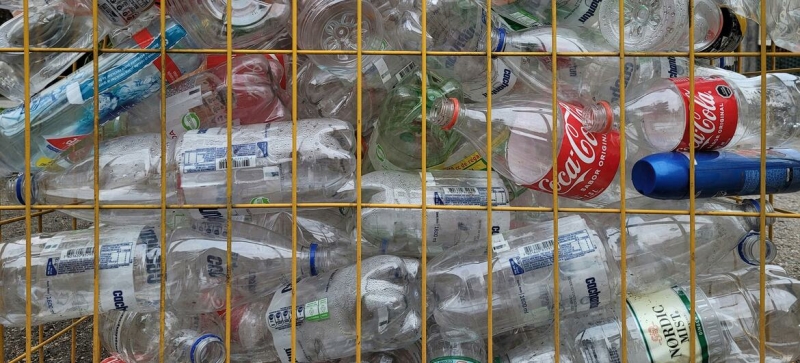
© Unsplash/K. Hotaru Recycled plastic approved for food contact can be as safe as new if it undergoes thorough cleaning, decontamination and regulatory testing.
New materials, new questions
The report also includes analysis of alternative packaging materials, including bioplastics, plant fibers and protein-based materials, which are increasingly being promoted as greener substitutes for traditional plastics.
Bio-based does not always mean biodegradable. Some materials made from natural products, such as corn or sugar cane, are chemically similar to plastics made from fossil fuels, while others are designed to degrade only under certain conditions.
The report’s authors warn that plant-based packaging may carry risks associated with its agricultural origins, including pesticide residues, natural toxins, mycotoxins and heavy metals. Protein-based materials can also promote the migration of allergens such as gluten into food.
Like traditional plastics, many alternatives use chemical additives to improve properties.
The conclusion is clear: alternatives can help reduce plastic waste, but rigorous evaluation is still needed safety.
Microplastics have not been studied enough
The report also addresses growing public concern about microplastics and nanoplastics found in food and drink. Scientists have identified tiny plastic particles in human blood, lungs, breast milk and placenta. Despite public concern, authorities still lack reliable and harmonized methods to detect and measure these particles, making it difficult to determine health risks.
The paper notes that recycling facilities themselves can contribute to microplastic contamination of products, especially during mechanical recycling, where plastic is broken into small fragments.
“Get Started well-controlled processing processes, including cleaning and removal of chemical contaminants,” said Fattori.
Towards harmonized international standards
The report’s findings are expected to help inform ongoing discussions within the Codex Alimentarius Commission, the international food standards body established by FAO and World Health Organization.
The report notes that countries are taking different regulatory approaches to recycled plastics, posing potential trade and consumer protection issues. Harmonized global standards will help ensure reliable, science-based risk assessments while supporting countries’ efforts to reduce plastic waste, according to the study.