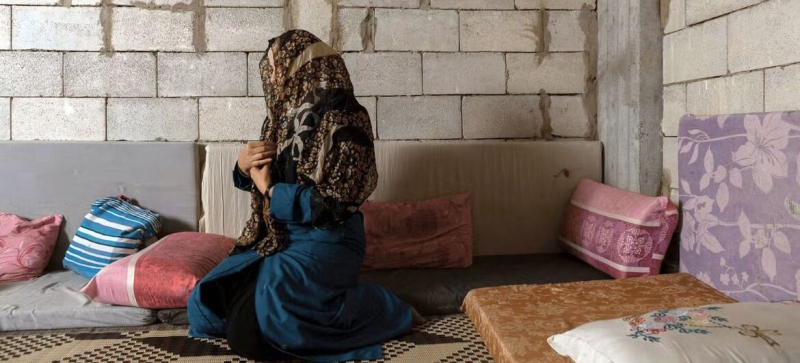

© UNFPA/David Brunetti A Syrian woman forced to flee her home. UN: new mass graves found in Syria Human rights
The Office of the United Nations High Commissioner for Human Rights (OHCHR) has documented evidence of serious abuses in Syria, including massacres, enforced disappearances and arbitrary detention. The press secretary of the OHCHR reported this at a briefing in Geneva on Tuesday.
He said a UN mission had just completed a visit to Hasakah province in northeastern Syria, where they had collected evidence of both past and ongoing human rights violations.
Mass graves
Numerous cases of killings, forced disappearances, arbitrary detentions and deportations of prisoners have been reported. During the five-day visit, UN officials also received information about the discovery of three mass graves in the region, including one at a former detention center run by the Syrian Democratic Forces (SDF).
The UN team met with families of the missing, including women and children. Relatives report that their loved ones have disappeared after being detained by the SDF or international coalition forces. According to the coalition, in January 2026, about 7 thousand prisoners were transferred to Iraq, about half of them Syrians. The UN expresses concern that many of them are deprived of the opportunity to communicate with their families and access to legal assistance.
Al-Khitan stressed that procedural guarantees must be respected in all circumstances, including the prohibition on deportation to a country where a person’s life or freedom is at risk, the right to a fair trial and the protection of the rights of detainees.
Situations in southern Syria
60~p>UN also expresses growing concern about the situation in southern Syria, where expanding operations by Israeli forces in control of these areas pose serious risks to civilians. Violations of the right to privacy and family life are reported, as well as significant damage to livelihoods, especially in agricultural areas.
Intimidation reported arbitrary detentions, interrogations, searches and restrictions on movement. In Quneitra governorate, roadblocks have reportedly been set up, homes have been searched, and civilians have been arrested.
In February, Israeli forces reportedly sprayed chemicals on farmland and restricted farmers’ access to their farmland, as well as striking farmland.
At least 250 people, including children, have been detained in southern Syria since the fall of the previous government, according to Syrian authorities. About 50 of them remain in custody, some have been transferred to prisons in the Israeli-occupied Golan Heights. The UN stresses that this raises serious concerns about possible cases of arbitrary detentions and enforced disappearances, as information about the legal status and whereabouts of some detainees absent.
Expansion of settlements
Of additional concern is Israel’s decision to expand settlements in the occupied Syrian Golan. According to available data, about 3 thousand Israeli families are planned to be resettled there. The UN Human Rights Office emphasizes that such activities violate international humanitarian law. those responsible are held accountable. He also demanded a halt to settlement expansion.
Assad’s trial and the question of accountability
The UN also noted the start of the trial in Damascus of former Syrian President Bashar al-Assad and representatives of his regime, which is being held largely in absentia. The Office considers this an important first step towards justice for hundreds of thousands victims, but emphasize the need to respect international human rights standards.
Al-Hitan also noted that Assad, his brother Maher and other defendants should eventually be tried in person. An important step he he called the arrest of former regime official Amjad Youssef, involved in massacre in the Tadamon area of Damascus in 2013.
The UN representative stressed that all parties must be held accountable. involved in serious human rights violations in Syria, both before and during the conflict.