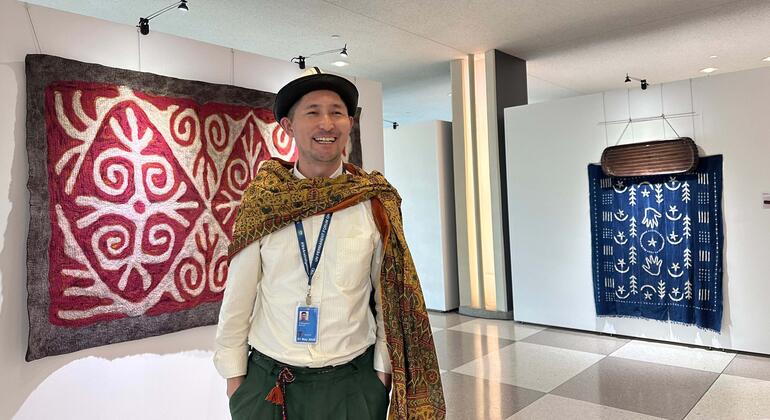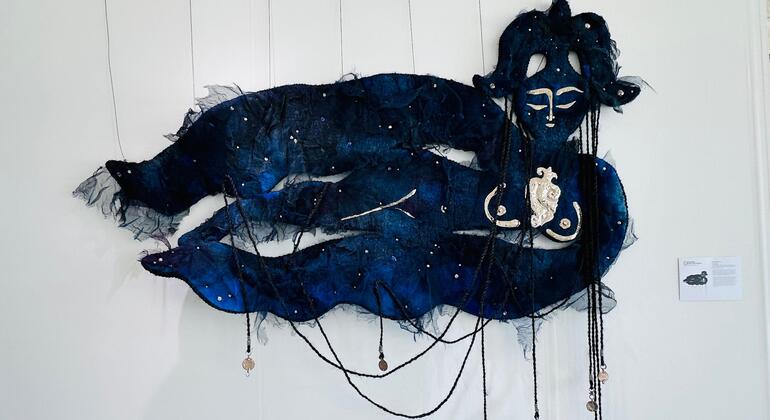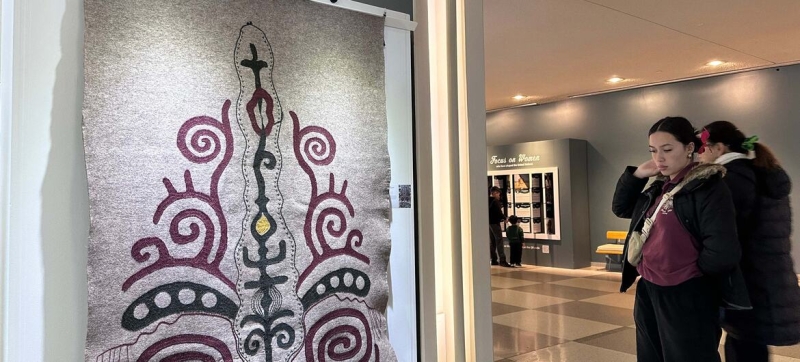

The exhibition “Walking with the Earth” brings together works from Central and Inner Asia, as well as Africa. An exhibition of the culture and traditions of nomadic peoples opened at the UN Culture and Education
An exhibition dedicated to nomadic and traditional communities, their cultural heritage and role in sustainable development has opened at the UN headquarters. The exhibition “Walking with the Earth” brings together works from Central and Inner Asia, as well as Africa. The authors sought to demonstrate how ancient practices and materials continue to live on and be reinterpreted in the modern world.
The exhibition is presented in the context of the UN’s international agenda, including the International Year of Pastures and Grazing Livestock, declared by the Food and Agriculture Organization (FAO). As noted by the UN, pastures occupy almost half of the Earth’s land mass and provide livelihoods and food security for hundreds of millions of people. At the same time, it is the indigenous and nomadic peoples who remain the guardians of a significant part of the planet’s biodiversity.
One of the curators of the exhibition is designer from Kyrgyzstan Mirrahim Oposh Toktogulov. “This exhibition is being implemented within the framework of our international program “Bashat” (“Source”). It supports the creative initiatives of youth and traditional communities,” he told UN News Service. According to the curator, the exhibition presents both ethnographic objects and their modern interpretations. Among the exhibits are traditional felt carpets shyrdak, colorful ala-kiyiz, as well as textiles and accessories that are finding new uses today. “Previously, many things were used in everyday life – like carpets or elements of a yurt. Today we are showing that they can also be used as interior items – for example, panels on the wall, capes or decorative elements,” explains Toktogulov. peoples were literally born on felt: newborns were wrapped in white felt, rulers were raised on it and people were seen off on their last journey,” says the curator, emphasizing the sacred significance of the material. At the same time, the ornaments retain their symbolic meaning and reflect the worldview of peoples. “Patterns convey everyday life, worldview and values. For example, there are ornaments associated with the image of a protector, a hero,” he notes. The exhibition not only introduces visitors to objects of art, but also reveals the philosophy of nomadic culture, based on flexibility and harmony with nature. “Nomadic culture is flexibility. Readiness for any changes, openness to the world. This is acceptance, respect for nature, for people and for oneself,” explains Toktogulov. According to him, these values are reflected today – in social relations, respect for elders, and respect for the environment. Ecological consciousness, he emphasizes, is formed not so much through prohibitions as through traditional ethics and cultural norms. coexistence. The UN emphasizes that such initiatives are consistent with the goals set within the Decade for Ecosystem Restoration and the Sustainable Development Goals. The exhibition demonstrates that knowledge passed down from generation to generation remains in demand today – helping to rethink man’s relationship with nature and society.