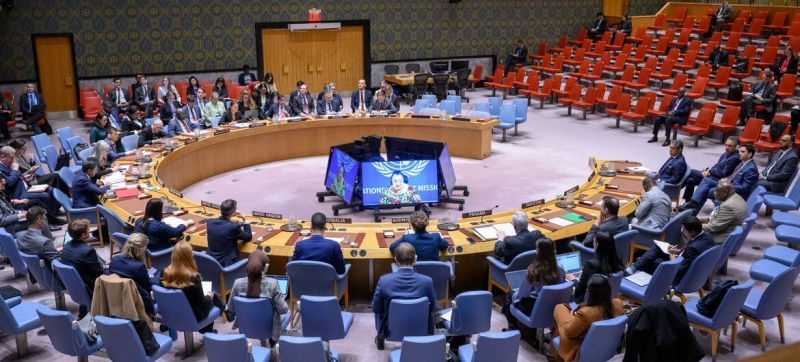

Security Council meeting on the situation in Libya. UN Special Representative: There is no progress in a political settlement in Libya Peace and Security
There has been no progress in implementing the political roadmap in Libya. Special Representative of the UN Secretary-General for Libya Hannah Tetteh stated this at a meeting of the UN Security Council on Wednesday.
She stressed that some Libyan actors continue to ignore public expectations and create parallel structures that undermine efforts to restore state institutions and political governance based on democratic legitimacy.
“Business as usual under current circumstances inadvertently legitimizes the status quo rather than stimulating serious negotiations and encouraging the necessary compromises to reunite the country,” the Special Representative said.
Tetteh paid particular attention to the work of the Structured Dialogue, which is preparing recommendations in four areas: security, governance, economics, national reconciliation and human rights. These recommendations should form the basis of a national strategy and create conditions for the holding of general elections.
The economic situation in the country is described as critical due to rising prices, fuel shortages and uncontrolled government spending. On April 11, an agreement was signed on a single expenditure system for 2026, which the UN regards as a positive step towards fiscal cohesion.
Libya’s resources are further strained by the ongoing conflict in Sudan, which has created an influx of refugees that require significant international funding.
The security situation remains fragile despite the 2020 ceasefire agreement. In the west, clashes continue between armed groups over control of territories. However, Tetteh welcomed the start of joint military exercises between the east and west of Libya in Sirte on April 14, calling it an important step towards unification of the army. The presence of two parallel Supreme Judicial Councils making unilateral decisions deepens institutional fragmentation. The UN warns that lack of progress on this issue could have extremely negative consequences for the integrity of the country and dispute resolution mechanisms in future elections.
The human rights situation also remains difficult, with reports of arbitrary detentions and intimidation. There has been progress in securing access to prisons for UN Mission in Libya staff and the release of some detainees.
“I call on the Security Council to use its collective influence to ensure that Libyan leaders fulfill their commitments to unite institutions and work towards national elections,” she concluded her speech.