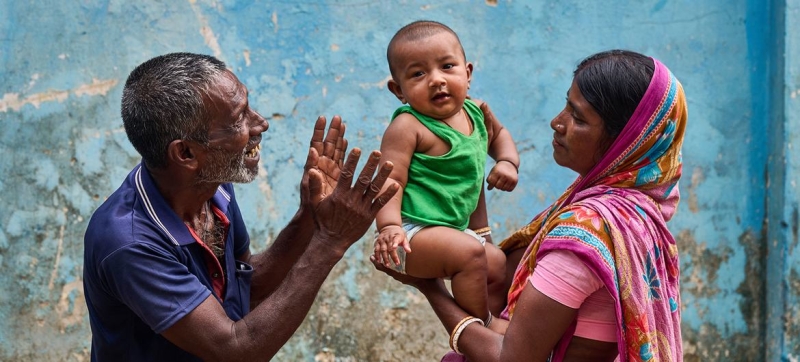

In many countries and regions of the world, the birth rate is declining and the population is rapidly aging. Beyond the Demographic Panic: Why It’s Time to Think Differently About Fertility, Migration, and Aging Economic development
Most people have only one child, although ideally they would like two. What is this connected with? With this question, Michael Herrmann, an expert at the United Nations Population Fund (UNFPA), begins a conversation about the main demographic problems of our time.
Statistics confirm: 20 percent of adults in the world cannot have as many children as they planned. And while the world’s population is approaching the eight billion mark, Herrmann calls on the country’s authorities to change tactics. In his opinion, the response to low birth rates should not be panic or pressure on citizens, but real support for their right to choose.
The expert shared his thoughts with the UN News Service on the sidelines of the 59th session of the Commission on Population and Development, which takes place in New York on April 13-17. Herrmann’s main thesis: demographic shifts are not a catastrophe, but a new reality, and it should not be feared, but taken into account in long-term planning.
What is demographic flexibility?
The UN is increasingly talking about “demographic flexibility”. The idea behind the term is simple.
“The idea is to help countries plan for, adapt to, and benefit from demographic change if possible, and thereby create societies that are resilient, able to withstand, and even thrive in the face of demographic change,” says Herrmann.
The expert is confident that everyone benefits from this approach. And this applies not only to countries with aging populations. Countries in earlier stages of demographic transition may also benefit. Some of them can receive a “demographic bonus” due to the growth of the labor force, while others – due to investments in technology, education and labor productivity.
What to do when there are not enough workers
When the number of working-age people decreases, authorities often choose the simplest route – raising the retirement age. However, Herrmann considers this method too “clumsy.”
“People are simply told: “Good news – now everyone will work 10 years longer.” Of course, this does not inspire anyone,” the expert notes.Migration is another important but often misunderstood driver of demographic change. In some countries, large parts of the population are moving abroad.
Herrmann cites the example of the Western Balkans, which is estimated to have lost 20 to 30 percent of its population since the 1990s. At the same time, Germany was able to avoid depopulation thanks to the influx of migrants.

Michael Herrmann, UNFPA Economics and Demography Advisor.
But the expert warns: migration is not salvation if this issue is not addressed and approached strategically. If you don’t use the potential of newcomers, don’t take into account their education and don’t help them learn the language, they will simply join the ranks of the unemployed, which will only increase social tension.
Why cash payments for children are ineffective
In an attempt to increase fertility, many governments are introducing lump-sum payments for children or setting targets. Herrmann puts it bluntly: “It doesn’t help. Many countries are literally “flooding” the problem with money, but this does not have a long-term effect.”
To understand the causes of the problem, UNFPA is currently conducting a survey among young people in 70 countries. The results show that young people are held back by factors such as high prices for housing and education, uncertainty about the future, and worries related to the political situation or the environment. them.
Human rights instead of directives
The expert also warns the authorities of countries against attempts to impose birth rates by decrees. Often these policies are accompanied by calls to “put women back in the kitchen,” eliminating sex education classes in schools or restricting abortion rights. However, this only harms the situation.
A bottom-up approach, where the government works with the population and respects human rights, can be much more effective. Authorities, Herrmann emphasizes, should ask people what exactly is preventing them from having a child and formulate policies accordingly: for example, developing a network of affordable kindergartens or helping young families with housing.
An aging population is not a death sentence for the economy
Herrmann does not deny that an aging population creates additional stress on pension funds and health care systems. However, the expert emphasizes that the inevitable economic collapse in such a situation is a myth. Spending on older people can also be a boost to the economy: it creates demand for services and new jobs in medicine.
The main problem is the shrinking working-age population. And it needs to be solved through the involvement of those who were previously left “overboard”: migrants, women and youth, as well as through the introduction of new technologies and investments in “human capital”.
This will overcome demographic difficulties and build an inclusive future, Herrmann emphasizes.