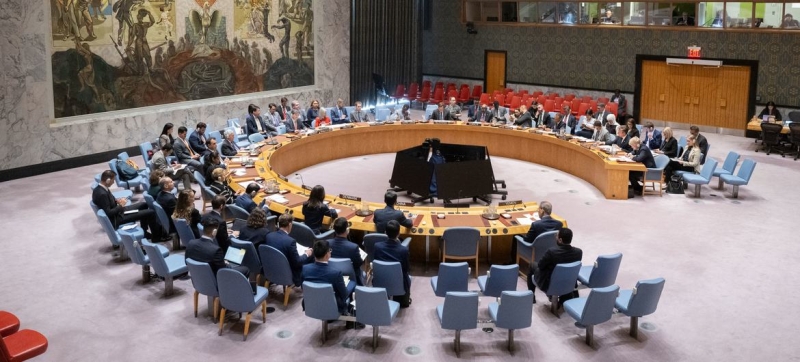

UN Security Council meeting on Yemen. Yemen: Regional tensions could derail fragile progress towards peace Peace and Security
UN Special Envoy for Yemen Hans Grundberg warned Security Council members on Tuesday that Yemen is at a dangerous crossroads and tensions in the region could derail fragile progress toward peace. Against the backdrop of rising fuel prices and lack of funding, the humanitarian situation has become even more complicated.
In his speech, Grundberg noted that Yemen has so far managed to avoid being directly drawn into the wider conflict in the Middle East, despite recent attacks by Ansar Allah militants, but the risks remain high. The special envoy called on all parties to respect the ceasefire between the United States and Iran, and Yemeni forces to refrain from actions that could lead to escalation.
After more than a decade of conflict, Yemen is not able to withstand new shocks, the UN warns. Grundberg recalled that the country is weakened by an economic crisis, political divisions and a broken public service system. Despite some positive steps, including the approval of a state budget for the first time in years, ordinary Yemenis continue to face rising prices, delayed wages and shortages of basic services.
“Relative calm”
The special envoy emphasized that the economic situation is directly related to the peace process. Work is underway to reduce tensions and strengthen cooperation between the parties, but progress remains fragile. The relative calm that has prevailed since the 2022 truce could easily be disrupted, with reports of troop movements and ongoing violence against civilians. Grundberg also pointed to ongoing negotiations for the release of those detained in connection with the conflict, calling such cases “a rare sign that dialogue is still possible.” he expressed serious concern about the fate of dozens of UN and humanitarian workers detained by Ansar Allah and called for their immediate release. “The people need a solution for Yemen,” he stressed, noting that only an inclusive political process can lead to sustainable peace.
60~h2>Humanitarian situation
The humanitarian picture presented to the Security Council was no less alarming. Eden Wosornu, director of crisis response at the UN Office for the Coordination of Humanitarian Affairs, speaking on behalf of the UN humanitarian chief, said millions of Yemenis were barely surviving after years of war.
More than 22 million people – almost half the country’s population – are in need of humanitarian assistance, and this number continues to grow. More than 18 million face severe food shortages. Many families are forced to skip meals every day, with women and children suffering first.
Some 2.2 million children under five live with acute malnutrition, and more than a million pregnant and breastfeeding women are at risk. For many, the consequences are irreversible or fatal.
Nearly half of Yemen’s health facilities are not fully functioning, leaving millions of people unable to get essential health care. aid. Diseases such as cholera, measles and diphtheria are on the rise.
Vosornu also warned that humanitarian faces serious obstacles in their work. Access restrictions, detentions and seizures of property are making it difficult to deliver aid. Meanwhile, rising fuel and food prices, partly driven by regional instability, are making the situation even worse.
Despite the difficulties, humanitarian organizations continue to work, but lack of funding remains a major problem. Last year, the humanitarian plan was less than a third funded, and the gap between needs and available resources is increasing.
Vosornu called on the Security Council to focus on three key tasks: achieving the release of detained UN staff, ensuring safe and unhindered access for the delivery of humanitarian aid, and urgently increasing funding.
Both speakers stressed that without peace there will only be a crisis in Yemen deepen. Amid ongoing regional tensions, the window of opportunity for a political solution remains open, but is rapidly narrowing.