Watch on UN Web TV

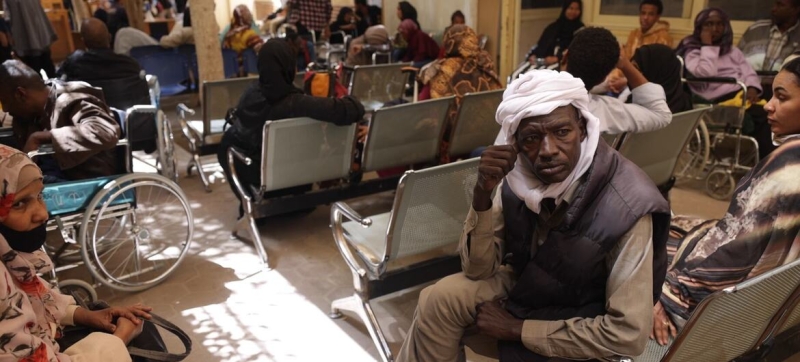
© UNHCR Sudanese refugees at the UNHCR registration center. UN warns of catastrophic consequences of war in Sudan Peace and Security
Due to the ongoing armed conflict, the humanitarian situation in Sudan is rapidly deteriorating, and the number of victims could be in the hundreds of thousands. This was stated by UN Under-Secretary-General for Political and Peacebuilding Affairs Rosemary DiCarlo, speaking at a meeting of the Security Council on Monday.
“The consequences of this conflict will be felt for a very long time, and their scale is shocking,” she emphasized.
Sudan’s civilian population is facing one of the worst humanitarian crises in the world, according to the deputy UN chief. People are regularly targeted by drone attacks in markets, schools, gas stations and water supplies, with attacks carried out by both sides in the conflict.
Burden of War
About 13 million Sudanese have been forced to flee their homes. The Office of the UN High Commissioner for Human Rights recorded about 1,400 civilian deaths from January to June this year. Approximately 1,100 of this number were killed in drone strikes.
It is impossible to confirm the actual death toll due to access difficulties. According to DiCarlo, “it’s probably in the hundreds of thousands.” “Brutal massacres and atrocities, abductions of women and girls, and mass rape have become daily occurrences,” she warned.
Human rights activists were able to document 838 victims of sexual violence in Sudan, but these figures may be “just the tip of the iceberg,” DiCarlo noted.
The United Nations, according to the Deputy Secretary General, continues to support the efforts of the United States, Saudi Arabia, Egypt and the United Arab Emirates to achieve a humanitarian truce in Sudan. To advance a viable political settlement, the UN is also working with the African Union, the League of Arab States, the European Union and other partners.
“Our goal is to build trust in the political process and create the conditions for inclusive dialogue led by the Sudanese themselves, to create a shared vision for the future of the country,” DiCarlo emphasized.
Both sides in the conflict, she said, must make concrete commitments to release prisoners, especially members of vulnerable groups such as women and children. “The [UN Secretary-General’s] personal envoy will soon visit Sudan to facilitate these negotiations,” the Under-Secretary-General said.
60~h2>Humanitarian Situation
“More than two-thirds of Sudan’s population is in desperate need of assistance,” the Under-Secretary-General for Humanitarian Affairs said during a video conference and UN Emergency Relief Coordinator Tom Fletcher.
Fighting in Northern Kordofan since mid-July has forced 15,000 families to flee to El Obeid, the state capital, putting additional pressure on resettlement sites and support services that are already stretched to capacity.
Fletcher noted that the towns of Dilling and Kadugli in Southern Kordofan are among the UN’s key priorities. In Western Kordofan, the epicenter of the recent cholera outbreak, the presence of humanitarian organizations remains “extremely limited.” Escalating violence in the Nuba Mountains of Southern Kordofan is cutting off local communities from aid in a region already plagued by chronic food insecurity.
Fighting and drone strikes are severely limiting humanitarian access in northwest North Darfur, according to Fletcher. Hundreds of thousands of people who fled the atrocities in El Fasher last year remain in desperate need of help.
“Despite these challenges, humanitarian organizations continue to work. By mid-year, we had reached nearly 11 million people with at least one form of assistance,” Fletcher said.
60~p>The UN Office for the Coordination of Humanitarian Affairs, he said, is well on track to reach its goal of providing food assistance to 11.4 million Sudanese, but is behind targets in the areas of education, health, housing and water supplies.
Sudan’s problem, Fletcher emphasized, is not a lack of understanding of the situation, but a lack of action: it needs “consistent and bold” diplomacy.
“The [Security] Council is not powerless,” he stressed. “The tragedy of Sudan is not that we don’t know what to do. It is that we have not yet found the will to do this.”