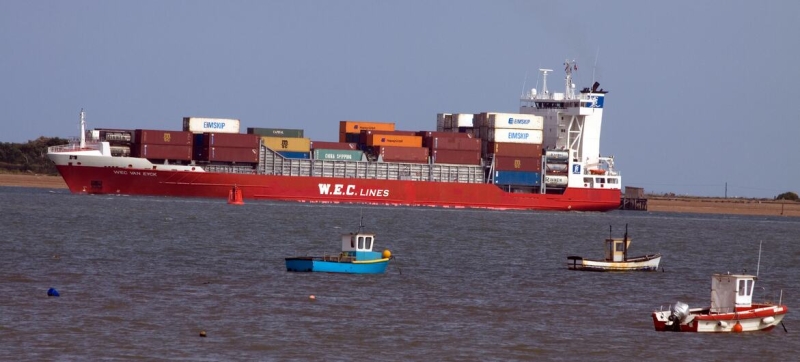

Cargo ship traffic through the Strait of Hormuz has not been restored. (Archive photo) Tensions remain in the Middle East: attacks in the Strait of Hormuz and rising oil prices Peace and Security
The situation in the Middle East is still very tense. There have been reports of attacks on shipping in the Strait of Hormuz and the interception of an Iranian cargo ship by the United States.
Meanwhile, preparations are underway in Islamabad for possible negotiations between the United States and Iran. The American delegation, according to available data, will be led by Vice President J.D. Vance. According to media reports, Iran has not yet officially confirmed its participation.
Why the Strait of Hormuz is so important
The Strait of Hormuz is one of the most strategically important maritime transport arteries in the world. The strait connects major oil and gas producing countries – including Saudi Arabia, Qatar, Iraq and Kuwait – to world markets.
Under normal conditions, the strait serves as a corridor for a significant share of the world’s energy supplies, including oil, liquefied natural gas, and raw materials for industries ranging from agriculture to pharmaceuticals.
The number of ships passing through the waterway has been reduced to a trickle since the conflict escalated in late February.
Israel, Lebanon observe ceasefire
Over the weekend, Israel and Lebanon generally adhered to the truce that took effect Friday, although isolated incidents were reported clashes.
Thousands of people continue to return to southern Lebanon. In total, more than 1.2 residents of the country left their homes. The Israeli bombing, which began in response to rocket attacks on northern Israel by Hezbollah militants following Israeli-American airstrikes on Iran, continued for several weeks.
UN agencies, including the United Nations Children’s Fund (UNICEF), continue to provide assistance to the victims.
Visit of the Personal Envoy UN Secretary General to Egypt
Meanwhile, the Secretary-General’s Personal Envoy for the Middle East Conflict, Jean Arnault, is in Egypt, where he will hold talks with government officials.
During the visit, he is expected to review Egypt’s position on the conflict and ongoing regional efforts to support dialogue between Iran and the United States.
Arnault is also will assess the broader economic and humanitarian impact of the crisis.
Oil Price Volatility
Global oil prices rose sharply following reports that the United States intercepted and confiscated an Iranian-flagged cargo ship, adding to uncertainty in global markets. At the same time, the movement of oil tankers through the Strait of Hormuz has not been restored.
As trading began in Asia, the price of Brent crude jumped more than six percent to $96 a barrel, reversing a downward trend seen late last week after Iran signaled the Strait of Hormuz would remain open during the truce. $70 a barrel before the crisis to almost $120 at the peak in early March.
Rising food prices
The UN also reminds us of rising food prices around the world. “The consequences [of the crisis] are clear,” said UN World Food Program (WFP) spokeswoman Corinne Fleischer.
“When supply chains are disrupted, people pay the price at the supermarket. Delays and rising transport costs are driving up food prices, and families that spend 50 to 70 percent of their income on food are the first to go without food,” she added. In Laos, for example, fuel prices have nearly doubled in some areas, driving up transport and food costs and forcing many families to choose cheaper, less nutritious food.
In Nigeria, fuel prices have risen more than 60 percent since February, doubling transport costs and also driving up food prices. Many people are struggling to afford basic necessities.
Egypt has also seen a sharp jump in prices: vegetables have risen almost threefold, basic foods have risen in price by 18 percent.
Rebuilding Gaza will require $71 billion
According An analysis by the United Nations, the European Union and the World Bank estimates that reconstruction of the Gaza Strip will cost $71.4 billion over the next decade, including $26.3 billion in the first 18 months.
Material damage to the enclave by the conflict is estimated at $35.2 billion, and economic and social losses at $22.7 billion dollars.
More than 371 thousand residential buildings were damaged or destroyed, more than half of the hospitals are no longer functioning, almost all schools were damaged. The sector’s economy contracted by 84 percent.