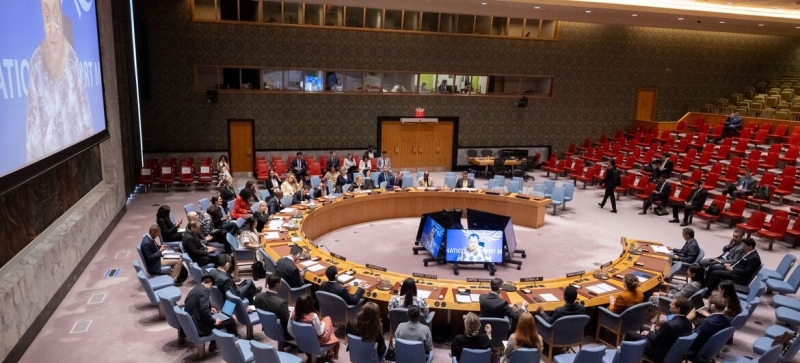

UN Photo/M. Elias Hannah Tetteh (on screen), Special Representative of the Secretary General and head of the UN Support Mission in Libya, addresses the Security Council. Libya: Migrant disinformation fuels attacks on UN sites Peace and Security
The political process in Libya is once again gaining momentum, but the progress achieved remains fragile and requires further support. This was stated by the Special Representative of the Secretary-General and head of the UN political mission in this country, Hannah Tetteh, speaking on Thursday at a meeting of the Security Council.
A major challenge, she said, is the growing wave of disinformation, hate speech and incitement directed at migrants, refugees, humanitarian actors and UN agencies.
“False and misleading statements, especially accusations that the UN allegedly intends to resettle migrants and refugees in Libya contributed to the formation of an atmosphere of hostility, threats and violence against humanitarian workers and UN personnel,” Tetteh noted.
The Special Representative said that in early June, hundreds of demonstrators gathered outside the Office of the UN High Commissioner for Refugees and the UN Mission in Tripoli to protest against false reports about the resettlement of migrants. Protesters damaged UN property and threw stones at security personnel. Tetteh stressed that the United Nations is not involved in resettling migrants in Libya.
Recommendations to overcome the crisis
The head of the UN Support Mission in Libya (UNSMIL) announced the completion of a structured national dialogue that lasted six months and brought together representatives from various political, social and professional circles in the country. Participants produced almost 600 recommendations on issues of governance, economics, security, national reconciliation and rights person.
In parallel, UNSMIL continues mediation efforts between representatives of the Government of National Unity, the command of the Libyan National Army and members of the country’s legislative bodies.
As Tetteh reported, the parties managed to reach an agreement in principle on the formation of a new composition of the High National Electoral Commission and begin a substantive discussion of the controversial provisions of the electoral legislation.
Economic problems and corruption
The Special Representative noted that the economic situation continues to pose a threat to the stability of the country. system of public services,” she warned.
Despite rising incomes due to higher global oil and gas prices, structural problems remain.
“The main factor causing fuel shortages remains entrenched smuggling networks that export subsidized petroleum products out of the country to the detriment of the interests of Libyan consumers,” she emphasized Tetteh.
Ongoing security threats
The Special Representative also expressed concern about the security situation. She said the resumption of violence in Zawiya in western Libya once again demonstrated the instability of the situation in this area. region.
“UNSMIL continues to engage with parties on the ground and calls for de-escalation and restraint amid the ongoing mobilization of armed groups and violence,” the rapporteur noted.
International support
Tetteh called on the country’s authorities to continue cooperation with the International Criminal Court and intensify prosecution of those responsible for violations of human rights and international humanitarian law.
According to the Special Representative, international support, including through the Berlin Process on Libya, remains critical to translating political initiatives into real changes that will strengthen state institutions, improve governance and ensure long-term stability in country.