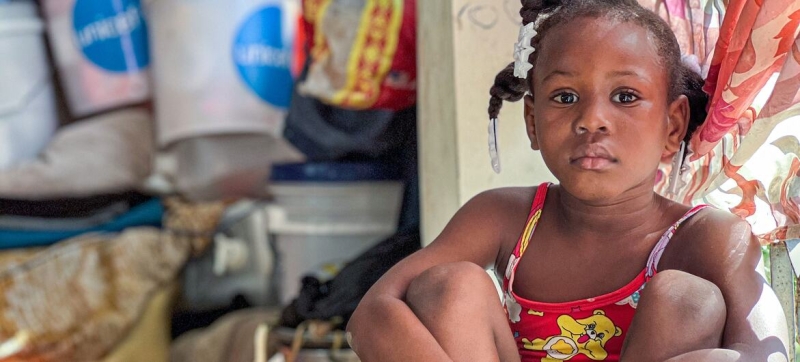

© UNICEF/G. Joseph Approximately one in every thirteen children in Haiti between the ages of six months and five years suffers from acute malnutrition. Haiti: One in 13 children under five suffers from acute malnutrition Peace and Security
About one in every thirteen children in Haiti between the ages of six months and five years suffers from acute malnutrition. This is evidenced by preliminary results of a nutrition study published on Friday by the United Nations Children’s Fund (UNICEF).
New data comes amid ongoing violence in the country: a recent gang attack on the community of Kenskoff, located in the hills above Port-au-Prince, killed at least 47 people, including five children.
Acute malnutrition among children
According to UNICEF, the prevalence of acute malnutrition among children aged 6 to 59 months increased from 5.1 percent in 2023 to 7.4 percent in 2026. These include moderate to severe wasting and edema associated with malnutrition.
“These findings come amid prolonged insecurity, economic hardship and humanitarian needs that continue to limit families’ access to sufficient nutritious food, health care and nutrition services,” said UNICEF Deputy Representative for Haiti Yannig Dussard. “Preventing and treating malnutrition in Haiti requires urgent action and attention from all stakeholders and stakeholders to ensure children have access to the life-saving services they need.”
Security Council Meeting
The scale of the crisis in Haiti was discussed on Friday at an emergency meeting of the UN Security Council. The Special Representative of the Secretary-General, Carlos Ruiz Massier, said that on the night of 23–24 August, armed gangs attacked the commune of Kenscoff in the hills above Port-au-Prince. At least 47 people were killed, including three boys and two girls. Dozens of people were kidnapped, many were injured, and the attack led to further population displacement.
The militants also set houses on fire and attacked people fleeing the violence. In particular, in the church, gang members executed people and killed others when they tried to escape. Ruiz Massier demanded the immediate and unconditional release of all those abducted, including women and children.
Gangs terrorize the population
According to the special representative, the tragedy in Kenskoff is not an isolated incident. It was the latest in a series of attacks that the community has suffered since the beginning of 2025. The joint UN office in Haiti, BINUH, recorded 1,408 deaths and 656 injuries between April and June 2026 alone. Ruiz Massier stressed that gangs continue to terrorize the population, expand their influence beyond the capital and directly challenge state authority and the rule of law.
Humanitarian crisis
Violence directly exacerbates the humanitarian crisis. As the Special Representative noted, security operations alone are not enough. They must be accompanied from the outset by efforts to restore government authority, basic services, and economic and social activity in affected areas.
A comprehensive approach is also needed, including reopening schools and health facilities, restoring livelihoods, and programs to help people leave gangs. Particular attention, he said, must be paid to children and young people who are recruited and used by armed groups.
“Expressions of concern are important and reflect our solidarity with the people of Haiti, but they must be accompanied by sustained action,” Ruiz Massieu said. According to him, Haiti needs to ensure that existing commitments are translated into concrete results as soon as possible. In addition to the violence, Haiti is subject to natural disasters, including hurricanes and earthquakes. About 1.5 million people – 12 percent of the country’s population – are internally displaced.
Ratwatte specifically focused on the situation of children. More than 2.6 million children in Haiti are in need of humanitarian assistance, he said, and the number of children recruited and used by armed groups in 2025 is estimated to have increased by 200 percent, according to UNICEF. More than 1,600 schools remain closed, preventing over 240,000 students from learning.