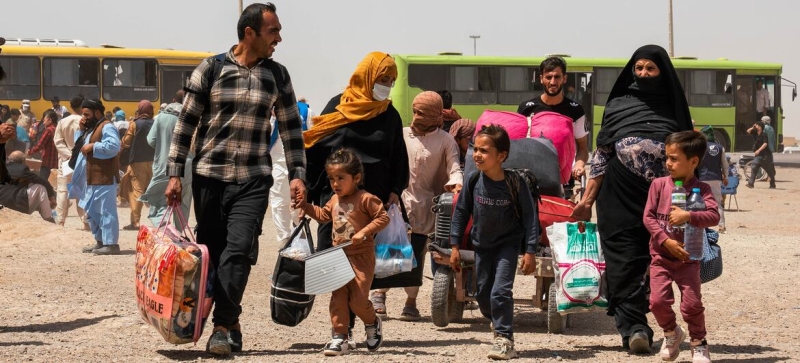

© UNHCR/Oxygen Empire Media Pro Afghan families cross the border from Iran into Afghanistan. UN human rights chief calls on international community to ‘not remain silent’ about repression in Afghanistan Human Rights
The UN High Commissioner for Human Rights condemned a number of repressive restrictions imposed in Afghanistan and called for pressure on the country’s de facto authorities to comply with international obligations.
Increasing repression
“Today the situation of the people in Afghanistan is getting worse day by day,” said Volker Türk. “Millions are plunged into poverty, respect for basic human rights continues to decline, while hundreds of thousands of people return [to the country] against their will.”
According to the High Commissioner, the de facto authorities in Afghanistan are tightening their repressive measures every month.
“It seems that the world has abandoned the people of Afghanistan, leaving them alone to face their troubles, which are getting worse every day,” said Volker Türk. “The silence is deafening.” women
New decrees issued by the de facto authorities this year, Turk continued, make it more difficult for women to end their marriages and effectively allow child marriage and violence against women and children. A year ago, the Taliban banned Afghan women, including UN workers, from entering United Nations premises throughout the country. Since 2021, some 2.2 million Afghan girls and women have been denied access to secondary and tertiary education.
“The systematic exclusion of women and girls from public life is an unacceptable violation of human rights that has been normalized and institutionalized by de facto authorities,” the High Commissioner said. “Such restrictions imposed on women and girls essentially constitute gender apartheid and cannot exist in any society.”
According to the Office of the High Commissioner for Human Rights, Afghan women and men are regularly detained by the Office for the Promotion of Virtue and Prevention of Vice for violating regulations regarding clothing, beard length, playing musical instruments or listening to music. In the first half of this year, at least 449 men and women were subjected to corporal punishment for such “offences.”
Pressure on the press
Afghan media, Volker Türk noted, continue to operate under censorship and other forms of pressure. They are prohibited from broadcasting or publishing material that de facto authorities consider “contrary to Afghan culture” or their rules. Arrests of journalists and closures of media outlets continue.
Forced returns
Despite a “horrific backdrop of human rights abuses,” forced returns to Afghanistan continue, the High Commissioner said. According to the UN, more than 400 thousand Afghans have been forcibly returned to the country, mainly from Iran and Pakistan. 21.9 million Afghans—about 45 percent of the country’s population—are in need of humanitarian assistance.
“Those with influence in the region must speak up for the equality and dignity of all Afghans,” the High Commissioner concluded. “No matter where we live, these principles remain inviolable.”