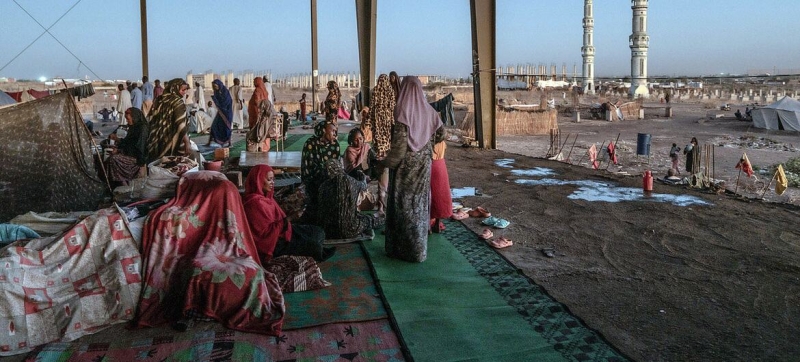

© UNDP/J. Clark Displaced people at a bus station in Gedaref, Sudan. New report from independent UN experts: war in Sudan is fueled by external forces Peace and Security
Recruitment of foreign mercenaries and support from outside forces fuels violent conflict in Sudan. This is stated in the report of the UN Independent International Fact-Finding Mission in this country, published on Thursday. Experts have called for those responsible to be brought to justice amid ongoing fighting between the Sudanese Armed Forces and the Rapid Reaction Force.
According to the report, external support strengthens the military capabilities of warring parties and allows them to conduct increasingly complex operations, leading to disastrous consequences for the civilian population.
Experts have documented the involvement of transnational entities operating in several countries. They recruit, train and deploy foreign personnel to support the Rapid Action Force, and facilitate the transfer of weapons, ammunition and military technology.
According to the report, there are also reasonable grounds to believe that the Sudanese Armed Forces used foreign-supplied drones in operations that resulted in damage to civilians and civilian objects. supply chains. They must investigate and disrupt illegal mercenary and logistics networks operating within their territory, prevent violations and enforce the UN arms embargo.
“The consequences of this external support are felt most acutely by civilians,” said Mohamed Chande Osman, Chairman mission.
“This outside assistance did not bring greater protection to the citizens. On the contrary, people pay a high price: residential buildings, hospitals, schools, markets and places of shelter are under attack,” he added.
Experts said that up to 2,000 former Colombian military contractors were directly involved in operating strike drones, artillery and advanced weapons with Rapid Reaction Force units in Darfur and Kordofan. southeast Libya and the Somali city of Bosaso to transport personnel, weapons and logistics support for the Rapid Reaction Force.
According to mission expert Mona Rishmawy, a “transnational network spanning several countries” was identified that supported the Force.
“This support fueled the Rapid Reaction Force operations in the Zamzam camp and later during the capture of El Fasher. In these areas, the mission documented gross violations of human rights, international humanitarian law and international crimes, including acts with characteristics of genocide,” she noted. front.
From warnings to action
Experts called on states to enforce the arms embargo on Darfur, end military transfers where there is a serious risk of facilitating serious abuses, investigate individuals and entities involved in illicit support networks, and strengthen enforcement efforts responsibility.
They also called on the Security Council to extend the arms embargo to the entire territory of Sudan.
Othman recalled that the international community has repeatedly received warnings about violations in Sudan.
“These warnings must translate into concrete actions,” he said he.
“Protecting civilians in Sudan requires action not only against those who are waging this war, but also against the individuals, organizations and networks that make its continuation possible,” Osman added.