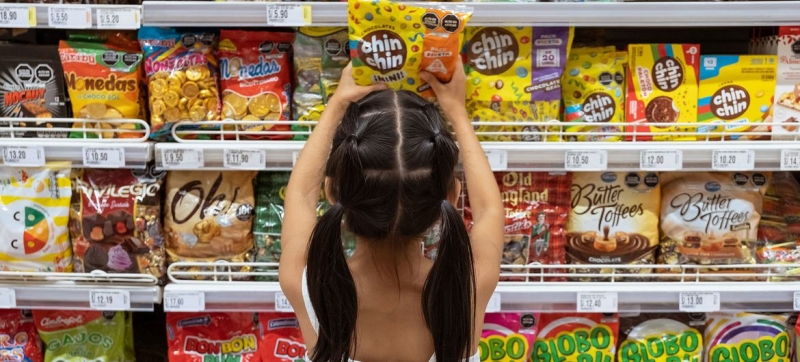

© UNICEF/F. Gupil It is essential for people with food allergies to have access to clear, reliable information. New guidance on food labeling to help people with allergies Healthcare
You take a packet of cookies. When you read the list of ingredients, everything seems safe. And then you notice a familiar phrase: “May contain nuts.”
For millions of people with food allergies, these three words could mean the difference between what they put in their cart and what stays on the shelf. The problem is that so-called “allergen warning labeling” is not regulated in many countries and is often applied differently in different regions of the world. Therefore, it can be difficult for consumers to understand when label information indicates a real risk.
The Codex Alimentarius Commission, the international food standard-setting body established by the Food and Agriculture Organization of the United Nations (FAO) and the World Health Organization (WHO), has adopted new guidelines for the use of food allergen labeling. It has the potential to revolutionize food safety and availability for the millions of people around the world with food allergies who are often reluctant to purchase foods with warning labels.
Aimed at addressing the overuse of allergen warning labels in foods, this groundbreaking document establishes, for the first time in history, scientifically and risk-based limits to identify unsafe levels of allergens in food products.
Here are five important facts about allergens and the new guidance.
1. Food allergies are a worldwide problem
Millions of people around the world suffer from food allergies. Allergic reactions range from mild symptoms, such as itching and swelling, to anaphylactic shock, a severe, potentially life-threatening condition.
It is essential for people with food allergies to have access to clear, reliable information. Labels help consumers learn which foods contain allergens and make informed decisions about what to eat.
Food allergies can affect quality of life. Many consumers must plan meals, grocery shopping, and leisure activities around the need for them and their family members to avoid certain foods.
2. The “May Contain Allergens” label was intended as an additional protective measure
During the manufacturing process, allergens, even those not included in the recipe, may be introduced into products in small quantities. For example, chocolate can be produced on the same equipment as nut products. Flour, milk powder, sesame and other allergens can be introduced into products when stored, transported or processed together.
This process is called allergen cross-contamination.
Recognizing the potential for such contamination, manufacturers often use warning labels such as “May contain peanuts” or “May contain tree nuts.” It is intended to draw attention to the fact that a product may have inadvertently introduced an allergen that is not included in its list of ingredients. People with food allergies receive extremely important information from such warning labels, as long as they are used only when needed.
Today, however, these labels are used so widely—sometimes unnecessarily—that people with allergies may be reluctant to purchase foods that are completely safe for them, or may ignore labels altogether, exposing themselves to food allergies. risk.
3. The new guide is based on scientific data and the results of many years of international research
Since 2020, FAO and WHO have held international expert consultations involving allergists, physicians, scientists, regulators and risk assessors. They collaborated to review the evidence on different types of food allergies and explore how allergen cross-contamination occurs at different stages of food production, processing and handling. They concluded that cross-contamination can be virtually eliminated if manufacturers adhere to good hygiene and manufacturing practices.
In addition, experts discussed how allergen warning labels could provide more accurate information about the actual risk. For the first time, limit levels for allergens in products have been established based on risk assessment and scientific evidence: in smaller quantities they do not cause a pathological reaction in most allergic consumers.
Their findings provided the scientific basis for the preparation of new guidelines adopted by the Codex Alimentarius Commission. It complements its previously developed General Standard for the Labeling of Prepackaged Foods (CXS 1-1985), which since 1999 has included a list of foods and ingredients that may cause hypersensitivity.
4. Allergen warning labels should only be used when necessary
The new guidance sets forth general principles that food processors should follow to prevent or minimize accidental exposure to food allergens through cross-contamination.
This will reduce the use of allergen warning labels and ensure that they are used only when truly necessary – in situations where accidental exposure to food allergens cannot be prevented or controlled through food allergen control regulations and a risk assessment indicates that they may exceed scientifically based limits.
5 Codex guidance is important to both consumers and traders
The Codex texts provide guidance for working to ensure the safety of internationally traded food products in accordance with the World Trade Organization (WTO) Agreement on the Application of Sanitary and Phytosanitary Measures. This means that all WTO members – which includes most countries in the world – are committed to trading food products that comply with Codex standards. Codex documents also help the food industry develop a consistent approach to food trade. With the first-ever allergen warning label guidance, the range of foods that can be offered to consumers without risk will be expanded.
By developing labeling guidelines and codes for the control of food allergens, the Codex Alimentarius Commission helps countries protect consumers and ensure fair trade practices.
60~p>B Ultimately, when it comes to consumer safety, the most useful labels are ones they can trust.