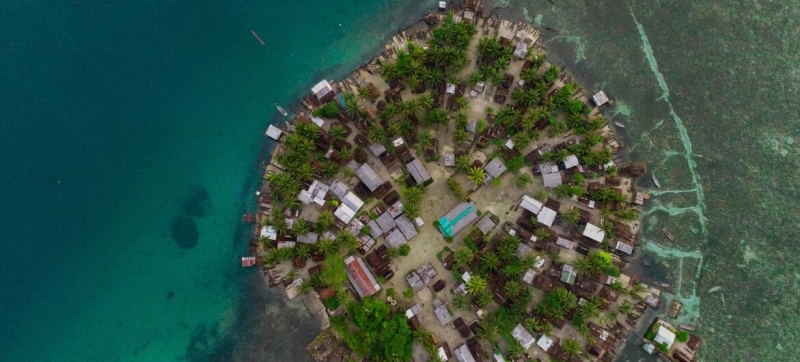

© UNDP The existence of low-lying areas such as Aromot Island in Papua New Guinea is under threat from rising sea levels. WE EXPLAIN | How sea level rise threatens humanity Daniel Dickinson Climate and Environment
Science Fact: The world’s sea levels are rising faster than at any time in history. The consequences are already being felt, and the threats continue to grow: houses and crops are flooded, people are deprived of their livelihoods, a safe future is becoming an increasingly distant dream.
The problem of rising sea levels affects not only the environment, this phenomenon also significantly affects human rights, economic development, health, culture and human dignity.
Everyone suffers: both developed and developing countries. The ability to act quickly and adapt becomes the deciding factor in whether sea level rise becomes a manageable problem or a generational crisis.
What is sea level rise?
Sea levels are rising due to the effects of man-made climate change. Between 2014 and 2023 it rose by 4.7 mm per year, and in 2024 by a record 5.9 mm.
Even under the most optimistic scenario, sea levels are likely to rise to 0.55 meters by 2100; at worst, this figure will be more than a meter. Under high-emissions scenarios, there is some likelihood that sea levels will rise by almost two meters by the end of the century.
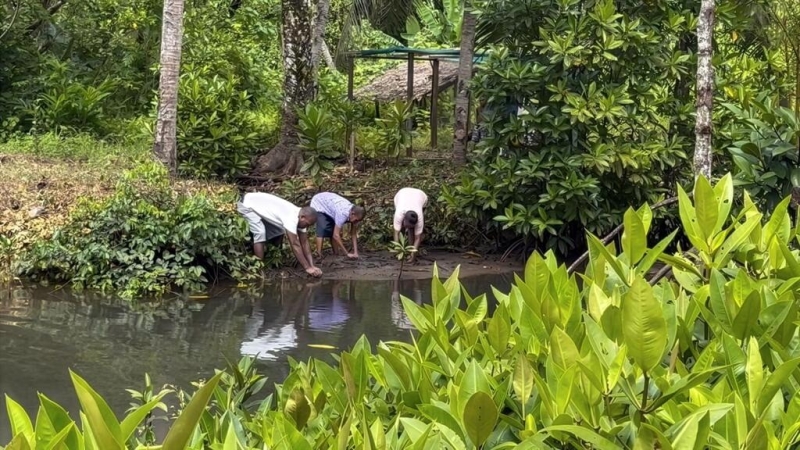
© UNDP Villagers in South Malaita in the Solomon Islands plant mangrove trees to protect the coastline.
What causes sea level rise?
- Melting glaciers.
- Expansion of heat zones. A warming ocean requires more space.
- About 91 percent of the planet’s excess heat is absorbed by the ocean, so as the climate warms due to rising emissions of harmful gases, further increases in temperature will be inevitable.
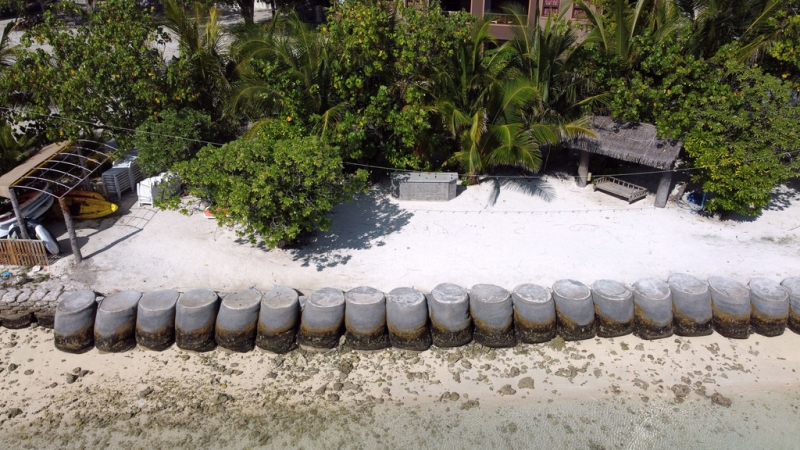
© UNICEF/A. Fahim A beach in the Maldives is surrounded by concrete cylinders to protect against rising sea levels.
Effects on humans
About 770 million people, about one in ten on Earth, live less than five meters from the high tide line. This is extremely risky, and the consequences are already being felt.
- Freshwater wells and farmland are becoming clogged with salt.
- Floods damage hospitals, schools and systems sanitation.
- Increasing risk of waterborne diseases is threatening drinking water supplies and exacerbating psychological stress.
- Fishing and tourism, the main economic sectors of many coastal regions, are experiencing serious disruption.
- Some projections suggest that up to 1.2 billion people could be displaced globally by 2050, looking not only for safer land but also for a new source of income.
- Current evidence suggests that the risks associated with rising sea levels may be significantly underestimated in some regions. Thus, tens of millions of people may be more vulnerable than previously thought.
In addition, the cultural heritage, ancestral land and traditional way of life of many peoples are disappearing, which has real psychological consequences.
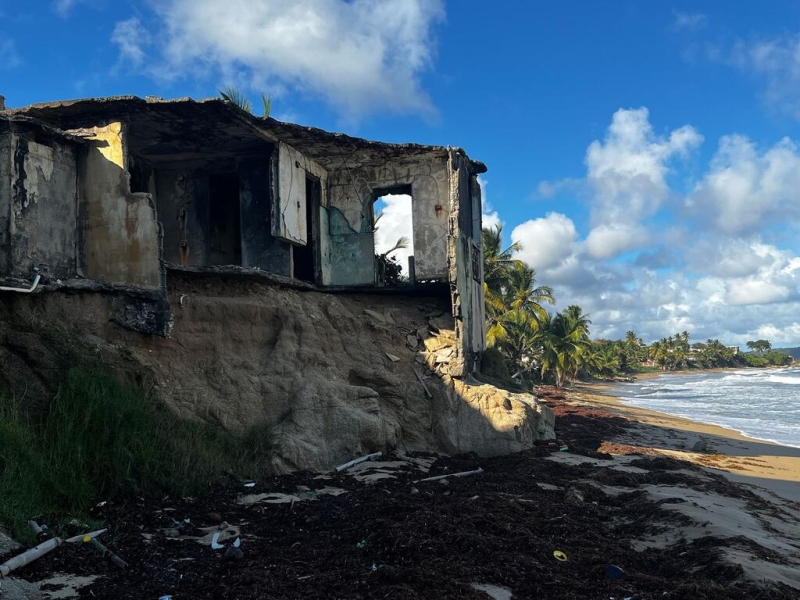
UN News Service/D. Dickinson In Puerto Rico, homes are being destroyed by the sea due to coastal erosion.
Damage assessment
- Damage to coastal infrastructure already exceeds $1.8 trillion.
- Without adaptation, annual global losses could reach $1.4 trillion.
- From 1970 to 2020, small island developing states due to climate hazards lost $153 billion.
- U.S. home insurance premiums in disaster risk areas rose 33 percent from 2020 to 2023.
- Ports, which handle more than 80 percent of global trade, are increasingly vulnerable to flooding and rising sea levels, posing risks to global chains supplies.
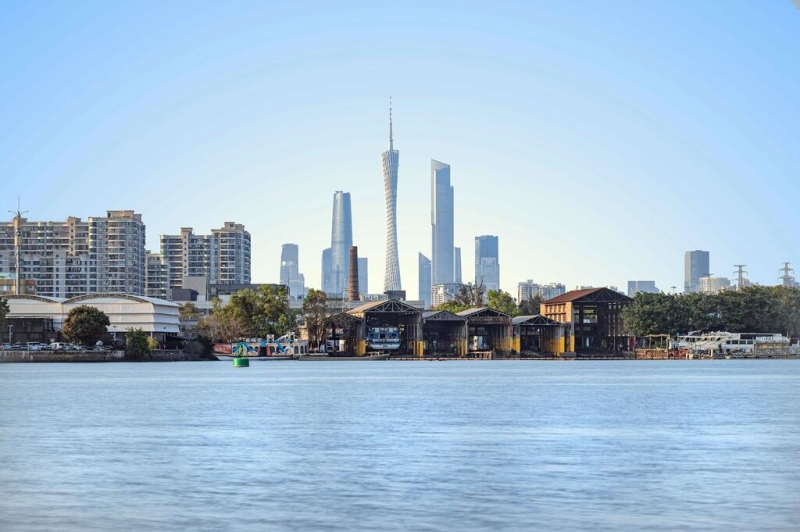
© Unsplash/Piiko Modern cities such as Guangzhou in China are facing flooding due to rising sea levels.
Who risks the most?
Many of the countries facing the greatest climate risks contribute the least to the emissions driving sea level rise and often have the fewest resources to respond.
- Small island states. Pacific countries face sea level rise that is more than double the global average planet. They are becoming particularly vulnerable to increasingly frequent floods.
- Cities in low-lying deltas, most notably the densely populated Dhaka, Mumbai and Kolkata, where more than 14 million people are at risk lose their homes, livelihoods and even lives.
- Coastal metropolises. Miami, New York and Guangzhou could suffer trillions of dollars in damage if their infrastructure is damaged.
Can this be stopped?
Not completely anyway, since some sea level rise is already irreversible. How much this figure will increase in the future depends on the speed at which harmful emissions will be reduced.
Just one example: the area of the Thwaites Glacier in Antarctica is about 190,000 square meters. km. Its collapse could cause a sudden and irreversible rise in sea levels of more than half a meter. This event may become a turning point, after which there will be no turning back.
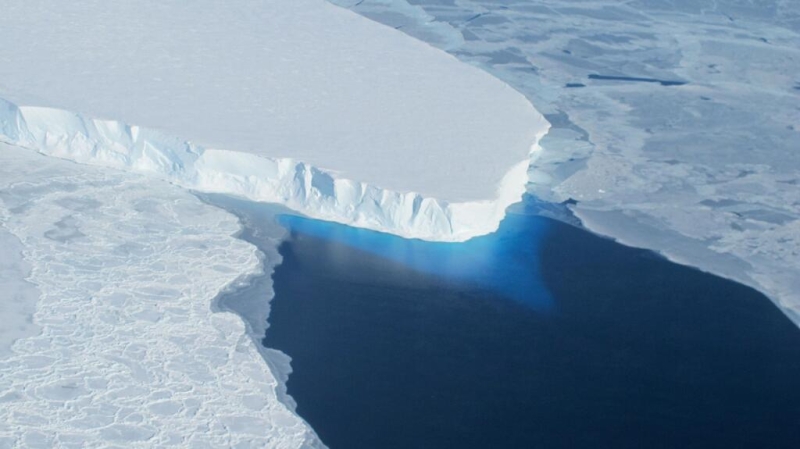
© NASA A rapidly melting section of the West Antarctic ice sheet known as the Thwaites Glacier.
Adaptation to the inevitable
Weaning away from climate-changing fossil fuels is the world’s biggest priority in slowing global warming, but adaptation is just as important now. disaster.
- Construction of water barriers, restoration of mangroves and dunes, and controlled withdrawal of people from potentially dangerous areas.
- Improving data management: many regions still lack basic monitoring of weather conditions on sea.
- Clear regulation of legal aspects relating to the state ownership of territories and maritime zones in the event of flooding.
Developing countries require approximately 310–365 billion dollars per year for adaptation. However, global funding for adaptation in 2023 was only about 26 billion. governments.
Ultimately, protecting people’s homes, cultures, livelihoods and identities requires increased funding for adaptation and making sea level rise a permanent global priority.