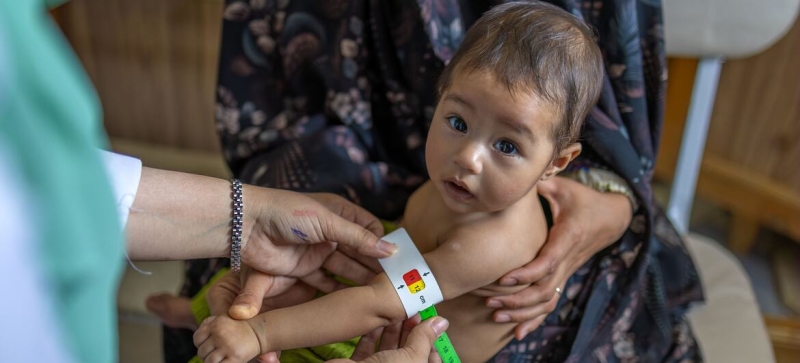

© UNICEF At a clinic in Herat, doctors examine a child for malnutrition. 3.7 million children suffer from acute malnutrition in Afghanistan Humanitarian assistance
In Afghanistan, 3.7 million children suffer from malnutrition, including about a million from severe, life-threatening forms. Hospitals are overwhelmed and funding cuts are forcing care centers to close amid soaring needs.
The crisis is particularly affecting young children: nearly 40 percent of children hospitalized with severe malnutrition and related complications are infants under six months of age. Yet children under two years of age account for 83 percent of all cases of severe acute malnutrition.
“Hospitals are already under enormous pressure. The number of children admitted with acute malnutrition and associated complications increased by a third compared to last year, from six thousand in July 2025 to eight thousand in July 2026,” said UNICEF Afghanistan Representative Tajudin Oyewale. nutrition
A new UNICEF report compares data on child wasting and household diets across all 34 provinces of Afghanistan for the first time at this scale.
According to the data presented, half of the country’s children live in conditions of severe food insecurity: they receive food from no more than two food groups every day. When a baby reaches six months and needs to be given nutritious complementary foods along with breast milk, many families can only offer bread and tea or yogurt diluted with water.
“This is simply not enough for a growing child,” said the UNICEF representative.
Additionally, according to the report, children from families experiencing severe food insecurity may be six times more likely to suffer from exhaustion during periods of seasonal exacerbation of the crisis. A child becomes dangerously thin due to lack of nutritious food, illness, or a combination of both. Without timely help, this condition can lead to death.
Climate shocks and mass returns
This year, the situation is aggravated by drought, followed by heavy rains and flash floods. A particularly strong El Niño event is forecast to increase climate shocks.
Regional instability is also disrupting cross-border trade and depriving families of income. “Six million people have returned to Afghanistan since 2023, more than half of them children. This places additional strain on the labor market, family resources, and health and nutrition services, which are already stretched to the limit,” Oyewale said.
However, even successful treatment does not guarantee full recovery. Returning to a home without nutritious food, clean water or access to basic health care, a child may again face malnutrition.
“Treatment saves lives, but treatment alone is not enough,” said a UNICEF representative.According to him, help should begin even before the child ends up in the hospital. It is necessary to provide adequate nutrition to women during pregnancy, support breastfeeding and help families introduce a variety of complementary foods after the child reaches six months of age. Medical care, vaccination, clean water, sanitation and social protection must also be comprehensively provided to the most vulnerable families.
Reduced assistance amid growing needs
Despite the deteriorating situation, more than a hundred treatment centers for children with severe illnesses have stopped operating this year due to lack of funds. exhaustion. Hundreds of other centers that provided care to children and pregnant and breastfeeding women have also lost funding.
Afghanistan’s nutrition program funding gap is 57 percent. UNICEF needs about $180 million for work in the country this year, but only 22 percent of that has been received so far amounts.
“We can see this crisis coming—in what children are eating, in the growing number of malnourished babies and in overcrowded hospital wards,” Oyewale said. “We shouldn’t wait until the child becomes dangerously thin and ends up in a hospital bed.” We know which children are most at risk and we know how to prevent the situation from getting worse. But we need to act now.”