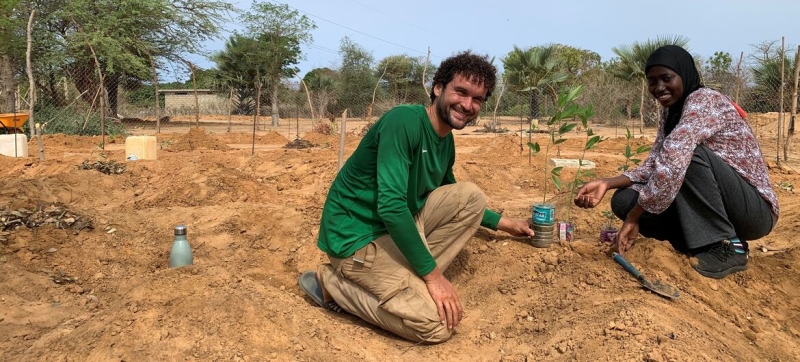

Fero Daniel Halman plants trees on vacant land. Land restoration helps create jobs, young entrepreneurs prove Climate and Environment
A new generation of entrepreneurs around the world, from Ecuador to Bangladesh, is turning soil restoration into a source of economic growth. By introducing AI-powered technologies and recycling agricultural waste with UN support, they are proving that caring for nature can generate income and improve living standards.
High productivity for the sake of the environment: the experience of Senegal
Daniel Halman’s business from Senegal is based on a simple idea: if a farmer gets more yield from less land, part of the land is freed up for nature restoration.
His company Féro combines high-tech greenhouses with agroforestry. The harvest from the greenhouses is sold almost immediately, and local species of trees, including fruit trees, are planted in the remaining areas of the farm. The balance between production and ecology reduces the load on the soil and makes land restoration economically profitable.
Halman appreciated the potential of this area as a student. Having participated in a small project, he saw what results could be achieved by simply planting trees and saturating the soil with carbon, after which he decided to develop the idea further. Ulaanbaatar.
The main obstacle was time. Trees generate income only after years, but businesses need funds as soon as possible. So Halman decided to combine reforestation with greenhouse crops, which mature very quickly.
“Onions are very popular in Senegal, and we realized: here is a great opportunity,” explains Halman. According to him, identifying an environmental problem is only half the battle. For a business to develop, it must meet real market demand.
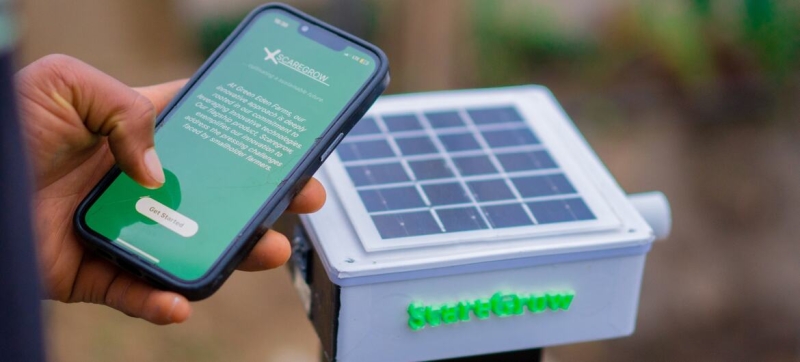
Green Eden Farms The ScareGrow system uses solar-powered devices that are installed in the fields to collect data
Solar sensors: Nigeria
Co-founder of Green Eden Farms, Ritkatmun Bwemana, brings personal experience to the business: she ran a smallholding in Nigeria. The entrepreneur knows firsthand how difficult it is to increase production volumes on depleted lands.
Her company has developed an efficient farming system, ScareGrow, powered by solar panels. It helps farmers use water and fertilizers in measured doses, protecting the soil from excess chemical load.
For Green Eden Farms, success is not measured by the number of devices sold. “We want to know whether farmers are actually saving water, whether fertilizer use has decreased, and whether inputs are being applied on time and exactly where they are needed,” she emphasizes.
According to Bwemana, this is the key to large-scale land restoration: the process must bring tangible benefits to those who work on the land. “If you come to a farmer and say: “Let’s restore the land,” but this will not bring him financial benefit, he simply will not invest.”
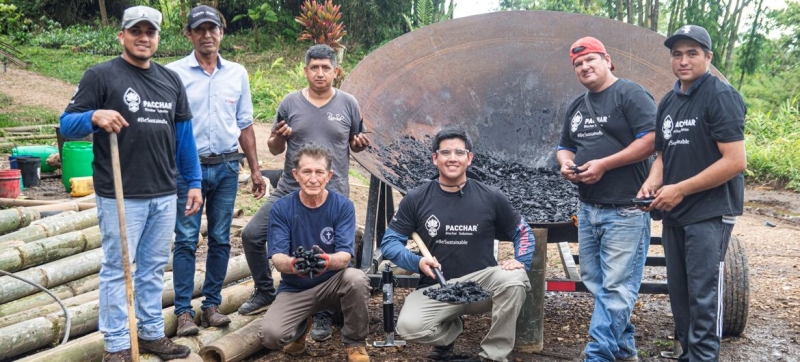
Pacchar Pacchar converts agricultural waste into biochar.
Processing agricultural waste into biochar: Ecuador
Ecuadorian Carlos Alfredo Gonzalez Vargas saw prospects in solving two problems at once. Years of intensive cultivation had depleted farmland, and tons of wood and plant waste either burned or rotted in the fields.
In 2021, he founded the company Pacchar, which processes this waste into biochar (biochar) – charcoal for enriching the soil. Its porous structure retains water and nutrients, reducing the need for mineral fertilizers and sequestering carbon in the soil for many years. According to the founder, the technology has already been implemented in more than 100 farming communities, and the areas of restored land have exceeded 500 hectares. “That’s why I decided to urgently launch my business; restoration of the land cannot be delayed.”
Several years of experience have demonstrated not only an increase in yield, but also significant savings in water and fertilizers. However, this was not enough to win the trust of farmers. Many were skeptical about the technology: the seller himself presented evidence of its effectiveness.
“You do the research yourself and sell me this product yourself. “I don’t believe you,” Gonzalez recounts a typical customer reaction. you can gain trust,” says the entrepreneur.
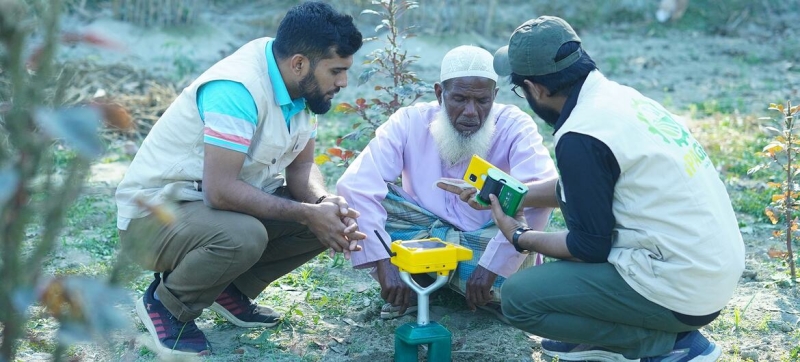
Aunkur Aunkur’s platform analyzes soil and weather data to help small farms decide what to plant and when.
Useful tips from artificial intelligence: Bangladesh
Mashrur faced a similar problem Shurid in Bangladesh. Due to unpredictable rains, floods, droughts and salt accumulation in the soil, it became increasingly difficult for farmers to make the right decisions. recommendations.
The Aunkur platform analyzes soil, weather and site-specific data, helping small farms decide what and when to plant and how to care for crops as conditions change. Today, the system serves more than 33 thousand farms in Bangladesh and is launching pilot projects in other countries.
Dry technical reports are of no value to farmers if they cannot be turned into concrete steps. Shurid.
Aunkur helps producers reach buyers and financial institutions.
“When we see that farmers are getting real benefits, we need to record this result in numbers,” concludes Shurid. It is these data that become a powerful argument for banks and investors.