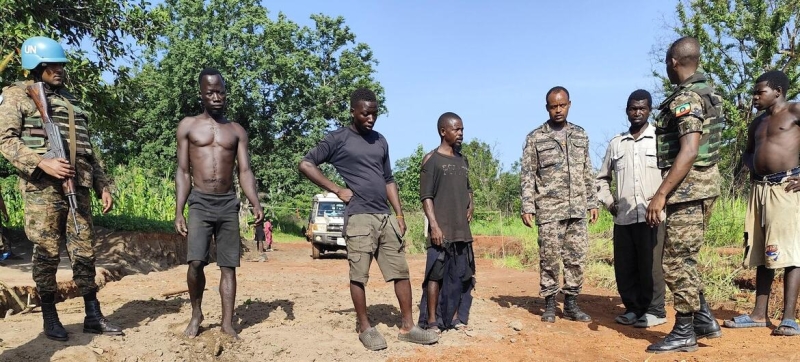

© UNMISS South Sudan is preparing for its first national elections since independence. UN experts warn of risk of mass crime in South Sudan Peace and Security
The humanitarian crisis in South Sudan, which the world media has recently mentioned less and less, is rapidly worsening. According to the UN Commission on Human Rights in South Sudan, established by the Human Rights Council, the risk of large-scale atrocities increases as renewed fighting in the African country increases.
In a report released Thursday, the Commission noted: “Multiple risk factors are stacked on top of each other… The window of opportunity to prevent a return to 2013-2018 levels of violence is closing.”
Escalation ahead of elections
South Sudan is preparing for its first national elections since independence, but the political situation is rapidly deteriorating. The commission warns that rushing through the vote without adequate security guarantees could intensify existing conflicts and increase the risk of mass crimes, including genocide and ethnic cleansing.
From August 2025 to January 2026, there were 407 ceasefire violations in South Sudan. Fighting has broken out in Upper Nile, Jonglei and Unity states, as well as in Western and Central Equatoria, where there are already civilian casualties.
The peace process is stalled
The provisions of the updated agreement to end the conflict signed in 2018 have not been implemented by almost half. His key point – the unification of security forces – was never realized. Instead, according to representatives of the Commission, the country is experiencing a “deterioration of the political, humanitarian and human rights situation”, accompanied by increasing political divisions and violence. Among the key problems mentioned are the resumption of armed conflict, the weakening of state institutions, entrenched impunity for crimes committed, corruption, shrinking civic space and hate speech. stopped.
The commission also noted that the policy of inclusion in South Sudan has been effectively abandoned, with a large part of the population excluded from meaningful political participation. Without genuine dialogue, elections can only deepen divisions, experts warn.
“The rule of the strong” instead of democracy
Chairman of the Commission Yasmin Sooka stressed that citizens who have waited 15 years for elections should be able to vote freely and in safety conditions.
“Elections cannot be allowed to become another arena of violent clashes,” said Commission member Barney Afako. “The sabre-rattling has resumed while measures to ensure peaceful political competition fade into the background. This is an extremely dangerous trend.”
“Elections cannot be considered legitimate just because they are held on time,” said Commission member Carlos Castresana Fernandez. “They will only be legitimate if citizens can vote without fear, political opponents can compete freely, courts can independently resolve disputes, and state institutions can limit power.”