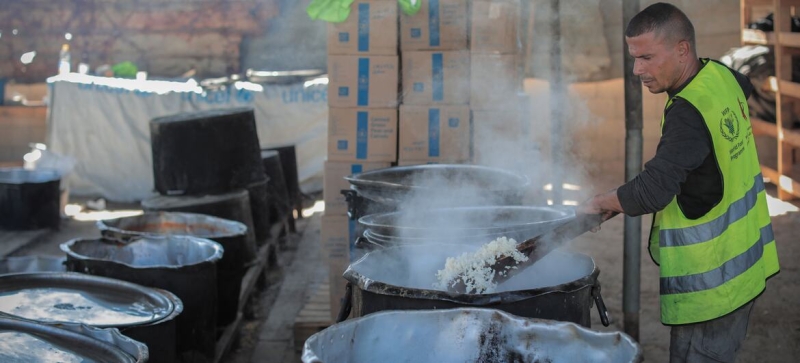

© VPP/M. Al-Hinnawi An aid worker prepares food in Gaza. Aid workers under fire: Drones are changing the nature of modern warfare Humanitarian Aid
On World Day of Humanitarian Aid UN warns: the use of strike drones is changing the nature of combat operations around the world, and humanitarian workers are increasingly being targeted fire.
According to new data released Wednesday by the UN Office for the Coordination of Humanitarian Affairs (OCHA) to mark World Day, 907 aid workers were victims of violence last year, including 350 killed. In 2025, the death toll fell from the previous year but remained at a historically high level. level – this is the second highest figure in the history of data collection.
In addition, according to the Aid Worker Security Database, 322 humanitarian workers were injured and 235 were kidnapped.
In his message on the occasion of World Day, the UN Secretary-General Antonio Guterres paid tribute to humanitarian workers.
“Disinformation undermines trust. Humanitarian funding is being cut. And humanitarian access is being restricted,” he said, calling on states to protect aid workers as they protect millions of people in distress around the world.
60~h2>Gaza remains the most dangerous place
Despite the declaration of a ceasefire in October, Gaza became the world’s most dangerous place for humanitarian workers for the third time in 2025. There, 186 aid workers were killed, 68 percent of them in airstrikes.
In Sudan, the number of aid workers killed rose for the fifth year in a row, reaching a new record high. In 2025, 71 aid workers died there, most of them as a result of small arms fire.
Among the countries with a high level of threats to humanitarian personnel in 2025, Ukraine, Ethiopia, Syria, Haiti, Chad and Cameroon were also noted. The most common forms of violence there have been kidnappings and air strikes.
Violence continues unabated
Since the beginning of 2026, 82 humanitarian workers have already been killed worldwide workers, another 97 were injured, and 39 – were kidnapped.
“More than a thousand aid workers have been killed in just three years, and this is completely unacceptable,” said Tom Fletcher, Under-Secretary-General for Humanitarian Affairs and UN Emergency Relief Coordinator. “But words of condemnation alone are not enough to protect the next humanitarian worker.” States must respect international humanitarian law and use all available means to protect civilians and our colleagues. And there must be real consequences for those who break the rules.”
Deadly Strikes from the Sky
Humanitarian organizations must work in the rapidly changing nature of warfare. Inexpensive and adaptable combat drones are making lethal technology available to more and more parties to conflicts and allowing explosive strikes deeper into populated areas.
In Sudan, strike drones have accounted for 80 percent of civilian deaths in the first four months of 2026. The attacks also targeted markets and medical institutions.
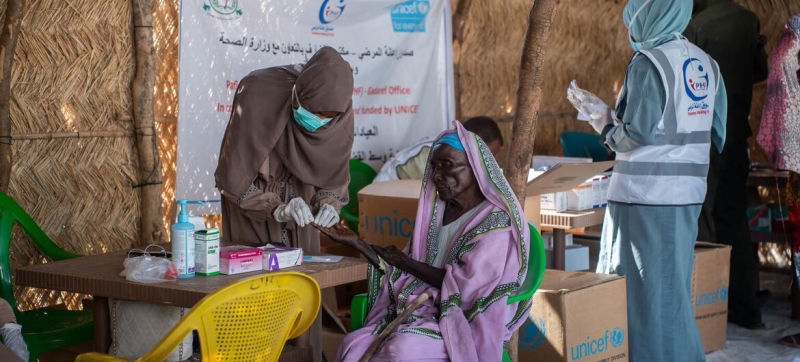
© UNICEF Aid workers in Sudan provide medical care at a UNICEF-supported center.
In April of this year alone, 80 civilians in Ukraine were killed as a result of drone attacks. In Russia, drone strikes have also resulted in civilian deaths and damage to civilian infrastructure.
In Colombia, armed drone attacks quadrupled from 2024 to 2025.
Humanitarian and medical workers increasingly face this threat. The World Health Organization (WHO) has already recorded 639 attacks on medical facilities since the beginning of this year.
In March, in the Democratic Republic of the Congo (DRC), a humanitarian worker was killed in a drone strike on a residential building. In Ukraine, four humanitarian aid workers were attacked in just one week in May convoys.
“Combat drones have become a new manifestation of an old threat – the deliberate or reckless destruction of the lives of civilians,” Fletcher said. “Technology may change, but the laws of war remain the same.”
DR Congo: “I must stay”
This year’s World Humanitarian Day campaign is under the slogan “Act for Humanity.” It aims to draw attention to the real people behind the published figures.
60~p>Emmanuel Madragule, an aid driver with over 20 years of experience, survived an attack by an armed group while on a humanitarian mission in the east DRC in June 2024.
Despite the danger, he returned to work because he wanted to continue helping people in crisis.
“I can’t leave my colleagues,” he told UN News Service.
His decision was partly due to personal experience: in 2008, aid workers saved the life of his uncle after he suffered a gunshot wound. Madragule’s story demonstrates the risks humanitarian workers face in DR Congo and the sacrifices they make to help others.
Protect humanitarian workers
International humanitarian law obliges parties to armed conflicts to protect civilians and respect humanitarian personnel. This year, humanitarian organizations plan to reach 87 million people with the most urgent needs around the world.
In memory of those killed in Baghdad
World Humanitarian Day is observed annually on August 19, the anniversary of the hotel bombing Canal in Baghdad in 2003.
The attack killed 22 UN staff, including the Secretary-General’s Special Representative for Iraq, Sergio Vieira de Mello.
Five years later, the UN General Assembly proclaimed August 19 as World Humanitarian Day. This year, the Organization once again calls on the international community and especially those with influence in conflict situations to “act in the name of humanity”.