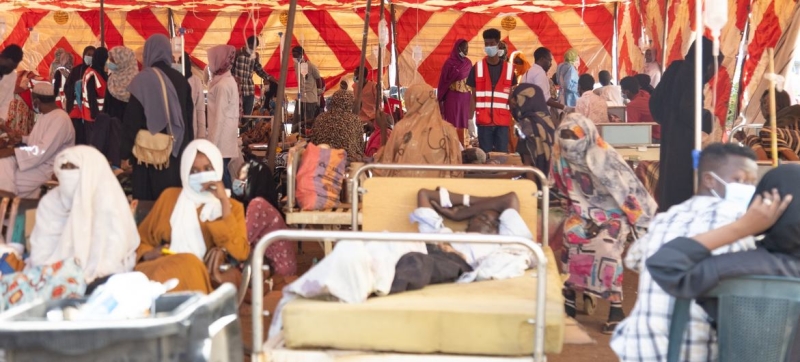

© UNICEF/A. M. Elfatih Patients in a tent outside a hospital in Khartoum, Sudan. Millions of patients around the world are treated in medical facilities without proper sanitary conditions Health
A new joint study by the World Health Organization (WHO) and the United Nations Children’s Fund (UNICEF) shows that despite remarkable progress over the past decade, many health facilities around the world still lack basic water, sanitation and hygiene services.
According to the report, in 2025, 85 percent of the world’s healthcare facilities had access to basic water supplies, 72 percent had access to hygiene services, and 71 percent had access to safe healthcare waste management systems. However, the situation remains significantly worse in the area of sanitation and cleaning: only 40 percent of facilities met basic sanitation standards, and 59 percent met requirements for proper cleaning and disinfection. antibiotics.
A particular problem is the availability of sanitary facilities. Although toilets are available in most health facilities, only about half have separate facilities for men and women, are accessible to people with disabilities, or provide facilities for menstrual hygiene.
Serious challenges remain in the area of sanitization of facilities. According to the report, approximately 1.5 billion people use healthcare facilities that lack adequate cleaning protocols or trained staff. In least developed countries, only 24 percent of healthcare facilities meet basic cleaning requirements.
Between 2015 and 2025, the report’s authors note, significant progress has been made, especially in the area of hygiene. Yet 10 percent of the world’s health facilities still lack access to water or basic sanitation.
The report calls on governments from WHO and UNICEF to strengthen monitoring of the quality of sanitation in health care facilities and to focus not only on the availability of infrastructure, but also on its safety, accessibility and reliability. In May 2026, the UN General Assembly already adopted a special resolution to strengthen national standards and finance sustainable water supply, sanitation and hygiene systems in health care facilities.