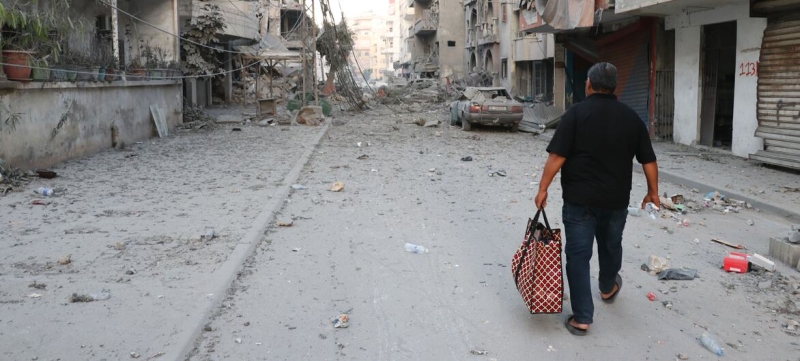

© UNHCR A man returns to his devastated neighborhood in the city of Tire (Sur) in southern Lebanon. Lebanon: About 860 thousand displaced people have returned to their home areas despite the ongoing crisis Refugees and migrants
About 860 thousand Lebanese residents, who had previously been forced to leave their homes due to fighting, have returned to their home areas. However, due to widespread destruction, instability and lack of basic services, return does not mean the end of the crisis.
Despite the declared ceasefire, new Israeli airstrikes in southern Lebanon over the weekend caused another wave of displacement. Hundreds of families were forced to go to the north of the country in search of refuge.
According to the United Nations Refugee Agency (UNHCR), about 360 thousand people are still unable to return home, with at least 22 thousand of them living in collective accommodation centers, others living with relatives or in overcrowded rented apartments.
The situation remains unstable
At the peak of the conflict The number of internally displaced persons in Lebanon exceeded one million. Although the intensity of fighting has decreased, ongoing airstrikes, restrictions on movement and unexploded ordnance continue to threaten the population, especially in the south of the country and the Bekaa Valley.
Many families are unable to return due to destruction, rubble, lack of safe access to their communities and severe damage to infrastructure. Thus, in a number of areas, the health care, electricity and water supply systems are intermittent or completely out of order.
The approach of the new school year also creates additional problems: many collective accommodation centers are located in public schools, which need to be vacated for the resumption of classes. Municipalities in affected areas are calling for temporary housing for families to avoid further displacement and allow people to remain close to their communities.
The line between those who have returned and those who are still considered displaced has become increasingly blurred, with some families making short trips to their communities to assess the situation before deciding to return. Others continue to move between their temporary residence and their home area.
Path to recovery
The Lebanese government has developed a national return and early recovery program that includes clearing unexploded ordnance, clearing rubble, repairing infrastructure and rebuilding housing.
Authorities are also providing temporary housing, financial and psychological assistance to victims with support from UNHCR and others humanitarian organizations.
“Lebanon has not yet entered the post-crisis phase. The country continues to face a complex displacement situation and ongoing protection risks,” said UNHCR spokesman Babar Baloch.
60~h2>Lack of funding
Humanitarian organizations are severely under-resourced, limiting their ability to assist both displaced people and families attempting to return home.
Relief operations in Lebanon are only 48 percent funded. However, UNHCR’s activities in the country in 2026 received only 24 percent of the required funding
The agency warned that without stable international support, displaced and returned families will continue to face serious difficulties. Achieving lasting solutions requires humanitarian assistance, debris clearance, reconstruction efforts and an improvement in the security situation.