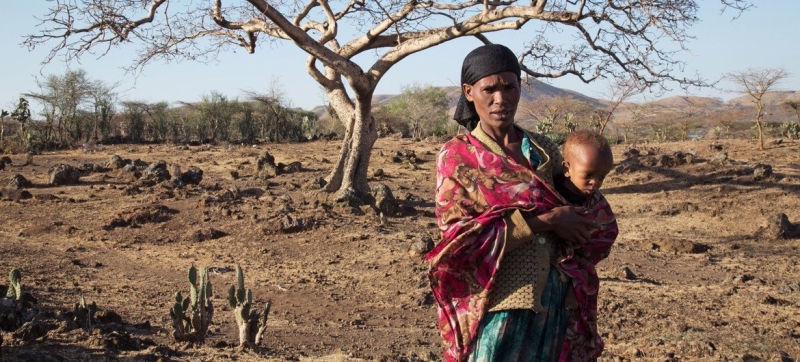

© UKGV/Sh. Kans In Eastern and Southern Africa, the deteriorating food situation could affect over 18 million people. El Niño intensifies: acute hunger threatens nearly 50 million people Climate and Environment
With the intensifying climate phenomenon El Niño, nearly 50 million people in the world’s most vulnerable regions could face acute hunger in the coming months. The UN World Food Program (WFP) warned about this on Wednesday. Acute hunger refers to the inability of people to meet basic daily food needs.
WFP is ramping up operations in eight countries where people already live in conditions of poverty, conflict, unemployment and persistent climate shocks. The priority is to prepare for predicted floods, droughts and storms.
El Niño poses a massive threat to the safety of millions of people, and the sooner the international community can prepare for climate shocks, the better the chance of saving lives and maintaining livelihoods, according to acting WFP chief Karl Skau.
The WFP estimates that El Niño will intensify in September, causing the number of people facing acute food insecurity to increase from 225 million to 274 million, an increase of about 22 percent. The most severe impacts are expected in Central America and southern Africa. Serious risks are also predicted for East Africa, South and South-East Asia.
WFP emphasizes that the impact of El Niño is extremely heterogeneous: some countries are already facing a lack of rainfall, flooding and abnormal heat, while others expect a worsening situation during the planting period and the upcoming harvest. South Africa is particularly vulnerable due to the dependence of millions of people on the rain-fed agricultural system.
The agency recalls that the 2015-2016 El Niño impacted the food security of 60-100 million people. Current forecasts indicate that the 2026-2027 cycle could result in a crisis of similar magnitude.
El Niño is forecast to peak between September and December of this year, but its effects will be felt throughout 2027 due to its impact on future yields.
Experience from past El Niño cycles shows that for every dollar invested in preventive measures, three to seven dollars of future losses and response costs are avoided. Together with other UN agencies, WFP implements prevention plans in more than 50 countries. Since May, the agency has activated proactive action mechanisms in South Sudan, Chad, Mauritania, Uganda, Guatemala and El Salvador, distributing more than $14 million to help half a million people.