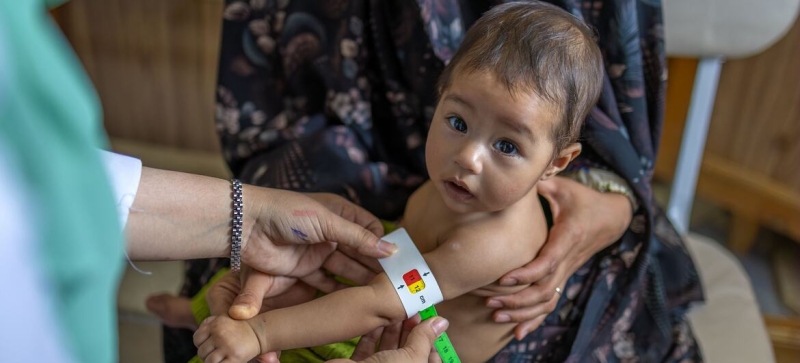

© UNICEF At a clinic in Herat, doctors examine a child for malnutrition. Humanitarian crisis in Afghanistan: millions of people left without food aid Humanitarian assistance
Every third resident of Afghanistan – 14 million people – is experiencing severe food shortages. This is stated in a statement released on Tuesday by the UN World Food Program (WFP).
Today, according to WFP, 12 provinces in Afghanistan have critical levels of acute childhood malnutrition – the highest rate ever recorded in the country. The crisis is fueled by local conflicts, mass unemployment, rising food prices, cuts in humanitarian funding and disruptions to supply routes.
Forced expatriation
The forced return of six million Afghans from Pakistan and Iran has added further strain to an already fragile economy countries.
“Over the past three years, almost six million Afghans have been forcibly displaced from neighboring countries,” explained WFP Afghanistan Director John Ayliffe. Briefing reporters in Geneva via video link from Kabul, he said there were not enough jobs in the country to accommodate returnees.
“The conflict with Pakistan and the crisis in the Middle East have caused disruptions in trade, causing prices for basic food products to rise by 20-30 percent… Prices are driving the poor out of the market,” he added he.
Due to massive cuts in international funding, WFP is now only able to feed one in nine hungry people in Afghanistan.
Child wasting
Child wasting has reached critical levels in a third of provinces countries.
“The number of children brought to medical centers is growing rapidly… In 80 percent of cases, these are children under two years of age. Non-governmental humanitarian organizations report that many are arriving too late,” John Ayliffe said.
Cutting humanitarian funding, he added, means “millions of acutely malnourished Afghan children are being abandoned without help at the very moment their lives are at risk,” leading to deaths that could have been prevent.
A Mother’s Fate
During a recent visit to Kandahar Province, WFP met Farida, a mother of three whose story mirrors the plight of many of the country’s poor families. Her husband, an elderly street vendor, earns less than a dollar a day, leaving the family unable to afford proper food or medical care.
Two of Farida’s children suffer from anemia, and her six-year-old son, due to acute malnutrition, has not been able to go to school for several months – the boy is very weak.
“When we spoke with Farida, her child began to cry from hunger,” said the WFP director for Afghanistan. “She reached into her bag and took out a baby bottle. Usually this bottle contains milk, but she had weak tea. There was simply no money in the house for milk.”
The family barely survives on tea and bread. Without the food assistance they receive through the WFP-supported clinic, Farida says her children will simply die.
“It’s hard to hear stories like this,” said John Ayliffe. – WFP programs have been funded this year only to the extent that they can feed one in seven women and one in seven children with acute malnutrition. We are leaving six out of seven empty-handed.”
In partnership with UNICEF, WFP treats malnourished children under five and pregnant and breastfeeding mothers in clinics across the country, but sharp cuts in humanitarian funding have forced the agency to prioritize only those most in need.
Distributing specialized nutritious foods to prevent malnutrition and stunting ended completely in May 2025. The budget for WFP’s emergency food assistance operations for 2026 is estimated at approximately $900 million, of which $500 million is still outstanding.