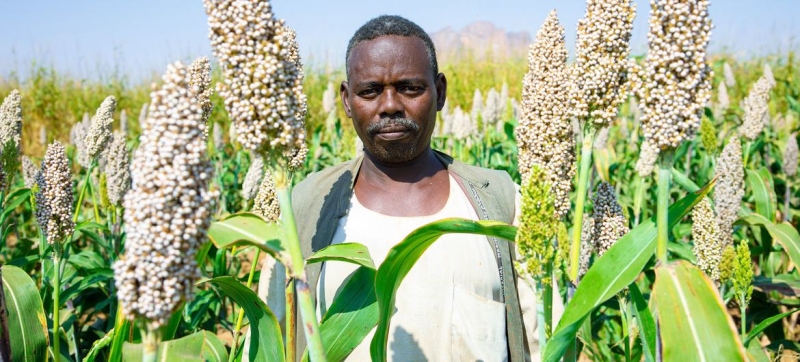

© FAO/M. Shamruk More than half of farmers in Sudan cannot harvest their crops safely. Sudan: Almost 90 percent of farmers have seen their yields decline Peace and Security
Destroyed by three years of war, Sudan’s agriculture remains potentially one of the few sectors that can help reduce poverty and hunger – given the necessary support. This is the conclusion reached by the authors of a new comprehensive study prepared by the United Nations Development Program (UNDP) and the International Trade Center.
The document draws on data from across the country and more than 80 consultations with government representatives, the private sector, financial institutions and humanitarian organizations. It provides a detailed picture of the devastation in Sudan’s agricultural and market systems since the outbreak of conflict in April 2023.
Nearly 90 percent of farmers and producer cooperatives reported a drop in yields compared to last year, ranging from 22 percent in relatively stable areas to 71 percent in active fighting zones.
More than half of farmers are unable to safely harvest their crops. Transaction costs have risen by up to 40 percent, leading to a decline in formal cross-border trade by about 45 percent. Supply chains have broken up into market segments isolated from each other. Food prices are double pre-conflict levels, while farm input prices remain low.
Over 70 percent of farmers and small businesses lack access to finance, and more than 80 percent face a lack of market information.
“Huge efforts are needed to restore agriculture and productivity in Sudan,” said UNDP Country Director Luca Renda. “But we must not fall into despair.” If investment comes in, markets can function and people can afford food.”
The report makes recommendations for the development of key supply chains related to seven commodities: sesame, sorghum, soybeans, peanuts, hibiscus, gum arabic, and livestock commodities. These items have great economic and export potential.
Measures proposed include stabilization and modernization of priority chains, strengthening farmer organizations and aggregation systems, increasing export readiness and compliance with standards, removing trade and regulatory barriers, and strengthening coordination between humanitarian, private and government actors.
B The report highlights that the growing role of women, youth and displaced people in informal markets requires targeted interventions to remove barriers to access to finance, land, resources and markets.
“Sudanese farmers and traders managed to maintain their markets even during the worst moments of the war,” Renda said. “Our recommendations aim to ensure that the resilience of these people is matched with the investment, financing and trading opportunities they deserve. If support can be mobilized, producers and businesses can be the driving force behind the recovery Sudan desperately needs.”