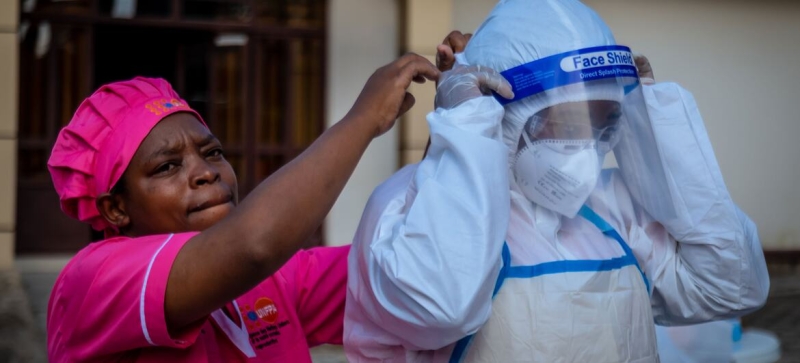

©UNFPA/J. Yunus The disease has already affected five provinces of the Democratic Republic of the Congo. The largest outbreak of Ebola continues in the DR Congo: WHO changes its strategy to combat the epidemic Healthcare
The World Health Organization (WHO) reported that the Ebola outbreak caused by the Bundibugyo virus in the Democratic Republic of Congo continues to spread rapidly, but experts are beginning to better understand the epidemic and are adjusting response strategies.
According to the head of WHO operations to combat the outbreak, Thierno Balde, to date, authorities in the Democratic Republic of Congo have registered 2,423 confirmed cases of the disease. 967 people have died, 469 patients have recovered.
The disease has already affected five provinces of the country, but the main outbreak remains the province of Ituri, which accounts for almost 89 percent of all cases of infection and 84 percent of deaths.
“Despite these numbers, we are beginning to better understand the dynamics of this outbreak,” Balde said. According to him, the epidemic is developing differently in different parts of the country: somewhere there is extremely intense transmission of the infection, in other places the situation remains relatively stable, and some areas are just beginning to face the spread of the virus. Instead of a single strategy, experts are developing measures that take into account the characteristics of each region.At the same time, he emphasized that the epidemic is still developing faster than it is possible to deploy response measures. “Let’s be frank: the outbreak is still ahead of us and we continue to catch up,” Balde said.
In the hardest-hit areas, WHO is prioritizing safe and dignified burials for the dead, establishing effective referral systems and expanding treatment options sick.
Preventing the spread of infection
Particular attention is paid to preventing the spread of infection in new regions. Ten days ago, WHO and partner organizations visited the city of Kisangani in Tshopo Province, where a rapid response strategy was developed with the deployment of mobile teams.
The first results, according to Balde, inspire cautious optimism. “So far, no secondary cases of transmission of infection have been identified there. All five reported cases are imported from the province of Ituri,” he said. work
On Wednesday, WHO representatives will again travel to Kisangani to assess the results of the work. In addition, the organization is launching a new project to strengthen sanitary control along the Congo River, one of the country’s most important transport routes through which the infection can spread.
Despite the ongoing difficult situation, experts note the first positive trends. In the city of Mongbwalu, where the outbreak was first identified, the number of new cases is beginning to stabilize. Similar dynamics are being observed in the city of Goma in North Kivu province.
Balde concluded by emphasizing that success in the fight against the epidemic is impossible without the trust of local residents.
“All of our teams continue to actively work with communities in the spirit of open dialogue and mutual respect, listening to people and taking their views into account when planning our actions,” he said, thanking the Ministry of Health of the DR Congo and all partners involved in the fight against the Ebola outbreak.