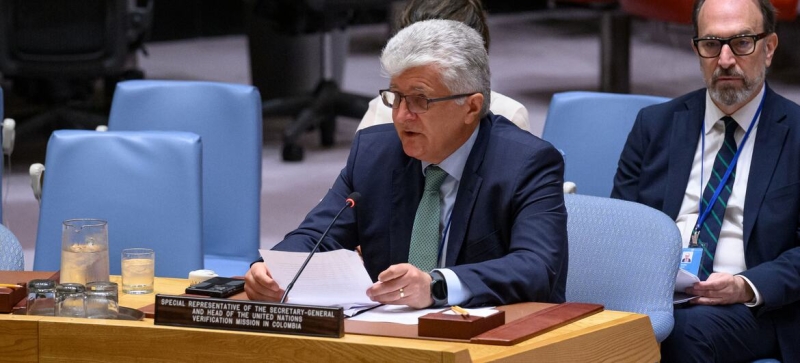

Photo UN/L. Felipe Miroslav Jenča, Special Representative of the Secretary-General and head of the UN Verification Mission in Colombia, speaks at a meeting of the Security Council. Top news of the day | Wednesday: Middle East, Colombia, Cuba, vaccination UN
The main news of the day in the UN and in the world: the ongoing escalation in the Middle East, a Security Council meeting on the situation in Colombia, the energy crisis in Cuba, global vaccination rates.
Escalation in the Middle East
UN Secretary-General Antonio Guterres is deeply concerned about the ongoing military escalation in the Middle East and calls on all parties to immediately take steps towards de-escalation and return to the path of diplomacy. This was stated today by the press secretary of the UN chief Stephane Dujarric. According to him, a return to full-scale hostilities will bring unbearable suffering to the civilian population and will result in a disaster for the global economy and international security. The UN chief once again called for the full restoration of freedom of navigation in the Strait of Hormuz and adjacent waters.
The situation in Colombia
As Colombia awaits the inauguration of its newly elected president, pockets of instability continue to threaten to undermine progress made in the peace process. This was stated on Wednesday by the Special Representative of the Secretary-General for Colombia, Miroslav Jenča, presenting a quarterly report on the situation in the country at a meeting of the UN Security Council. According to him, a long-term vacuum in the areas of security, governance and development allows armed groups and criminal structures to continue the struggle for control of strategic routes and the shadow economy in a number of areas.
Crisis in Cuba
UN humanitarian units are monitoring the consequences of another large-scale failure in Cuba’s energy system. This is the third collapse in a week and the fifth since the beginning of the year. Regular power outages paralyze the supply of clean water, telecommunications and medical facilities, as well as the country’s economy as a whole. By the end of June, the UN and partners had provided drinking water to about 500 thousand people, and more than 900 thousand Cubans had received food assistance. However, the UN plan to help Cuba’s 2 million people has received only 40 percent of the funds needed. However, millions of children still remain unprotected from outbreaks of measles and other dangerous diseases. According to an annual report published by the United Nations Children’s Fund (UNICEF) and the World Health Organization (WHO), the number of children around the world who start vaccination courses but do not complete them is increasing. In 2025, 57 countries reported large measles epidemics.