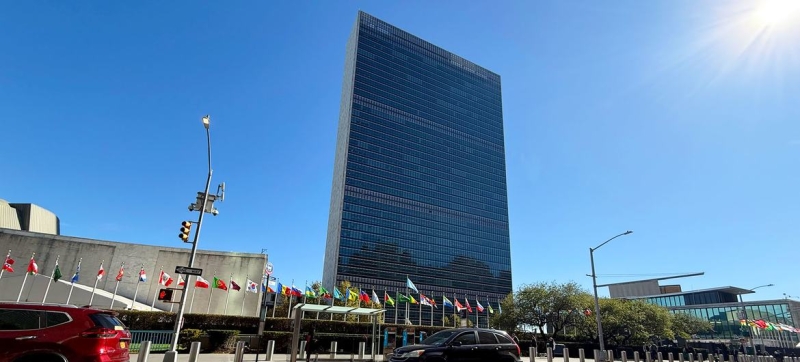

UN Photo UN headquarters in New York. UN80 initiative: implementation of reforms enters a “decisive phase” UN
UN Secretary-General Antonio Guterres presented a report on the progress of the large-scale UN-80 initiative. This strategic reform and restructuring project is designed to improve the efficiency and flexibility of the global organization, and to enhance the organization’s readiness to respond to today’s global challenges.
Speaking to the General Assembly on Thursday, Guterres stressed the need for change: “Inaction amid geopolitical turmoil will only deepen human suffering.”
Launched in March 2025 amid growing needs and limited resources, the initiative aims to ensure that “every mandate, every dollar and every decision” delivers maximum benefit to humanity and the planet.
The UN chief described the project as a significant “shift in the principles of organizing work and interaction within the UN system in order to achieve more significant results.” He also announced that the reform was moving into a new, decisive phase – the stage of making key decisions and their practical implementation.
First results and ongoing work
The progress report, published on Tuesday, reflects steps already taken to improve the effectiveness of the UN. In particular, we are talking about reviewing the mechanisms for fulfilling mandates and analyzing possible structural changes, including the potential merger of some divisions.
The UN Secretariat and a number of other departments are already optimizing operational activities: duplication of functions is eliminated and coordination is improved. These measures were part of a larger program to modernize the organization’s work processes.
In addition, the initiative aims to simplify administrative procedures and improve the quality of services throughout the UN system. The main goal is to provide member states with more responsive and cost-effective support.
Optimizing mandates and increasing accountability
Another key area of reform was the revision of approaches to the formation, execution and evaluation of mandates – the tasks that are set for the organization Member States.
The report outlines engagement with national governments to increase transparency, reduce the administrative burden of reporting, and align mandates with available resources and expected results.
Given that the UN is governed by tens of thousands of different mandates, auditing is designed to ensure that these tasks remain relevant, coordinated and results-oriented. responsible for peace and security, development and human rights.
The authors of the initiative point out the need to overcome departmental disunity and move to integrated approaches. To achieve this, it is planned to introduce new tools, such as platforms for data exchange and improved coordination mechanisms.
At the same time, the final say in matters of UN restructuring remains with member states: they are the ones who approve the priorities and plan for implementing changes.
The Secretary-General emphasized that only the continued involvement of all parties will create a more coherent and effective UN system.
As the project is implemented, its individual areas are expected to form a unified system that will ensure more decisive and coordinated actions of the organization.
Facts and figures
The report describes the main Initiative results achieved to date:
- 21 percent workforce reduction in 2026 with minimal impact on existing staff
- Consolidation of 11 specialized teams into a common administrative platform serving 6 thousand employees in New York (later to the platform will connect five more UN units located in different parts of the planet)
- Launch of the UN Digital Hub in Valencia, Spain, to support digital services at the level of the entire UN Secretariat
- Merger of 10 payroll centers into one common one team
- Transfer of 220 Secretariat staff from regions with high costs of living to regions with lower costs
- Start the process of reducing senior positions
- Pilot implementation of the New Humanitarian Compact in five crisis regions (Afghanistan, Haiti, Occupied Palestinian Territory, Somalia and Sudan). The project involves connecting supply chains that account for up to 70% of all humanitarian spending.