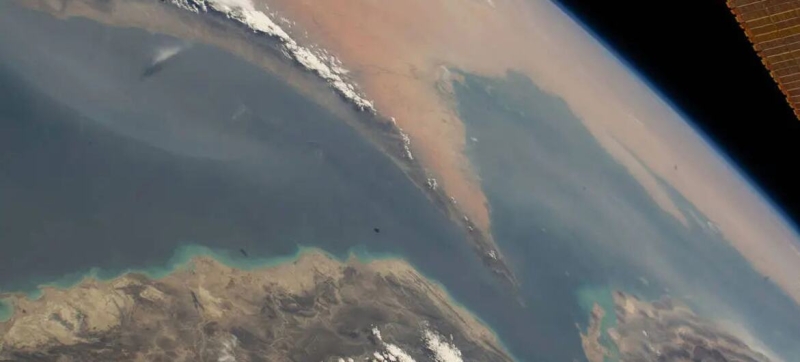

© NASA Satellite image of the Strait of Hormuz. Top news of the day | Thursday: Strait of Hormuz, North Korea, journalists UN
The main news of the day in the UN and in the world: The UN Secretary General presented three scenarios for the development of events in the Strait of Hormuz, the DPRK nuclear program was discussed at the Security Council, women journalists are increasingly faced with online violence, the Syndicate of Sudanese Journalists became a laureate of the World UNESCO/Guillermo Cano Prize 2026.
Crisis in the Strait of Hormuz
Despite the ceasefire, the situation in the Strait of Hormuz remains critical. UN Secretary-General Antonio Guterres announced this at a press conference in New York. Restrictions on freedom of navigation, the UN chief recalled, impede the supply of oil, gas and fertilizers, which was a heavy blow to the global economy. He presented three scenarios for the development of events, and even in the best case scenario – if restrictions are lifted today – global economic growth will slow, inflation will rise, and supply chains will take months to restore. The UN Secretary General called for the opening of the strait.
Security Council meeting on the DPRK nuclear program
This year, North Korea is beginning to implement a new five-year plan for the development of its armed forces. Deputy Secretary General Rosemary DiCarlo said at a Security Council meeting that the country continues to actively test various types of missiles and build up its nuclear capabilities. She emphasized that these actions violate Security Council resolutions and undermine the global non-proliferation regime. DiCarlo called on Pyongyang to comply with international obligations and resume dialogue to reduce tensions on the peninsula.
Online violence against women journalists
The number of calls to the police due to online violence against women working in the media has doubled since 2020. This is stated in a new report by UN Women, published on the eve of World Press Freedom Day, which is celebrated on May 3. According to the study, 12 percent of women surveyed, including journalists, reported unauthorized distribution of personal images, including intimate ones. Six percent have been victims of deepfakes, and almost one in three have received unwanted sexual advances in digital messages. UNESCO/Guillermo Cano 2026. The award was given to the organization in recognition of its role in defending freedom of speech during the armed conflict in Sudan. Since the outbreak of hostilities in 2023, the Syndicate has recorded the deaths of 32 journalists, 556 violations against media workers, and the closure of many newspapers and radio stations. Sudan is one of the most dangerous countries to be in the media today.