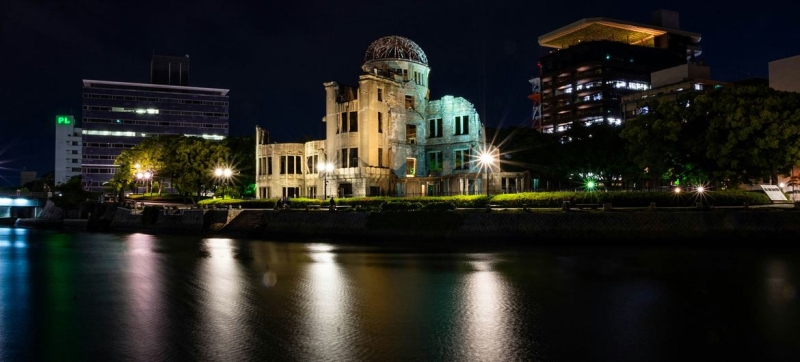

© Unsplash/A. Stech Peace Park in Hiroshima. 81 years after the nuclear disaster, Hiroshima brings hope to humanity Peace and Security
Eighty-one years ago, the United States dropped an atomic bomb on Hiroshima. The city was turned into ruins, tens of thousands of people died, and humanity found itself face to face with the catastrophically destructive force of nuclear war.
This must never happen again, UN High Representative for Disarmament Affairs Izumi Nakamitsu said at a memorial ceremony in Hiroshima, speaking on behalf of the United Nations Secretary-General.
“Hiroshima remains an inspiring example of resilience, rebirth and hope,” Nakamitsu said. “For generations, its inhabitants have reminded us that even after the darkest pages of history, a person is able to choose for a better future and build it with his own hands.”
Just two days later in 1945, a second nuclear attack was launched on Nagasaki. As a result of the two explosions, about 120 thousand people died, and approximately the same number died later from burns and the effects of radiation exposure. After the tragedy, there were about 650 thousand survivors, known as hibakusha – this is the name in Japan for people who survived the atomic bombings.
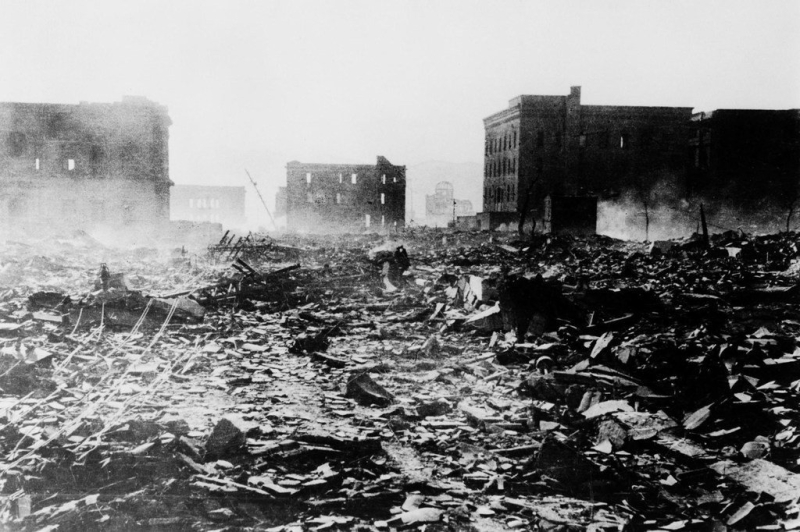
Photo UN/M. Kishida Hiroshima after a nuclear bomb was dropped on the city in August 1945.
Destruction of nuclear deterrence mechanisms
Describing the current nuclear weapons situation, Nakamitsu warned that deepening geopolitical divisions, growing mistrust and intensifying competition are eroding the norms and deterrence mechanisms that for decades have helped the world avoid nuclear cataclysm.
The decades-long trend of shrinking nuclear arsenals has been reversed, she said. The global consensus on a nuclear test ban was also under threat. Additionally, global military spending has risen to $2.9 trillion in 2025.
A promise that may yet be kept
“They are starting to rattle nuclear weapons again, seeing them as an instrument of intimidation and coercion,” the High Representative for Disarmament Affairs emphasized. She recalled that the United Nations was created to rid the world of the scourge of war, and the very first resolution of the General Assembly, adopted in 1946, set the goal of eliminating nuclear weapons.
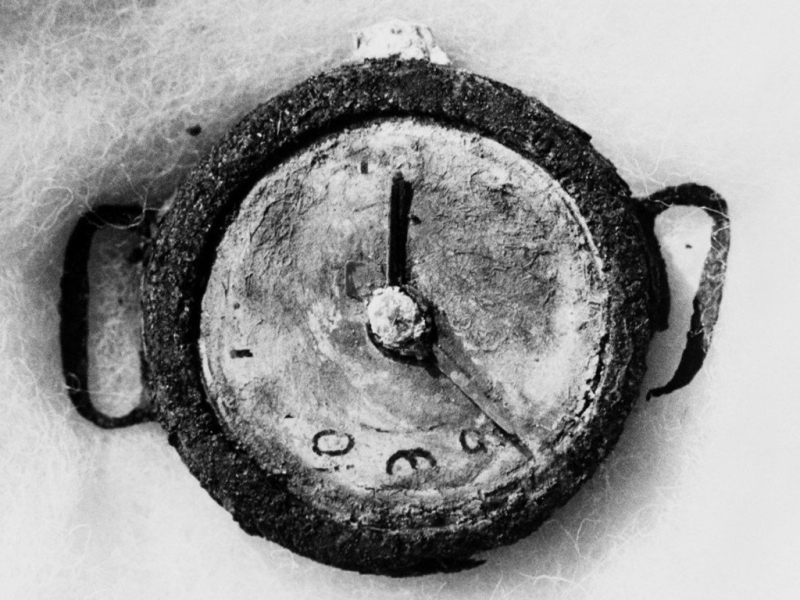
“This promise remains unfulfilled, but it is not impossible,” Nakamitsu said. Photo UN/U. Sasaki A clock found in the ruins of Hiroshima stopped forever at the moment of the atomic explosion. She stressed that peace is achieved not through intimidation or military might, but through trust, sustained investment in dialogue, diplomacy and international cooperation, a strong commitment to international law and a strengthened global disarmament regime. Achieving peace, she said, requires action on the part of all states, but especially those with nuclear weapons: risk reduction, trust restoration and progress towards complete nuclear disarmament. Equally important, Nakamitsu said, is to decisively reject the logic that nuclear weapons are considered the ultimate guarantee of security, when in fact they are the exact opposite. On the 81st anniversary of the tragedy, the High Representative called on the global community to be resolute: “Let us choose dialogue over division, cooperation over confrontation, and shared security over narrow national advantages. Let us hasten the day when the tragedy of Hiroshima will never be possible again.”